
South Africans can no longer afford to view Phala Phala as a private matter involving a private businessman. Whatever happened at President Cyril Ramaphosa’s game farm in Limpopo has grown far beyond the theft of foreign currency hidden in furniture, writes Zukile Majova in Real Politics.
The scandal now sits at the centre of the country’s political and economic future because it has consumed the presidency, weakened the credibility of the reform project, delayed the rebuilding of key state institutions and introduced uncertainty into the Government of National Unity (GNU), which many South Africans viewed as the country’s last realistic chance of economic recovery.
The Constitutional Court’s decision in May 2026 to reopen the impeachment process against Ramaphosa has transformed what many hoped was a fading controversy into a renewed political crisis.
The ruling has revived difficult questions about accountability, transparency and leadership. More importantly, it has ensured that South Africa’s political conversation remains focused on the president’s survival rather than the country’s recovery.
That is the real cost of Phala Phala.
The scandal is damaging not simply because of the allegations themselves, but because it strikes directly at the reason Ramaphosa became president.
When Jacob Zuma left office, South Africa was not looking for another politician. It was looking for a repairman. The country was emerging from a decade of state capture that had hollowed out institutions, damaged investor confidence and weakened public trust in government. Ramaphosa was presented as the leader who would restore integrity to public office, rebuild institutions and reconnect South Africa with investors who had become increasingly sceptical about the country’s future.
His greatest political asset was credibility. Investors, business leaders and many South Africans trusted him.
The promise of the New Dawn was built on that trust. Phala Phala has steadily eroded it.
For almost five years, the scandal has hung over the presidency. Every court application, parliamentary battle and political confrontation has pulled attention away from the work of governing. Instead of focusing on economic growth, infrastructure, job creation and institutional reform, South Africa has repeatedly found itself dragged back into questions about what happened on a farm in Limpopo.
The opportunity cost has been enormous.
South Africa is still rebuilding after state capture. Law enforcement agencies need strengthening, state owned companies require reform, municipalities need fixing and unemployment remains stubbornly high.
Instead, political energy has increasingly been diverted towards managing the fallout from Phala Phala.
Whether one believes Ramaphosa is guilty of wrongdoing is becoming secondary to the larger problem. The presidency has become distracted and increasingly consumed by self preservation.
That is the uncomfortable parallel with the Zuma years.
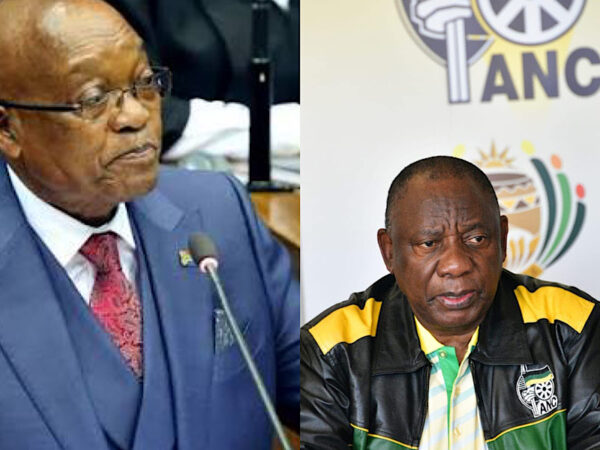
Both presidencies became increasingly defined by legal battles and political survival.
For much of the last two decades, South Africans have watched national priorities compete with the personal legal problems of sitting presidents. Ramaphosa was supposed to represent the end of that era.
Instead, there is now a growing risk that the final years of his political career will also be dominated by litigation, impeachment proceedings and arguments about accountability.
Many South Africans expected him to restore dignity to the government and close the chapter on one of the darkest periods in democratic South Africa’s history.
Today, he is no longer widely viewed as a leader standing above factional battles. He is increasingly seen as a politician fighting for his own survival.
That shift has consequences far beyond his personal reputation.
South Africa needs investment to grow the economy and create jobs. Investment depends on confidence, confidence depends on stability and stability depends on trusted leadership.
Every new twist in the Phala Phala saga weakens that chain.
The danger now extends beyond Ramaphosa and the ANC.
The GNU has become a critical pillar of investor optimism and public hope. For millions of unemployed South Africans, it represented hope that the government could focus on growth, infrastructure, corruption and jobs.
Yet 2026 is also a municipal election year, when political attention should be focused on fixing local government.
Political parties should be debating how to fix collapsing municipalities, improve service delivery, attract investment and create jobs. Voters should be hearing plans to repair roads, fix water systems, maintain infrastructure and restore local government.
Instead, the national conversation is once again being dominated by scandal, court battles and political survival.
Failing municipalities are where South Africans experience government most directly. It is where taps run dry, potholes go unrepaired, refuse remains uncollected and businesses struggle to operate.
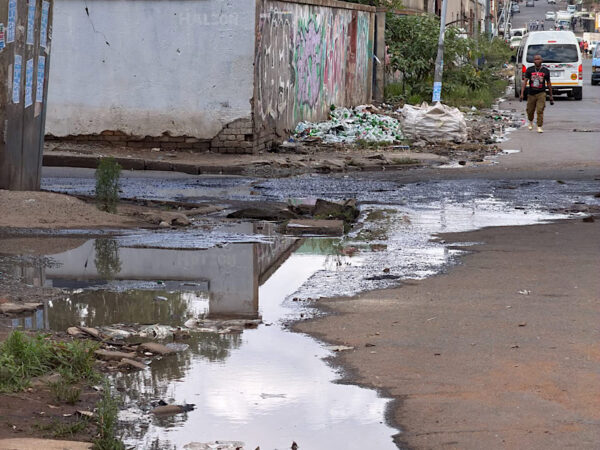
When municipalities fail, quality of life declines. When municipalities work, local economies grow and jobs follow.
Yet political energy that should be focused on fixing local government is increasingly being absorbed by the fallout from Phala Phala.
As the impeachment process gathers momentum, difficult questions are emerging. Can a president fighting for political survival still drive reforms? Will coalition partners remain united if the crisis deepens? Can the government maintain its focus on economic priorities while political leaders become consumed by legal battles?
These are questions investors dislike and unemployed South Africans cannot afford.
When investment decisions are delayed, jobs are delayed. When political uncertainty increases, economic growth slows. When the government focuses on survival, reform suffers.
The people who ultimately pay the price are not politicians in Parliament.
They are young people looking for their first job, small business owners struggling to expand and communities waiting for better services and economic opportunities.
Phala Phala can no longer be dismissed as a private matter.
It has become a symbol of a political system once again consumed by scandal when South Africans need delivery.
The deepest tragedy is not what happened on a game farm in Limpopo.
The tragedy is that South Africa once again finds itself trapped in a politics of scandal when it should be focused on a politics of delivery.
While politicians fight over Phala Phala, millions of South Africans are still waiting for working municipalities, economic growth, jobs and the better life they were promised.
Pictured above: President Cyril Ramaphosa. The Constitutional Court reopened the Phala Phala impeachment process in May 2026, renewing questions about accountability and the future of his presidency.
Image source: The Presidency of the Republic of South Africa
LISTEN: Sharp Sharp Podcast
Zukile Majova and Rob Rose dig into the week that shook the presidency. Ramaphosa has filed his affidavit to set aside the Phala Phala impeachment report, but the saga looks set to drag well past November. ANC elders are breaking ranks, caretaker presidents are circling and the succession whispers are getting louder.
