


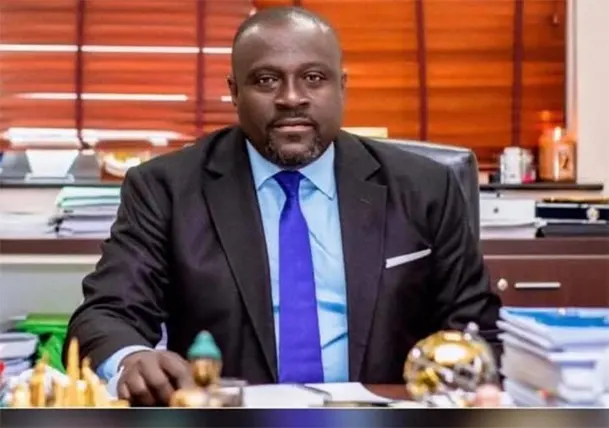
Dr. Mark Assibey-Yeboah
Former Member of Parliament (MP) and economist, Dr. Mark Assibey-Yeboah, has warned that growing public distrust in political leadership poses a serious threat to democratic governance and national development.
According to him, one of the greatest crises confronting modern democracies is not merely the absence of institutions or laws, but the erosion of public confidence in leadership itself.
Delivering the Osahen Excellence Public Lecture in Winneba under the theme, “Selfless Leadership and Public Service: Building Integrity, Trust and Accountability,” Dr. Assibey-Yeboah said citizens across many societies were increasingly questioning whether public office still represented sacrifice and service.
“Across many societies today, citizens increasingly question whether leadership still represents service, whether public office still reflects sacrifice, and whether those entrusted with authority genuinely place the public interest above personal ambition,” he stated.
He stressed that the future stability of democracies would largely depend on whether leaders could regain the trust of citizens through honesty, transparency, competence, accountability and service.
The lecture, organised by the Effutu Traditional Council in collaboration with Christian and Muslim groups and other stakeholders, was held in honour of the Minority Leader and Member of Parliament for Effutu, Alexander Afenyo-Markin.
Dr. Assibey-Yeboah noted that many young people across Africa were becoming increasingly disillusioned with political leadership and public institutions, making conversations on integrity and accountability more critical than ever.
“At a time when many young people across Africa are becoming increasingly disillusioned with political leadership and public institutions, conversations about integrity, accountability and selfless service have become more necessary,” he said.
He argued that leadership should not be measured by status, privilege or visibility, but rather by responsibility, sacrifice and commitment to the public good.
“Leadership is not about occupying office; it is about stewardship. It is about the ability to inspire confidence, unite people around a common purpose and remain accountable even when authority provides the opportunity to do otherwise,” he stressed.
The former MP described public service as a “sacred responsibility” that must never become an avenue for personal gain or political advantage.
According to him, once leadership becomes disconnected from service, trust begins to decline, institutions weaken and citizens lose confidence in governance.
He said integrity remained the moral foundation upon which leadership legitimacy was built, warning that societies where leaders fail to uphold integrity often experience cynicism, institutional decline and weakened national cohesion.
Dr. Assibey-Yeboah further underscored the importance of accountability, insisting that true leaders should not fear scrutiny.
“Accountability is not an obstacle to leadership. Accountability is what gives leadership credibility,” he noted.
He also urged political leaders, traditional rulers, religious leaders, professionals and the youth to reflect on the type of society they were building and the values being passed on to future generations.
Touching on the role of Parliament in democratic governance, Dr. Assibey-Yeboah praised Mr. Afenyo-Markin for consistently advocating stronger institutions, parliamentary oversight and accountability in public administration.
He said the Effutu MP’s rise from humble beginnings in Winneba to national leadership demonstrated the importance of resilience, discipline and empathy in public service.
The former MP recounted how Mr. Afenyo-Markin supported his family by selling bread as a young boy before later pursuing education, law and politics.
According to him, leaders who understand hardship firsthand often develop a deeper appreciation for ordinary people and their struggles.
Dr. Assibey-Yeboah also highlighted the role of culture and tradition in national development, arguing that societies could not achieve sustainable progress if they lost their identity, communal values and historical consciousness.
He called for unity beyond political, ethnic and religious divisions, stressing that leadership must promote dialogue, peaceful coexistence and social harmony.
Addressing the youth directly, he urged them not to equate leadership with wealth, popularity or social influence.
“True leadership is not measured by popularity. True leadership is measured by responsibility,” he said.
He reminded leaders that political office was temporary but integrity and legacy endured long after power changes hands.
“Leadership is temporary, but legacy is permanent,” he declared.
By Ernest Kofi Adu
