
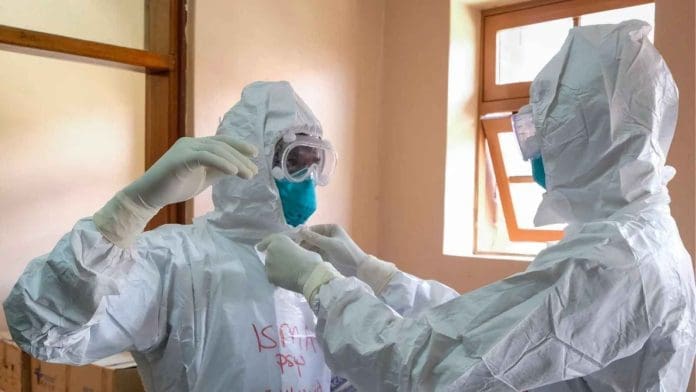
Nigeria’s disease control authority has placed ten states on its highest tier of preparedness alert for Ebola importation, warning that the country faces a high risk of the virus entering through its international transit hubs and porous land borders as an outbreak in Central and East Africa continues to grow.
The Nigeria Centre for Disease Control and Prevention (NCDC) issued the advisory on May 27, 2026, following the World Health Organisation’s (WHO) declaration of the escalating Bundibugyo Ebola Virus Disease outbreak in the Democratic Republic of Congo (DRC) and Uganda as a Public Health Emergency of International Concern (PHEIC). Nigeria has recorded no confirmed case of the virus.
The ten states classified at the highest risk level are Lagos, the Federal Capital Territory (FCT), Rivers, Kano, Enugu, Borno, Akwa Ibom, Cross River, Taraba and Adamawa. The NCDC identified these as priority areas because of their international airports, major seaports, border corridors and high volumes of human movement. A second tier of moderate-risk states, including Ogun, Nasarawa, Kaduna, Plateau, Kogi, Niger, Jigawa, Katsina, Bauchi, Ebonyi, Abia and Bayelsa, was also identified.
The current outbreak data from the DRC-Uganda source zone shows 1,077 suspected cases and 247 deaths, representing a case fatality rate of 24.6 percent.
A critical dimension of the alert is the absence of any approved vaccine or targeted treatment for the Bundibugyo strain. Medical countermeasures currently available, including the Ervebo vaccine and monoclonal antibody therapies, were developed for the Zaire Ebola strain and offer no documented protection against this particular variant. The NCDC said early detection and rapid public health intervention therefore remain the only effective line of defence.
The agency directed health workers to maintain a high index of suspicion from the earliest stage of patient contact. Ebola’s initial symptoms, including fever, fatigue, muscle pain, headache, vomiting, diarrhoea and hiccups, closely resemble those of malaria and Lassa fever, which are endemic across Nigeria. The NCDC warned that “health workers must not wait for bleeding before initiating isolation,” emphasising that taking detailed travel histories and isolating early were critical to preventing spread within health facilities.
The National Emergency Operations Centre has been activated in alert mode to coordinate preparedness between federal and state health authorities. State governments in high-risk zones must now verify operational readiness across both public and private health facilities, including contact tracing systems, personal protective equipment (PPE) distribution, safe sample handling procedures and rapid ambulance transfer protocols. States were directed to submit readiness reports within 72 hours.
The NCDC advisory underscores the broader regional concern triggered by the WHO PHEIC declaration, which has already prompted Kenya to explore a US-managed quarantine facility and led Ghana’s health authorities to heighten border surveillance at key entry points.

