


The University of Johannesburg (UJ) recently took centre stage in shaping the technological future of the continent by hosting the SA Artificial Intelligence Unfiltered Executive Roundtable.
The event brought together thought leaders from diverse sectors, including medical, education, regulatory institutions, business, law, government, and telecoms, to deliberate on the critical path toward a robust national AI policy.
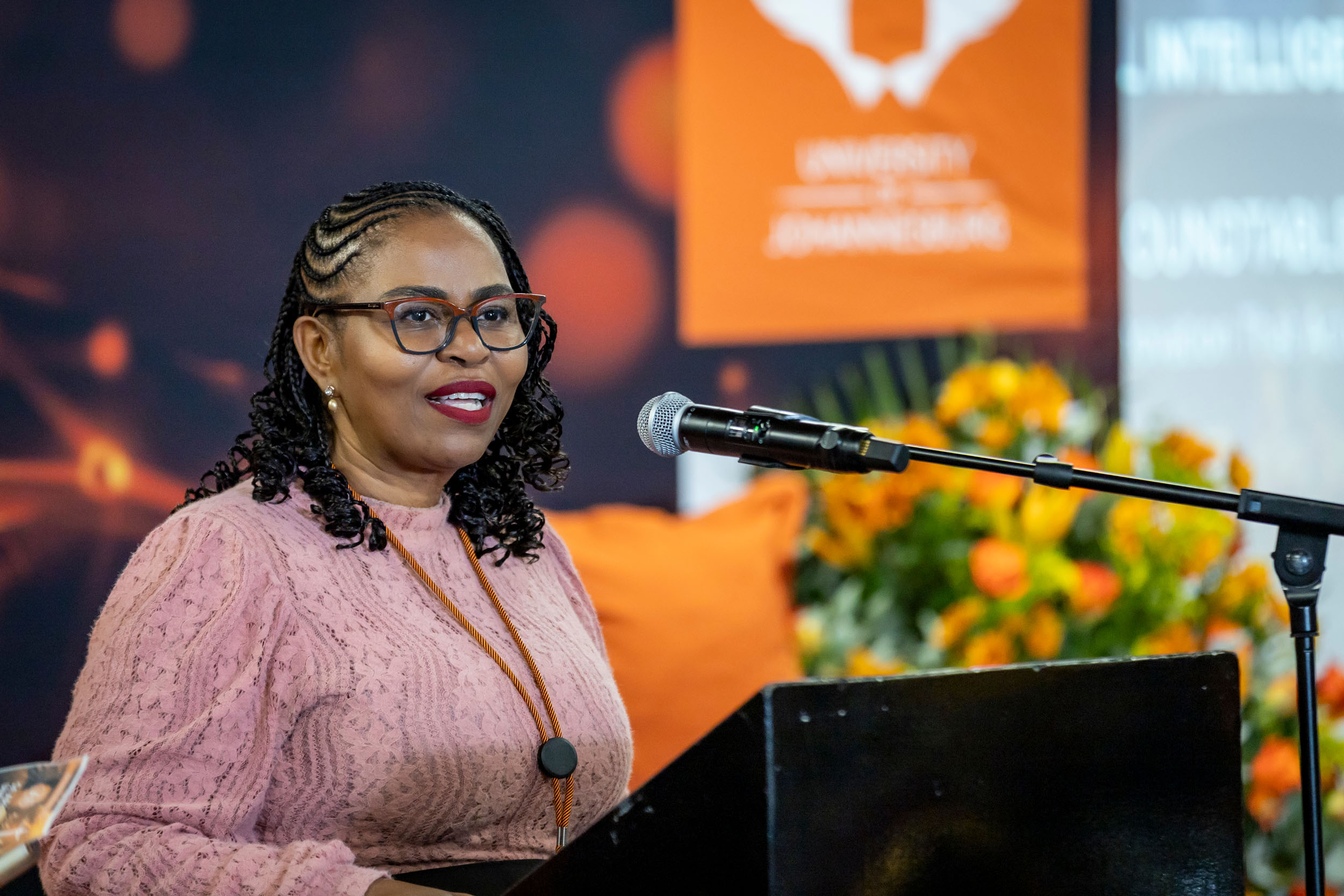
Professor Stella Bvuma, who serves as the Director of the School of Consumer Intelligence and Information Systems (SCiiS) at the University of Johannesburg and is a leading voice on ICT adoption and responsible digital equality, set the tone for the engagement. Professor Bvuma chairs the board of the State Information Technology Agency(SITA) highlighted that the intention of the dialogue was to contribute the thoughts of leading IT and CIO professionals as part of this essential academic and national debate.
“I’m sure, all of us are reading what’s happening in the media in terms of the national AI policy,” Professor Bvuma stated in her welcoming remarks. “So, we are going to be having thought leaders here today. But what I wanted to share, as I was penning down, what I needed to share with you is that when we gather here, it’s not because we fear AI, also not because we worship AI, but to ensure that it serves the grandeur of the human person in all of us. Technology is never neutral. It will reflect the values of those who build and guide it.
“Let this gathering be a commitment that our AI journey in South Africa and our continent places human dignity, the common good, and shared humanity at the center of it all. May we build tools that elevate people, not replace them, tools that expand freedom and opportunity rather than concentrate power, tools that keep the human heart, relationships, and moral responsibility as the true measure of progress. Welcome, and let the conversations be honest, courageous, and human”.
Six Strategic Pillars Guiding the Discussion
The intense panel discussions and collaborative workshops during the roundtable were structured around specific framework elements designed to address the multifaceted nature of technological evolution. These strategic pillars guided the discussion completely, ensuring that every angle of technological advancement, safety, and socioeconomic impact was addressed by the experts present.
The conversation was anchored by the extraction of six primary focus areas from the framework documentation. The first is Capacity and Talent Development, which focuses on building national AI capability, digital infrastructure, and workforce readiness. The second pillar is AI for Inclusive Growth and Job Creation, targeting economic transformation, innovation ecosystems, startups, and industrial competitiveness. Third is Responsible Governance, encompassing AI governance, cybersecurity, risk, privacy, accountability, and data governance. The fourth focus area is Ethical and Inclusive AI, which deals directly with human rights, fairness, inclusion, explainability, and bias mitigation. Fifth is Cultural Preservation and International Integration, addressing AI sovereignty, African identity, indigenous languages, and global cooperation. Finally, the sixth pillar is Human-Centred Deployment, which covers public-sector AI, transparency, explainability, and citizen-centred deployment.
Aligning Local Strategy with Global Standards
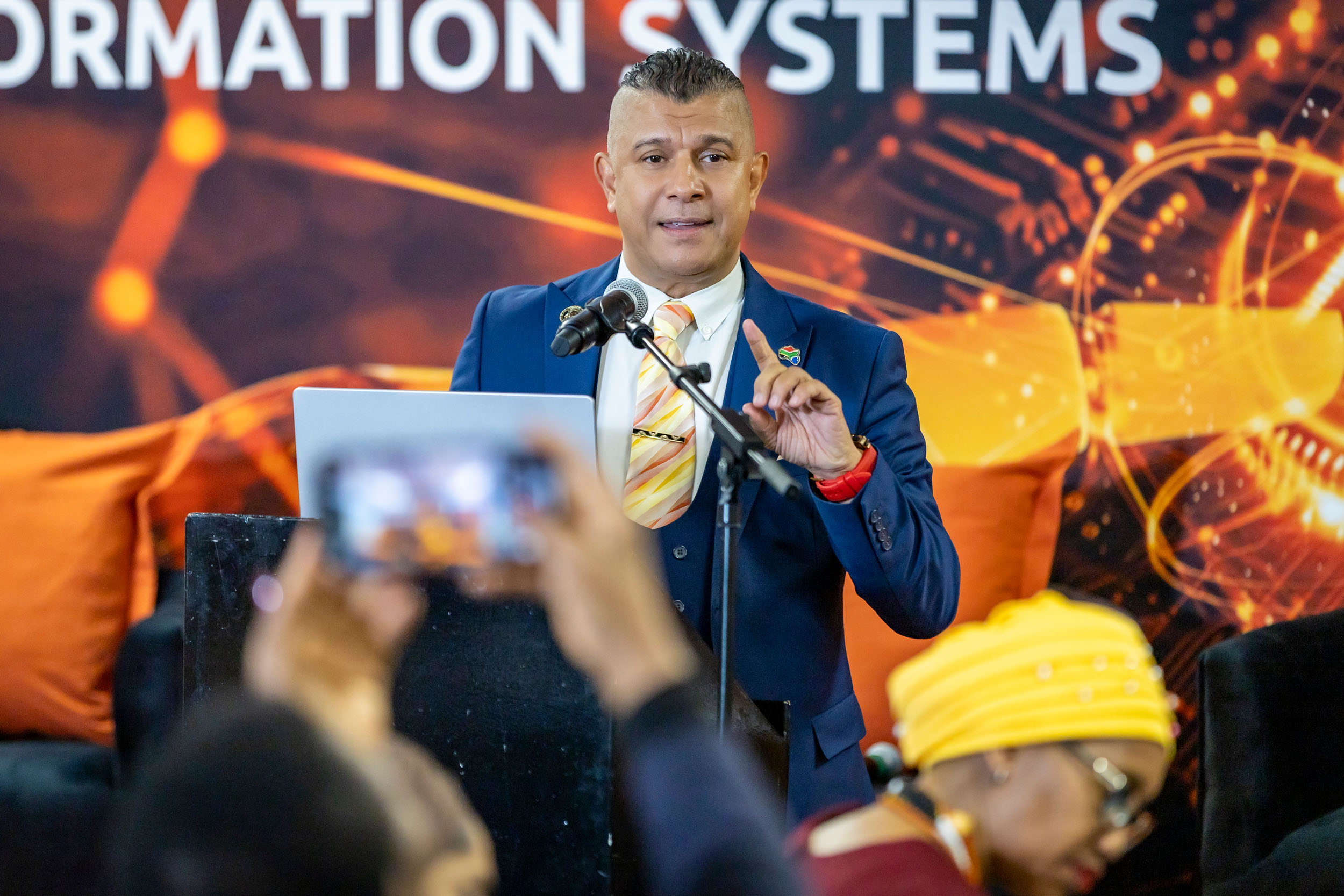
Representing the Department of Communications and Digital Technologies, Craig Meyer, the Director for Emerging Technologies, emphasized that South Africa aims to harness the transformative power of AI through clear policy objectives. These include stimulating innovation through capacity and talent development, as well as advancing the development of AI for inclusive growth and job creation to improve the quality of life for citizens through ethical adoption.
“We’re not developing a policy that is going to be for South Africa,” Meyer explained during his presentation. “We’re looking at a policy that is going to be commensurate with what’s happening globally. We must, we absolutely have to. And the rest of Africa is looking to us to guide in this.”
Meyer further added that getting the policy right would have immense geopolitical and economic advantages for the nation. “If we get it right, we position South Africa as a regional leader in AI innovation,” Meyer noted. “As I said, the other countries in Africa are looking to us to get this right, and if we lead in the severe, we will become the powerhouse in Africa that we deserve to be.”
Keeping Humanity at the Core of Innovation
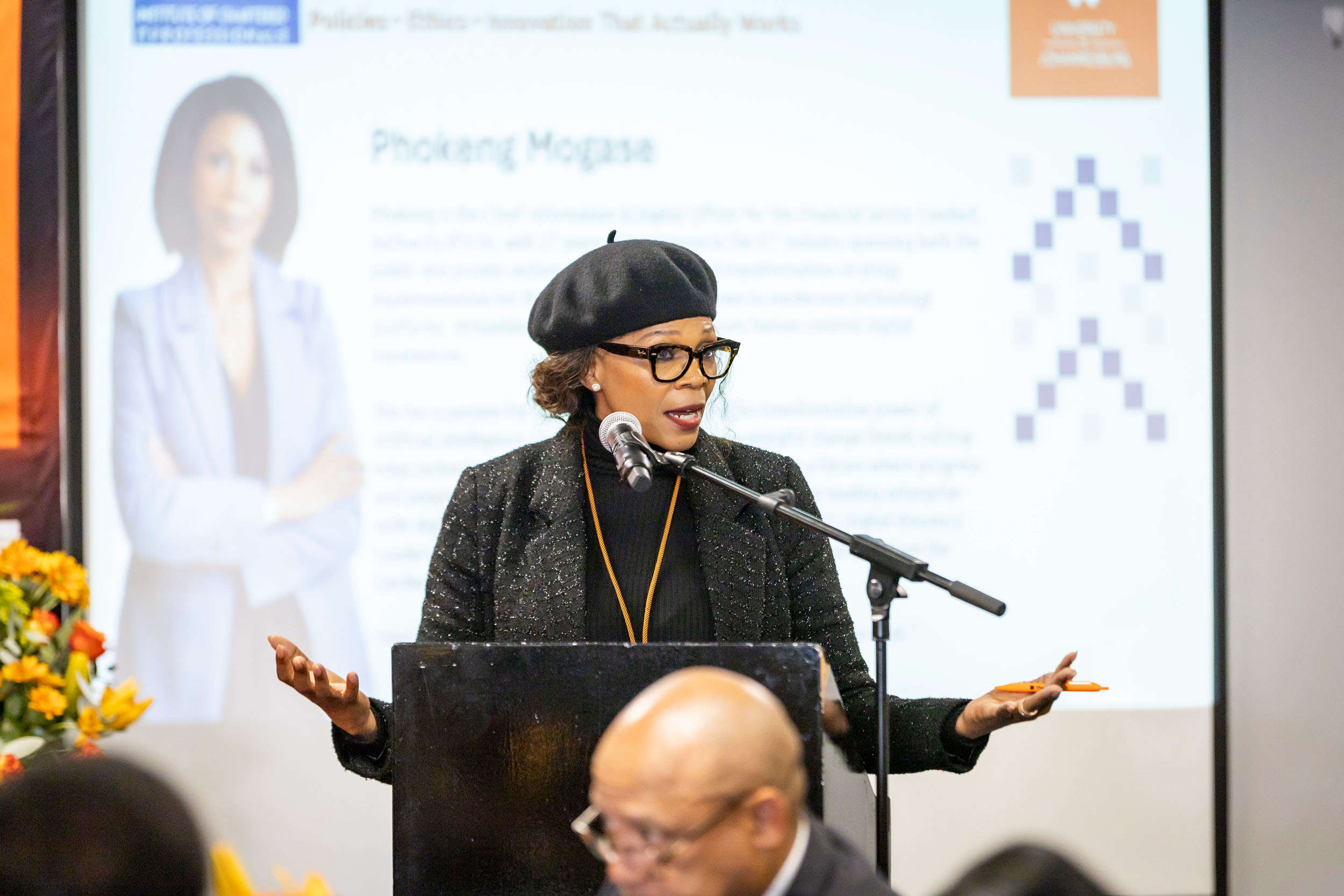
Phokeng Mogase, the Chief Information and Digital Officer for the Financial Sector Conduct Authority, led the conversation on the sixth pillar. With twenty-seven years of experience in the ICT industry spanning both the public and private sectors, she leads the digital transformation strategy implementation for the FSCA.
“Our role is not to come up with all the answers but is to position a thought,” Mogase said. “I will be talking to the Human Centered Deployment Pillar. Human-centered deployment in this discussion is positioned as a mechanism to make sure that humans stay in the center of the innovation and to ensure we progress in society in a just manner.”
She urged developers and policy writers to remember that technology must serve everyone, not just the elite. “However, human-centered deployment inherently calls for AI and solutions that look beyond just technical performance,” Mogase asserted. “It invites the people who are not always in the room when these solutions are designed. It invites them into the conversation, and it puts a responsibility on all of us to make sure that the solutions that we design actually are beneficial to them and society. It introduces co-creation design thinking, it brings in that voice of the customer in the room, and that’s what at the center of human-centered deployment, that’s the elements that we should not forget.”
Practical Governance and Accountability
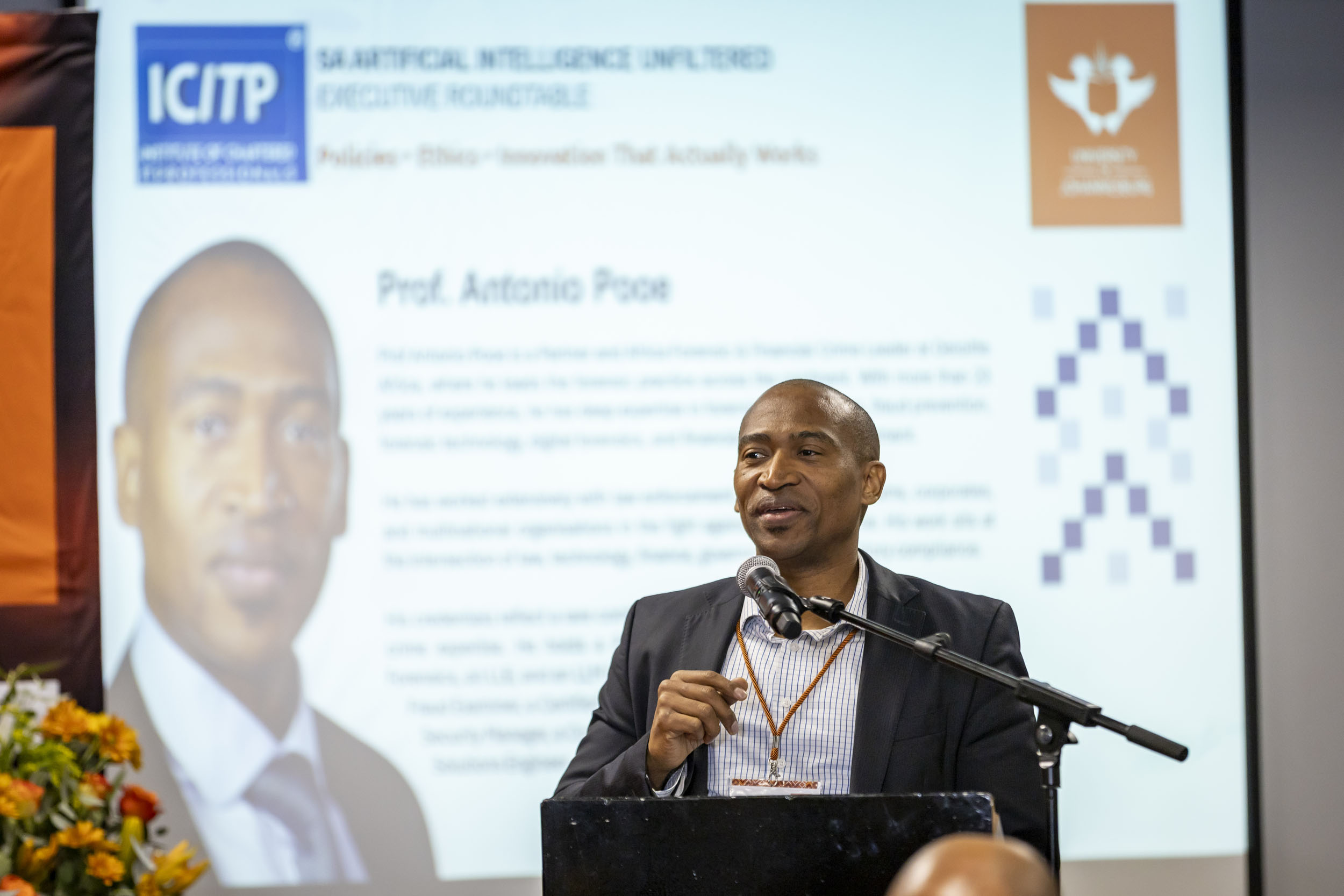
The conversation shifted toward security and systemic stability when Antonio Pooe, a Partner and Africa Forensic and Financial Crime Leader at Deloitte Africa, shared his insights. Pooe leads the forensic practice across the continent and viewed governance through a deeply practical lens.
“AI without controls is like building a skyscraper on sand, soon enough, the cracks in the foundations are going to start showing,” Pooe warned the audience. “Responsible governance, as is the pillar we’re discussing, is about principle. Practical governance for me speaks to execution. It says we can transplant and borrow from the EU and the rest of the world, but we’re going to look at our realities and make it work for us. I operate in the forensics and cyber-crime world, and it’s, it’s sad to see the sophistication of cyber-crimes and other frauds that are today being committed in South Africa, because we love grabbing new technology, without the necessary protections.”
Pooe introduced a vital principle that he believes must be integrated into the foundation of the state strategy. “Forensic readiness is a principle I’d like you to think about, that I’d like to introduce,” Pooe explained. “It’s something that must be baked or engineered into policy from the onset. It cannot be an afterthought. Yes, the draft AI policy suggests that AI is a tool for inclusive economic growth, but without practical governance it can amplify harm at exponential rates. So, forensic readiness is therefore that bridge between AI governance and practical accountability. As I conclude my question to you, then is how do we ensure that our AI ambitions are matched by practical accountability?”
Professional Standards and Future Certification
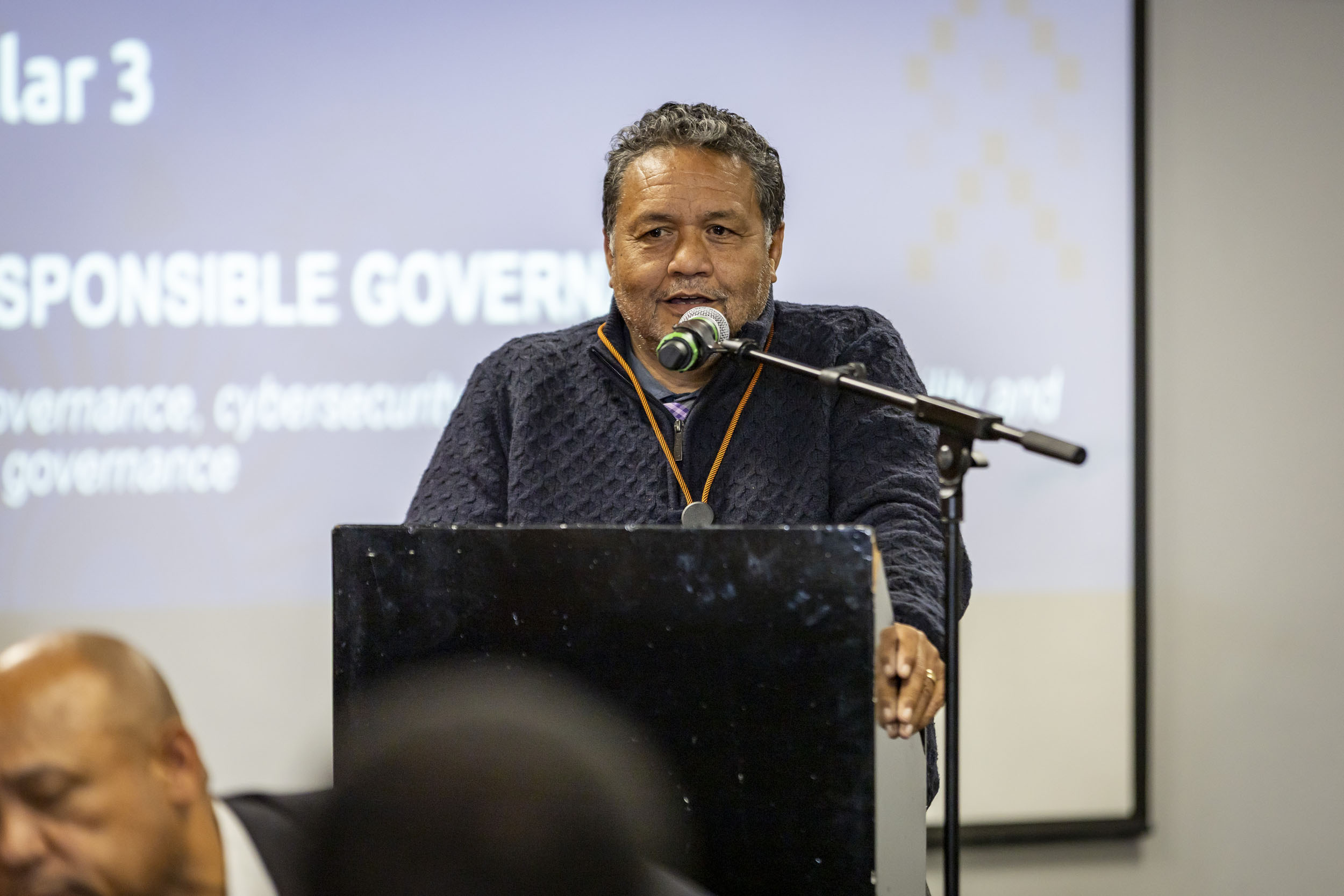
John Bosco Arends, the Chairperson of the Chartered CIO Council, concluded the panel contributions by speaking directly to the changing responsibilities of technology executives and the need for structured oversight.
“CIOs are going to be kept responsible, and as a professional body, we are trying to help guide them and lead them in a way, but remember, you are not just a customer to AI policy, you have the opportunity to inform what policy becomes and things are being,” Arends remarked.
He suggested that the future landscape might require stricter regulatory measures for professionals in the field. “But I think what is important is that from a professional body perspective, the Charter CIO Council, when we look at all of this and understand the implications of what AI has for the industry that we’re in, we understand that mandatory certification maybe doesn’t sound that far off, because we will need to certify certain people, because if we want them to have a code of practice, a code of conduct, ethics in there, and human centricity, it means that somewhere we need to teach and inculcate those behaviours into, into the people that have,” Arends concluded.
The ultimate outcome of the AI Unfiltered Dialogue is that all submissions from these diverse sectors will be collated into a comprehensive document. This final text will serve as part of the official submissions to the Ministry of Communications and Digital Technologies, ensuring that the voice of the academic and professional community directly shapes the upcoming national AI policy.
