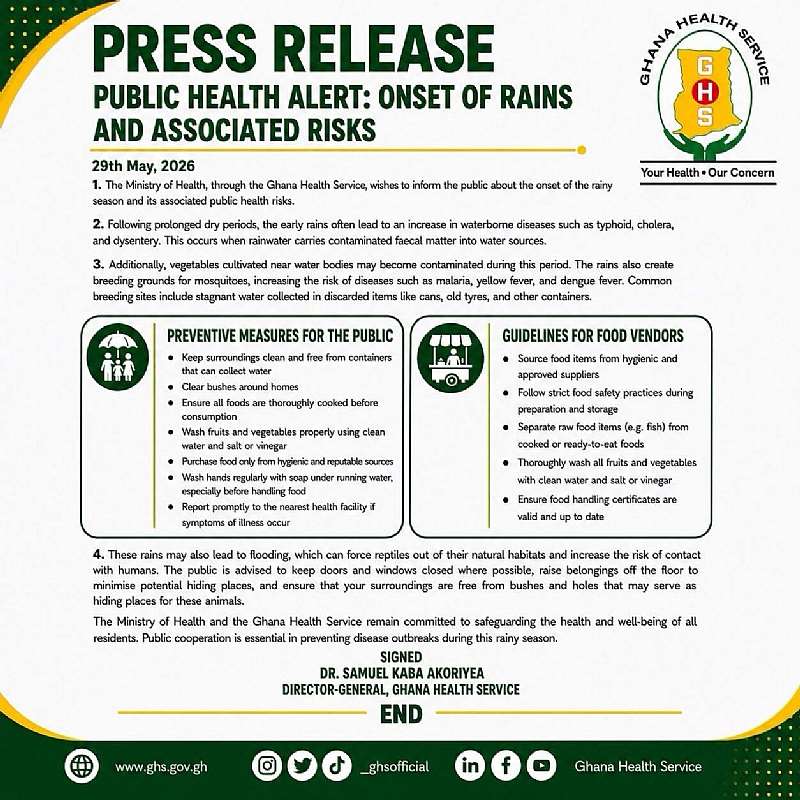
The Ministry of Health, through the Ghana Health Service (GHS), has issued a public health alert over increased risks of disease outbreaks and flooding following the onset of the rainy season.
According to the health authorities, the early rains after prolonged dry periods often lead to a rise in waterborne diseases such as cholera, typhoid and dysentery due to contamination of water sources.
In a presa release issued on Friday, May 29, the service also noted that stagnant water created during the rainy season could increase mosquito breeding and heighten the spread of diseases including malaria, yellow fever and dengue fever.
“Following prolonged dry periods, the early rains often lead to an increase in waterborne diseases such as typhoid, cholera, and dysentery. This occurs when rainwater carries contaminated faecal matter into water sources,” the statement said.
The alert, signed by the Director-General of the GHS, Dr. Samuel Kaba Akoriyea, further indicated that vegetables cultivated near water bodies may become contaminated during this period, posing additional health risks to consumers.
It therefore advised the public to observe proper hygiene practices, including washing hands regularly with soap under running water, thoroughly cooking food before consumption and properly washing fruits and vegetables with clean water and salt or vinegar.
The service also encouraged the public to keep their surroundings clean and free from containers capable of collecting stagnant water.
Food vendors were urged to source food items from hygienic suppliers and strictly observe food safety practices during food preparation and storage.
The GHS further advised the public to keep doors and windows closed where possible, clear bushes around homes and raise belongings off the floor to reduce hiding places for reptiles.
It further urged persons experiencing symptoms of illness to report promptly to the nearest health facility for medical attention.