


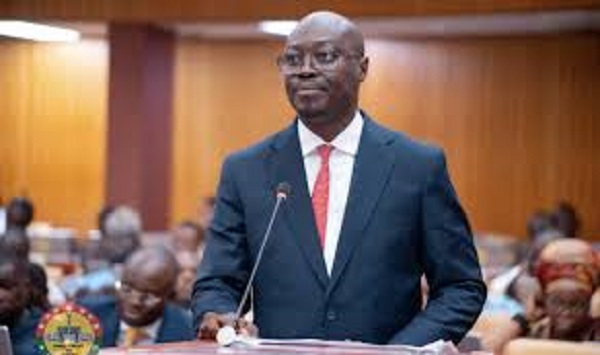
GHANA has now achieved a moderate risk of debt distress, as against the previous high risk of debt distress, the Minister of Finance, Dr Cassiel Ato Forson, has told Parliament.
He said the achievement was a major turnaround for Ghana, which had been classified from unsustainable debt distress to high-risk debt distress since 2013.
“Mr Speaker, I am proud to inform the House that Ghana, since 2013, has achieved a moderate risk of debt distress from unsustainable debt to high risk of debt distress to now a moderate risk of debt distress,” he said.
Statutory reports
Dr Forson stated this on the floor of Parliament on Tuesday when he laid four statutory reports in the House.
They were the annual report on the management of the energy sector levies and accounts for the year 2025 and the reconciliation report on the Petroleum Holding Fund for the year 2025.
The others were the annual public debt management report for the year 2025 financial year and the annual report on public-private partnership projects for the year 2025.
Obligations
Briefing the House on the reports, Dr Forson said the annual report on the management of the energy sector levies and account for 2025 detailed monies received and accrued to the state on the back of how all the petroleum taxes were utilised, particularly the one relating to the management of the energy sector debt recovery.
For the reconciliation report on the Petroleum Holding Fund for 2025, he said the Petroleum Management Act imposed an obligation on the Finance Minister to submit a report of the previous year to Parliament.
He said the report detailed money that accrued to the state in terms of the petroleum funds and how that amount was used.
“And so Mr Speaker, I am only presenting the reports detailing what was accrued to the state and how we actually utilised the resources,” he said.
Debt situation
With regard to the public debt report, Dr Forson said the report was largely intended to inform Parliament of Ghana’s public debt situation.
For the report on public-private partnership projects for 2025, he said the Finance Ministry was under an obligation to present public-private-partnership projects to the House and also look at future projects.
Soon after laying the reports, the First Deputy Speaker, Bernard Ahiafor, referred the reports to the Finance Committee as well as the leadership of the Committee of Energy to consider them and report to the House.
