


Ghana is positioning itself for a structural shift in its industrial base, with the government declaring a broad reset of manufacturing policy, accelerating trade digitalisation, and deepening agro-industrial expansion as it courts capital at the Ghana–UK Investment Summit in London.
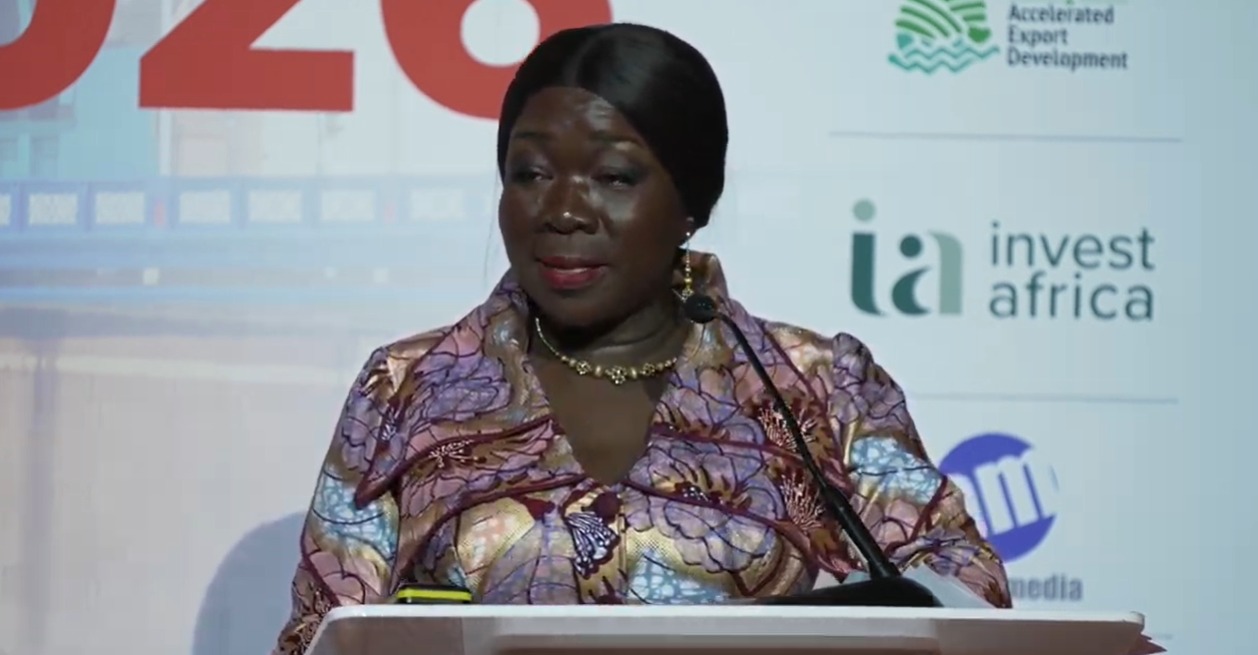
Speaking on Day 2 of the summit, the Minister for Trade, Agribusiness and Industry, Elizabeth Ofosu-Adjare, told investors that reforms underway across the economy are fundamentally reshaping Ghana’s industrial landscape and investment outlook, anchored on a strategy that aligns state policy with private capital.
“Every sector of the Ghanaian economy is resetting. Industrial reforms are underway. Markets are being reorganized,” she said, framing the current policy direction as a comprehensive recalibration rather than incremental reform.
She pointed to rising activity in domestic production and agro-processing as evidence of a sector already in motion. “Local industries are expanding product lines and building new factories. Across our agro-processing corridors, from food processing to beverages and light manufacturing, Ghanaian enterprises are positioning themselves to serve both domestic and export markets more effectively,” she added.
At the heart of Ghana’s pitch to global investors is a redefinition of the state–investor relationship. “Ghana is resetting the manufacturing sector. Ghana and investor interests are not divergent. They are fundamentally aligned,” the Minister stressed, positioning private capital not as external to growth but central to it.
She argued that the country’s investment model is increasingly anchored on partnership and long-term confidence. “Shared prosperity is achieved when investment is anchored in partnership, confidence, and a common vision for sustainable growth,” she said.
The Minister also highlighted strengthening trade performance between Ghana and the United Kingdom, noting that bilateral flows have reached a new milestone. “As highlighted by His Excellency the President yesterday, bilateral trade between Ghana and the United Kingdom hit a record 1.5 billion in 2025, an 11% increase,” she said, describing the figure as evidence of deepening commercial ties.
Ghana is now moving to convert that momentum into a more structured trade framework with the UK, with negotiations on a new partnership agreement underway. According to her, the agreement is designed to extend beyond traditional trade arrangements into more integrated economic cooperation.
“The technical work to deliver on that promise is already well underway. We are digitalizing our rules of origin system, moving away from paper certificates to a single window digital platform that gives our exporters speed, traceability, and confidence,” she said.
Regulatory reforms are also being advanced in agriculture and export facilitation. “A sanitary and phytosanitary agreement is being finalized to ease certification for agri-food exporters,” she noted, adding that Ghana is simultaneously working to protect and monetise its cultural and agricultural heritage in global markets.
“We are advancing geographical indication protection for iconic Ghanaian products, from contained smog fabrics to shea butter and cocoa, ensuring Ghana’s heritage commands its true value in global markets,” she said.
Framing herself as a facilitator of investment, she told the summit: “Distinguished ladies and gentlemen, my mission as a merchant of opportunities is to create pathways for growth, innovation, and tangible returns, and I want to speak directly to the priority sectors that your capital, your technology, and your partnership can unlock.”
She further underscored Ghana’s industrial trajectory, citing manufacturing’s growing contribution to the economy. “As at the end of 2025, Ghana’s manufacturing value added reached roughly 10% of GDP, signaling a sector on the verge of transformation.”
