


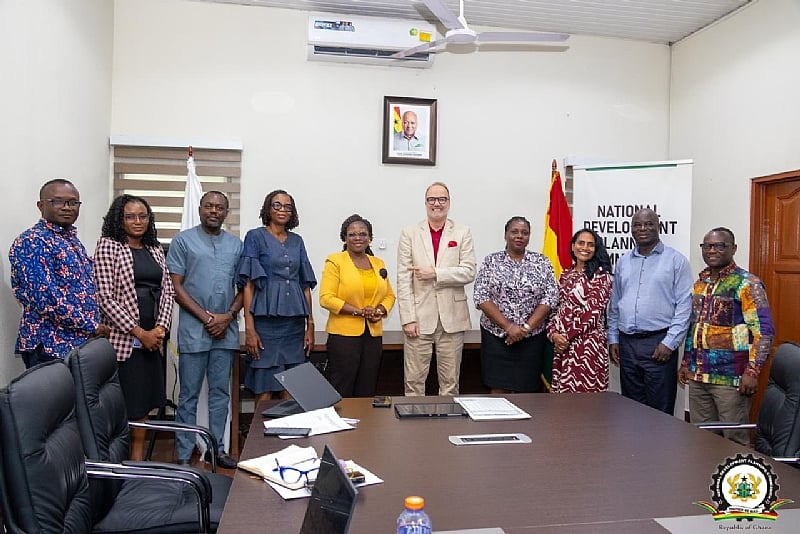
The Director-General of the National Development Planning Commission (NDPC), Dr Audrey Smock Amoah, has called for stronger collaboration among development partners, government institutions, and local authorities to accelerate sustainable development and improve the lives of Ghanaians.
Speaking during a courtesy call by the Ambassador of the Royal Norwegian Embassy to Ghana, Dr John Mikal Kvistad, in Accra on Monday, Dr Smock Amoah said effective development planning depended on strong institutions, reliable data, and coordinated action among stakeholders.
She described the NDPC as the government’s principal advisory body on national development planning and policy coordination, responsible for aligning development efforts across Ministries, Departments and Agencies with national priorities.
“The NDPC plays a central role in ensuring that development efforts across government are coordinated, aligned, and responsive to national priorities. Our work is guided by the need to promote policy coherence, strengthen planning systems, and support the effective implementation of Ghana’s development agenda,” she added.
Dr Smock Amoah noted that the Commission continues to coordinate development planning at both national and sub-national levels through the preparation of the Medium-Term National Development Policy Framework and the monitoring of development performance across the country.
She said the NDPC was working closely with Regional Coordinating Councils and Metropolitan, Municipal and District Assemblies (MMDAs) to improve planning, monitoring and evaluation systems.
Dr Smock Amoah noted that effective development planning depended on strong institutions, reliable data, and meaningful collaboration among stakeholders, which, she said, were necessary to achieve sustainable outcomes and improve the lives of the people.
The meeting also provided an opportunity for the Commission to showcase some of its flagship initiatives aimed at advancing sustainable development and strengthening local governance.
A Principal Planning Analyst at the NDPC, Mr Philip Acheampong, briefed the Norwegian delegation on the implementation of the Smart Cities Programme, which seeks to support cities in identifying and developing strategic investments to promote urban transformation and build resilient and sustainable communities.
He explained that the Commission chairs the programme’s Technical Committee and provides technical guidance and oversight for its implementation.
Ambassador Kvistad commended the progress made under both the Smart Cities Programme and the Voluntary Local Reviews initiative, describing them as important tools for strengthening development planning and accountability at the local level.
He expressed appreciation for the insights shared by the Commission and reiterated Norway’s commitment to supporting initiatives that promote sustainable urban development and evidence-based planning.
“The progress being made demonstrates the value of locally owned development interventions and effective collaboration among stakeholders,” he said.
He added that partnerships between governments, local authorities, and development partners remain essential for achieving long-term development outcomes.
Joyce Adwoa Animia Ocran, ISD
