


dead deal
Ghana is the latest in a string of African countries standing up to US President Donald Trump’s health aid conditions in order to protect its citizens’ data.
By
AFP
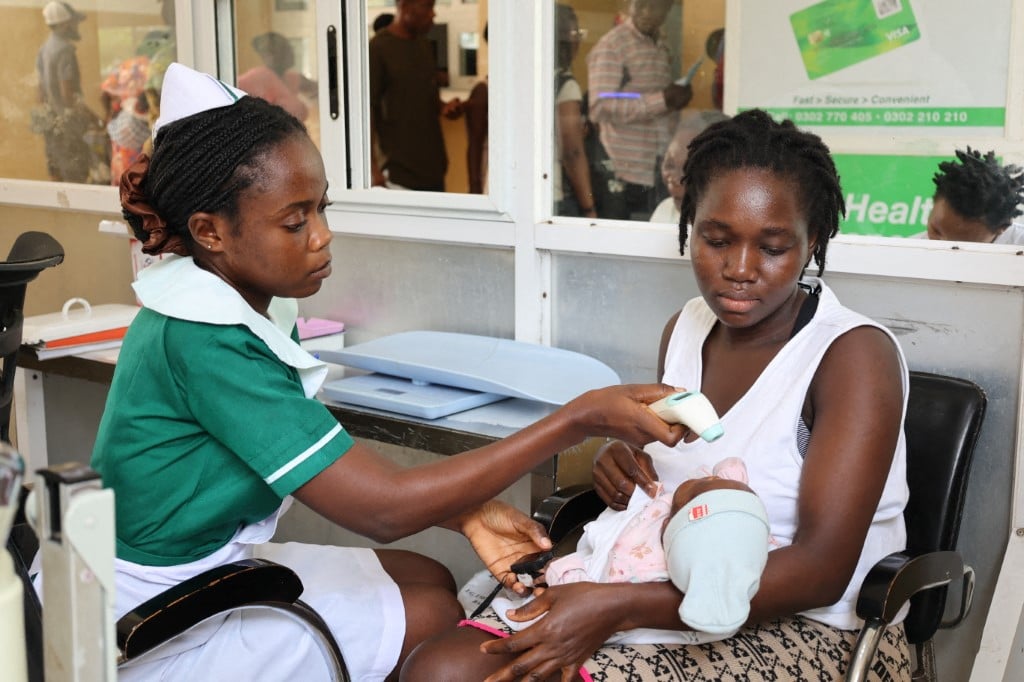
Ghana has ended talks on a multi-year aid deal with the United States after Washington demanded access to citizens’ personal data, a source close to the West African nation’s government has told AFP.
The US has been striking health aid deals across Africa after the administration of US President Donald Trump dismantled the long-standing USAID agency and curtailed the role of NGOs. It was unclear what the proposed Ghana funding deal specifically covered, or what the personal data relates to.
“The deal is dead,” the source said this week, noting that Ghana‘s negotiating team included health officials, suggesting it may have been partly tied to health.
The US team became “hostile” and piled on “pressure” after Ghana pushed back on the demand for personal data, the source told AFP. A spokesman for Ghana’s health ministry did not immediately respond to AFP’s request for comment.
The deal would have provided Ghana $109m in funding for five years, according to the source who spoke to AFP on condition of anonymity, without confirming the specific areas of focus of the proposal.
32 deals signed with African countries
A spokesperson told AFP in an emailed statement that the US State Department “does not disclose the details of ongoing bilateral negotiations” and suggested the funding would have supported “fighting HIV/AIDS, malaria, tuberculosis and other infectious diseases”.
The funding offered to Ghana was far less than the $2.5bn and $2.1bn offered to Kenya and Nigeria, respectively
At least 32 such deals worth about $20.6bn under the America First Global Health Strategy had been signed as of 27 April, according to the department.
The funding offered to Ghana was far less than the $2.5bn and $2.1bn offered to Kenya and Nigeria, respectively. More than a dozen African countries have signed on, including Nigeria, Kenya, Rwanda, Uganda, Lesotho and Eswatini.
Zimbabwe rejected a similar proposal in February, saying the terms threatened its autonomy. Zambia followed suit in March.
Kenya’s deal – the first of such bilateral agreements – was suspended by a court a week after it was signed in December over concerns about sharing personal data.
Shaky Ghana-US diplomacy
Relations between Accra and Washington had been cordial in recent months. They received a boost after Ghana signed a deal in September to receive Africans deported from the US, with Washington reversing its visa restrictions – put in place in June – on Ghanaians.
Washington also rolled back the 15% tariff imposed on Ghana’s cocoa and agricultural exports in November. Ghana, the world’s second-largest cocoa producer, relies heavily on export revenues to stabilise its currency and finance public spending.
The US disbursed some $219.4m and $138.5m to Ghana in 2024 and 2025, respectively, to fund agriculture, health and other projects, according to ForeignAssistance.gov.
“We continue to look for ways to strengthen the bilateral partnership between our two countries,” the US State Department said.
