
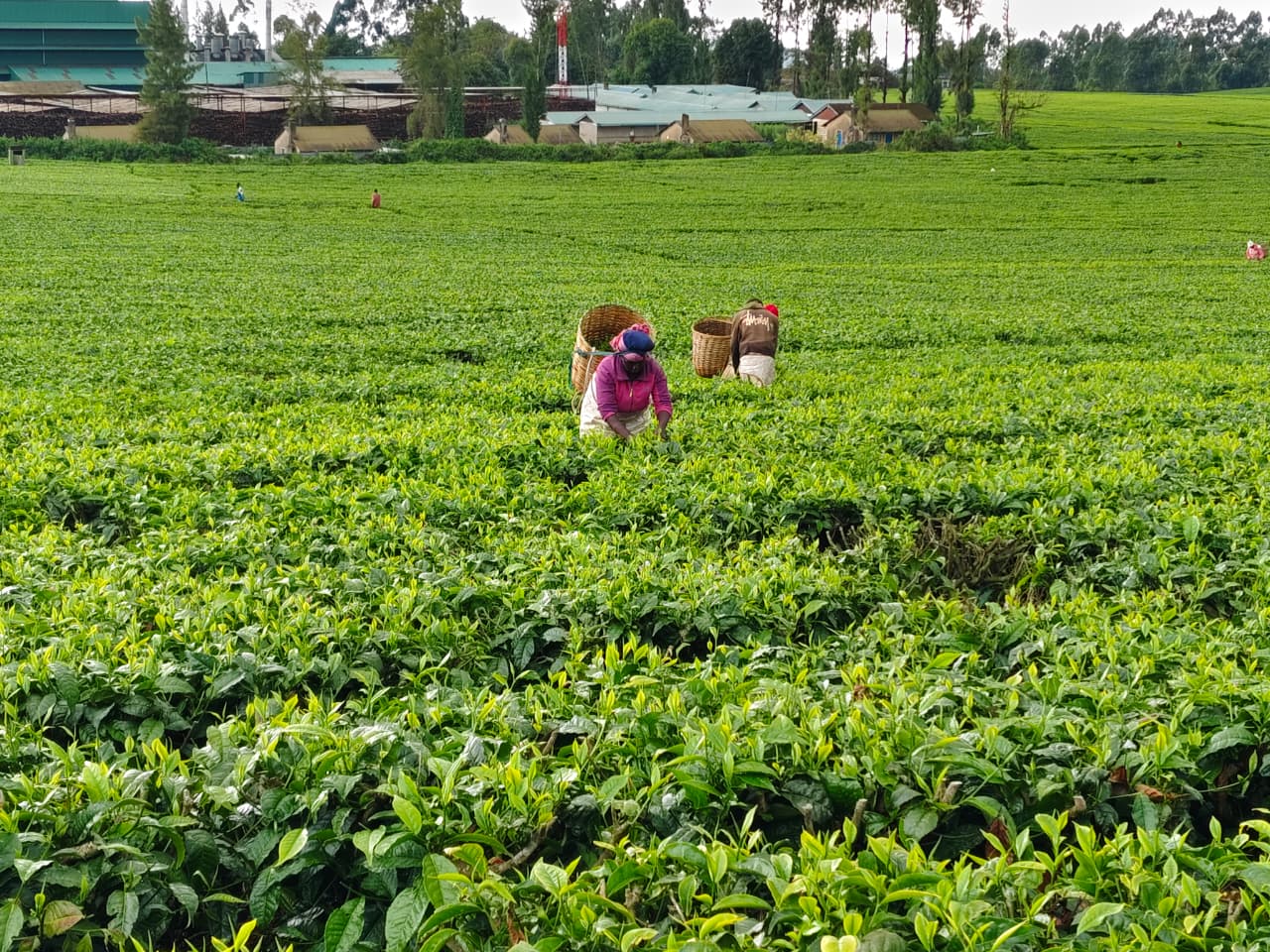
 Farmers picking tea in Kangaita area, Kirinyaga county/ FILE
The Tea Board of Kenya (TBK) has introduced the Tea
(Levy) Regulations, 2026, re-establishing a statutory levy on tea exports and
imports under Section 53 of the Tea Act, 2020.
The levy replaces an earlier system that was
scrapped in 2016 and is intended to provide sustainable funding for research,
regulation, market development, infrastructure, and farmer price stabilisation
in the tea sector.
The levy will apply only at the point of export and import; tea exporters will pay 0.8% of the
auction value or customs value for direct sales, while tea importers will pay
100% of the import value per consignment of made tea. TBK says farmers,
factories, domestic traders, aggregators, and value-added tea products will not
pay the levy.
Several categories are exempt under the
regulations, including value-added tea packaged in containers of 10 kg or less
such as retail packs, tea bags, instant tea, and ready-to-drink tea, as well as
tea extracts and tea aroma products.
Tea processed in Export Processing Zones (EPZs) and
Special Economic Zones (SEZs) for local consumption is also exempt. The
exemptions are intended to encourage value addition and protect downstream tea
industries.
TBK says the levy is meant to address funding gaps
created after its removal in 2016, which weakened key institutions such as the
Tea Board of Kenya and the Tea Research Institute (TRI).
The board argues that the absence of the levy
reduced investment in research, quality control, and marketing, affecting the
competitiveness of Kenyan tea. The new system is designed as a ring-fenced
funding mechanism to ensure all collections remain within the tea sector.
Revenue collected will be distributed as follows:
50 per cent will go
to farmer income support and price stabilisation, 20 per cent to research and development through the Tea
Research Institute (TRI), 15 per cent to
regulatory functions through the Tea Board of Kenya (TBK), and 15 per cent to county infrastructure development in
tea-growing regions.
TBK says the price stabilisation fund will cushion
farmers against global price fluctuations and support incomes during periods of
low returns.
The levy is projected to generate about Sh1.42 billion annually based on export and import
volumes, and all funds will be reinvested in the tea value chain.
Exporters and importers will be required to declare
consignments through TBK’s digital Management Information System (IMIS), upload
supporting documents, and obtain clearance before shipment. The system is fully
digitised, with the Kenya Revenue Authority (KRA) expected to support collection
in some cases.
“Exporters and importers declare consignments
electronically through the TBK Management Information System (IMIS) using Forms
TBK/TB/J2 (exports) or TBK/TB/L2 (imports). Supporting documentation (sale
contracts, commercial invoices, customs entry forms, etc.) is uploaded
digitally. Levy payment is confirmed before a permit (Form TBK/TB/M) is issued
– within three working days,” TBK said.
TBK says the levy will be managed under the Public
Finance Management Act, with quarterly and annual reporting requirements and
audit oversight. Counties will also be required to account for infrastructure
allocations.
The regulations were developed through a Regulatory
Impact Assessment, stakeholder consultations across 20 counties, and national
validation forums before being gazetted on April 1, 2026, and they came into effect on May 1, 2026.
TBK maintains that the levy is not a burden on
farmers but a reinvestment tool designed to stabilise prices, improve research,
strengthen regulation, and support infrastructure development across Kenya’s
tea-growing regions.
The Board has since launched a public awareness campaign to counter misconceptions surrounding the levy, particularly claims that it will reduce farmers’ earnings.
One concern raised by stakeholders is that exporters may pass the levy cost to farmers by lowering auction prices.
However, the board says enhanced regulatory oversight under the Tea Act, 2020, and the competitive auction system will help prevent exploitative practices.
Officials have also dismissed claims that the funds will be diverted to unrelated government activities.
They note that the Tea Fund established under Section 54 of the Tea Act, 2020, is a ring-fenced fund with legally prescribed allocations for farmer support, research, regulation and infrastructure development.
The board further defended the reintroduction of the levy, noting that while a 2016 task force recommended its removal, the concerns at the time related to governance and accountability rather than the levy concept itself.
Since then, the Tea Act, 2020, has introduced new safeguards, including digital monitoring systems and multi-stakeholder oversight mechanisms aimed at preventing misuse of funds.
The Board also rejected assertions that the tea industry is already overtaxed, arguing that, unlike other taxes remitted to the National Treasury, all proceeds from the tea levy will remain within the sector.
The board says impact assessments indicate that the expected benefits, including increased reinvestment, market expansion and improved farmer returns, outweigh the cost of the levy.
On concerns about tea imports, the board clarified that the proposed 100 per cent import levy targets bulk-made tea imports and is designed to protect local production. Retail-ready value-added teas packaged in units below 10 kilogrammes, tea extracts and tea aromas will remain exempt.
The board also defended the consultation process, saying 11 stakeholder forums were conducted across 20 counties with participation from tea farmers, tea factory representatives, the Kenya Tea Development Agency (KTDA), the Kenya Tea Growers Association (KTGA), the Independent Tea Producers Association of Kenya (ITPAK) and other industry players.
According to the board, views collected during the consultations were reviewed and incorporated into the final regulations.
