


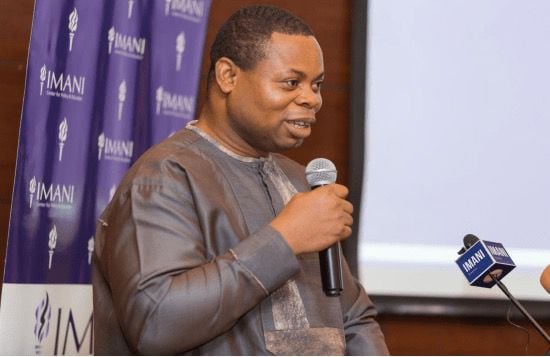

A new political sentiment analysis by IMANI Africa has found that Ghanaian online political discussions are becoming increasingly driven by governance issues rather than loyalty to political personalities.
The report, released on Monday, June 1, examined 10,000 mentions across Facebook, X, TikTok and major web-based news sources under IMANI’s Public Understanding and Literacy for Sentiment and Election (PULSE) framework.
It compared discussions surrounding President John Dramani Mahama and former Vice President Dr. Mahamudu Bawumia, who remain the most visible figures of Ghana’s two major political traditions.
According to the report, public discourse throughout May focused heavily on policy delivery, accountability, economic management, international engagement and political preparedness rather than partisan affiliations.
“The May 2026 IMANI PULSE analysis reveals a significant shift in the nature of political discourse in Ghana. Rather than centring conversations around political personalities, public discussions increasingly focused on governance outcomes, policy delivery, economic credibility, international engagement, and political preparedness,” the report stated in part.
IMANI said sentiment across the political divide remained largely neutral during the month, recording an average score of approximately -0.01.
The policy think tank noted that the finding suggests many citizens are evaluating political actors based on performance and credibility rather than emotional or partisan considerations.
The report found that policy-oriented discussions accounted for 78.2 per cent of all classified conversations.
For President Mahama, 87.5 per cent of discussions were policy-focused, while 66.9 per cent of conversations about Dr. Bawumia centred on policy issues.
According to the analysis, discussions about President Mahama evolved through three main phases during the month.
Early conversations focused on infrastructure delivery and accountability, particularly debates surrounding the Agenda 111 hospital programme and government commitments.
By mid-May, however, discussions shifted significantly towards foreign policy following the President’s participation in the World Health Assembly in Geneva.
Issues relating to global health governance, healthcare financing and diplomatic engagement dominated conversations.
The report said foreign policy eventually overtook infrastructure as the leading issue associated with the President, accounting for between 42 and 68 per cent of discussions by the end of the month.
For Dr. Bawumia, the analysis found that public conversations initially centred on assessments of the previous administration’s record, including debates over digitalisation, economic management and Ghana’s IMF-supported recovery programme.
However, discussions gradually shifted towards opposition rebuilding, organisational renewal and preparations for the 2028 general election.
The report noted that despite increasing attention to his future political prospects, many online discussions continued to assess Dr. Bawumia through the lens of the previous administration’s economic performance.
Among the dominant issues driving engagement were infrastructure delivery and accountability, foreign policy and international engagement, economic management, and opposition reorganisation.
IMANI also identified emerging discussions around democratic governance, civil liberties, internal party cohesion, constitutional reform and the anti-LGBTQ+ bill.
“The near-neutral sentiment score recorded throughout the month reflects a public increasingly focused on evaluation rather than emotional partisan reaction. Rather than asking who they support, citizens appeared to be asking whether leaders can deliver, whether promises have been fulfilled, and whether competing political actors possess the credibility required to address future challenges,” the report summarised.
