


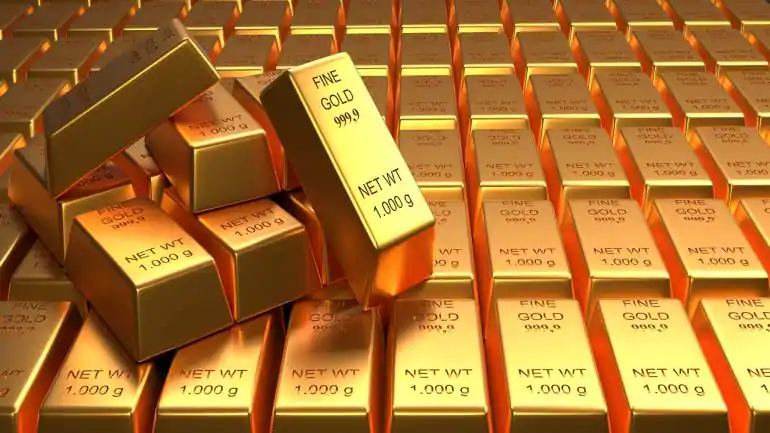
Ghana’s gold reserves recorded a month-on-month improvement in April 2026, offering some relief to earlier concerns over depletion pressures, even though the stock remains lower on a year-on-year basis.
According to the Bank of Ghana’s latest Summary of Macroeconomic and Financial Data, gold holdings stood at 22.3 tonnes in the first four months of 2026, down from 31.4 tonnes in the same period last year.
The drop had initially fueled concerns about potential depletion pressures on the country’s external buffers, particularly at a time of heightened focus on reserve adequacy and macroeconomic stability.
However, the 22.3 tonnes recorded in April 2026 is an improvement from the 20.8 tonnes recorded in March 2026.
Despite the annual decline in physical holdings, Ghana’s external sector remained broadly resilient, underpinned by strong commodity exports.
Gold exports alone generated about $6.86 billion over the review period, maintaining their dominance as the country’s single largest foreign exchange earner and reinforcing Ghana’s position among Africa’s leading bullion exporters.
Total exports stood at $11.15 billion, significantly outpacing imports of $5.87 billion, resulting in a trade surplus of $5.28 billion for the period. The surplus reflects sustained strength in Ghana’s commodity-driven export base, with gold, cocoa, and oil all contributing meaningfully.
Cocoa exports brought in $1.86 billion, while oil exports added $1.28 billion, helping to cushion the impact of rising import demand across both oil and non-oil categories.
Even so, gross international reserves eased marginally to $13.95 billion in April 2026 from $14.16 billion in March, while net international reserves also moderated to $10.99 billion over the same period.
Earlier communications from the Bank of Ghana have pointed to a deliberate strategy of reserve portfolio diversification, aimed at improving the quality and resilience of external buffers rather than relying solely on accumulation volumes.
The development also comes at a time of recent policy discussions with the IMF, where attention remains focused on strengthening external stability while balancing growth and fiscal adjustment as Ghana completers it ECF programme and transitions to Policy Coordination Instrument (PCI).
.
.
