


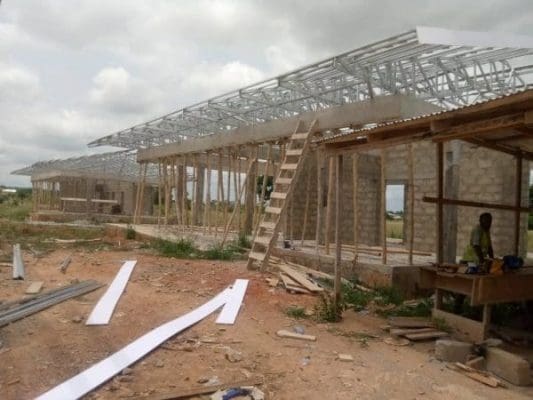
Former Director-General of the Ghana Health Service, Dr Anthony Nsiah-Asare, has defended the Akufo-Addo administration’s Agenda 111 hospital programme, arguing that the projects were strategically planned using oil revenue and should not be left incomplete by the current government now more than 17 months into office.
Speaking on the Joy Super Morning Show, Dr Nsiah-Asare said the initiative was never designed to be completed at once. He explained that the previous government adopted a phased approach because funding from oil proceeds would arrive incrementally, and that most of the 111 hospitals had reached between 80 and 90 percent completion before the New Patriotic Party (NPP) administration left office in January 2025. He added that three were commissioned before the handover.
He also disclosed that when the NPP government departed, there were outstanding contractor payment certificates worth approximately $100 million tied to an oil-backed funding arrangement still awaiting settlement.
“The health of the people is the responsibility of every serious government,” he said, pushing back firmly against suggestions that private entities or state-owned enterprises should take over hospital operations.
Dr Nsiah-Asare cited land acquisition difficulties as a major contributor to delays, noting that securing a site in Nima in Greater Accra alone took until the middle of 2024 to resolve. He questioned why the current administration had not used available resources to accelerate completions and challenged the government’s priorities, asking whether building 24-hour markets across the country was more urgent than finishing near-complete hospital projects.
His remarks come days after President John Dramani Mahama himself criticised the programme, describing it as poorly planned for starting construction on all 111 hospitals simultaneously rather than in phases, and disclosing that the government has decided to prioritise 35 hospitals close to completion while exploring partnerships with faith-based organisations to operate some facilities.
The Ministry of Health has also placed the cost of completing all remaining projects at $1.589 billion, and parliament has heard warnings that the GH¢100 million allocated for 10 hospitals in the 2026 budget could stretch the full programme’s completion to over 190 years at current funding levels. Community frustration is already visible on the ground, with residents in Ahanta West picketing the Bokoro hospital in April after the facility remained shut more than a year after its pre-election commissioning.
Both sides of the political divide agree the hospitals must be completed. The dispute is over who bears responsibility for the stall and how financing should be structured going forward.
