


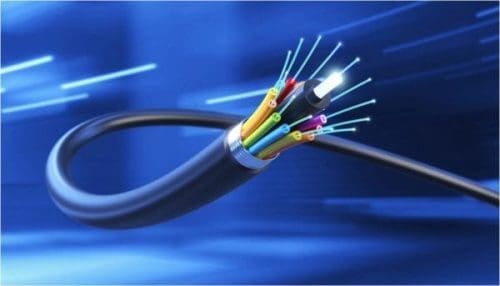
Ghana’s fibre cut incidents have surged from roughly 400 annually to more than 8,000 per year, the Chief Executive Officer of the Ghana Chamber of Telecommunications has warned, describing the scale as a mounting threat to network stability and long-term digital investment.
Sylvia Owusu-Ankomah made the disclosure while speaking on the evolution of Ghana’s telecommunications sector, noting that although the industry has achieved remarkable growth over the past 15 years, infrastructure damage has emerged as one of its most persistent and costly operational challenges.
She said the rising frequency of fibre cuts forces operators to redirect funds intended for network expansion and quality improvements into constant repairs, effectively slowing Ghana’s connectivity progress.
“In mature markets, roads are built with fibre ducts underneath them,” she said, highlighting the gap between Ghana’s current infrastructure approach and international best practice.
To address the problem, Owusu-Ankomah called for swift implementation of the industry-backed “Big One” policy, which proposes that all new road construction projects include the installation of underground fibre ducts along road reserves. She stressed that policy approval alone would not be sufficient and that on-the-ground enforcement would determine whether the initiative achieves meaningful results.
Despite the fibre cut crisis, the sector’s broader performance tells a story of significant progress. Internet penetration has climbed from just four percent to over 70 percent, network coverage now reaches approximately 98 percent of the country, and every district capital in Ghana has access to minimum network service. Operators have also shifted from building isolated systems to collocating on towers and sharing fibre infrastructure, improving efficiency across the industry.
Ghana’s telecom sector has earned recognition from the GSMA, the global mobile industry body, as one of the most progressive on the continent. However, Owusu-Ankomah cautioned that sustaining this standing depends on resolving infrastructure vulnerabilities, particularly fibre instability, which she identified as a leading driver of network outages.
She also acknowledged that Ghana remains several years behind more advanced markets in its rollout of fifth-generation (5G) mobile technology, though she said ongoing regulatory reforms and planned spectrum auctions would support faster deployment in the years ahead.
The National Communications Authority (NCA) has been credited with strengthening regulatory oversight and compliance with quality-of-service standards, contributing to the sector’s coverage gains.
