
Limited career development opportunities over the years continue to prevent newly trained doctors from accepting postings to practise their profession in the Upper East Region.
The Upper East Region continues to grapple with a declining number of doctors, as many newly posted medical officers fail to report for duty despite voluntarily selecting the region during the placement process.
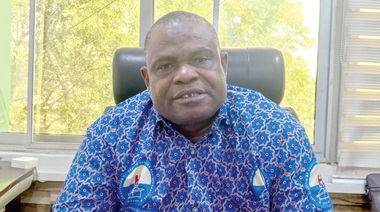
The Regional Director of Health Services, Dr Braimah Baba Abubakari, explained that many doctors prefer postings where they can receive mentorship, work alongside specialists, and build their skills in their chosen fields.
“Sadly, that is mostly not the case in some regions, including Upper East, and there are limited opportunities for them to develop their skills and knowledge while in practice. This situation compels them to refuse posting to areas where they cannot develop their career to become better doctors,” he stressed.
Interview
Dr Abubakari made the remarks in an exclusive interview with the Daily Graphic in Bolgatanga last Thursday, February 5, 2026.
The encounter was to enquire into the factors preventing doctors from accepting postings to work in health facilities across the region.
This refusal is not peculiar to this year. In 2021, none of the 10 doctors posted to the region reported for duty. In 2022, only five of the doctors posted reported, while in 2025, only five out of the 26 doctors posted to the region have so far reported for duty.
Although the doctor-to-patient ratio has improved slightly from one doctor attending to 17,173 people (1:17,173) to one doctor attending to 14,072 people (1:14,072), it still falls short of the national target of 1:7,500.
To address this challenge, the Ghana Health Service (GHS) has experimented with various posting models, including allowing doctors to voluntarily choose their preferred regions through an online portal. However, this approach has also failed to yield the desired results.
“This explains why there are about 100 doctors in the region, and more than half of them prefer to work at the regional hospital.
The next facility with the highest number of doctors is the War Memorial Hospital in Navrongo, which has five doctors, including specialists,” he added.
Reasons
The regional director further indicated that poorly equipped health facilities limited doctors’ ability to practise effectively, leading to frustration and demotivation, particularly in deprived areas like the region.
“You know what to do, but you don’t have the equipment. That cannot make any doctor happy to accept posting to a region where he will not be comfortable.
Lack of quality schools, decent accommodation and social amenities in many districts, also discourages doctors with families from accepting postings,” he stated.
He said a doctor’s salary in Ghana could not meet even half of the expectations placed on them, “so if he is posted to a place where he cannot do part-time work and has to rely solely on his salary, that doctor will definitely seek an alternative elsewhere”.
Beyond internal challenges, Dr Abubakari mentioned the prolonged delay between the completion of housemanship and the issuance of formal clearance for posting of doctors, emphasising that the delay left newly qualified doctors idle for months and often pushed them to seek alternative employment elsewhere, indicating that countries such as United Kingdom, the United States of America, Saudi Arabia and Dubai recruit doctors from Ghana, offering them better working conditions and remuneration.
Way forward
On the way forward, Dr Abubakari said the most effective solution is to end the long break after housemanship, saying “fundamentally, if the government wants to change the narrative, doctors should not be sent home after housemanship.
Where they are going next should be clear before they finish”.
He explained that immediate posting of doctors would prevent them from settling elsewhere and making it very difficult to redeploy them, noting, “Once you allow them to taste different working conditions, there is no way they will come back”.
“Other long-term measures, including improving infrastructure and equipment in district health facilities, expanding specialist and training opportunities in deprived regions, enhancing accommodation, social amenities and providing targeted incentives for doctors in hard-to-reach areas, will help retain doctors,” he stated.

