
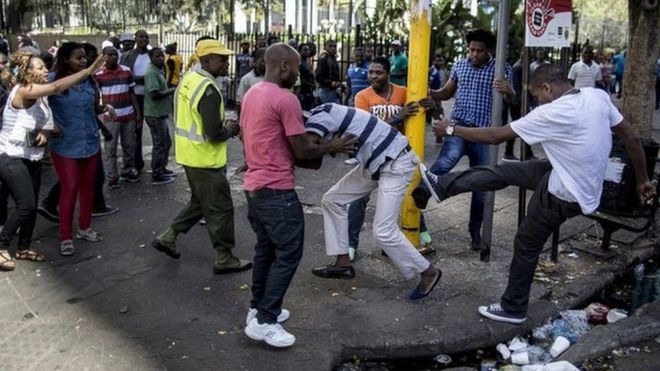
The Ministry of Foreign Affairs has issued a travel advisory urging Ghanaians to avoid non-essential travel to South Africa following recent xenophobic attacks targeting African nationals in that country.
A statement issued by the ministry on Monday, June 1, 2026, said groups presenting themselves as anti-immigrant vigilantes had carried out attacks that resulted in injuries, looting, business closures and the destruction of property.
“The Government of the Republic of Ghana hereby advises Ghanaian nationals to exercise extreme caution in their travel plans and avoid non-essential travel to South Africa until further notice,” the statement said.
It urged Ghanaians already living in South Africa to maintain regular contact with the Ghana High Commission in Pretoria for consular assistance and updates.
The travel advisory follows a series of diplomatic measures taken by the government in response to the attacks.
The Minister of Foreign Affairs, Mr Samuel Okudzeto Ablakwa, earlier summoned South Africa’s Acting High Commissioner to Ghana to formally convey Ghana’s concerns over xenophobic incidents involving Ghanaians.
The ministry cited a verified case involving a Ghanaian resident in KwaZulu-Natal who was confronted and ordered to leave the country despite residing there legally.
Ghana has also petitioned the African Union Commission to place the matter on the agenda of the Eighth AU Mid-Year Coordination Meeting scheduled for June 24 to 27, 2026, in Cairo, Egypt.
In the petition, Ghana described the attacks as an urgent continental concern, citing loss of lives, destruction of businesses and growing insecurity among African nationals in South Africa.
South Africa’s Ministry of International Relations and Cooperation described Ghana’s decision to refer the matter to the African Union as regrettable. It nonetheless stated that President Cyril Ramaphosa had condemned xenophobia and directed law enforcement agencies to protect all residents.
On May 12, 2026, President John Dramani Mahama approved the immediate evacuation of Ghanaians who had registered with the Ghana High Commission in Pretoria.
The first batch of 300 evacuees arrived at the Kotoka International Airport on May 27 aboard a government-chartered Ethiopian Airlines flight.
Receiving the returnees, Mr Ablakwa announced a support package covering transportation assistance, temporary accommodation, counselling, financial support and access to employment and business opportunities.
He also disclosed that 26 Ghanaians who had been detained in South African prisons for visa-related offences were released following discussions between the two governments.
“We negotiated with the South African government that since we have evacuated our nationals, we do not want to leave anybody behind in prison, and the South African government agreed with us,” Mr Ablakwa said.
Ghana’s High Commissioner to South Africa, Mr Benjamin Quashie, said 826 Ghanaians had registered for evacuation, while additional flights are expected to bring back more citizens.
The Ministry of Foreign Affairs has called on the South African government to provide protection for African nationals living in the country and enforce law and order.
The ministry said Ghana would continue to engage South African authorities to facilitate the evacuation of citizens who wish to return home.

