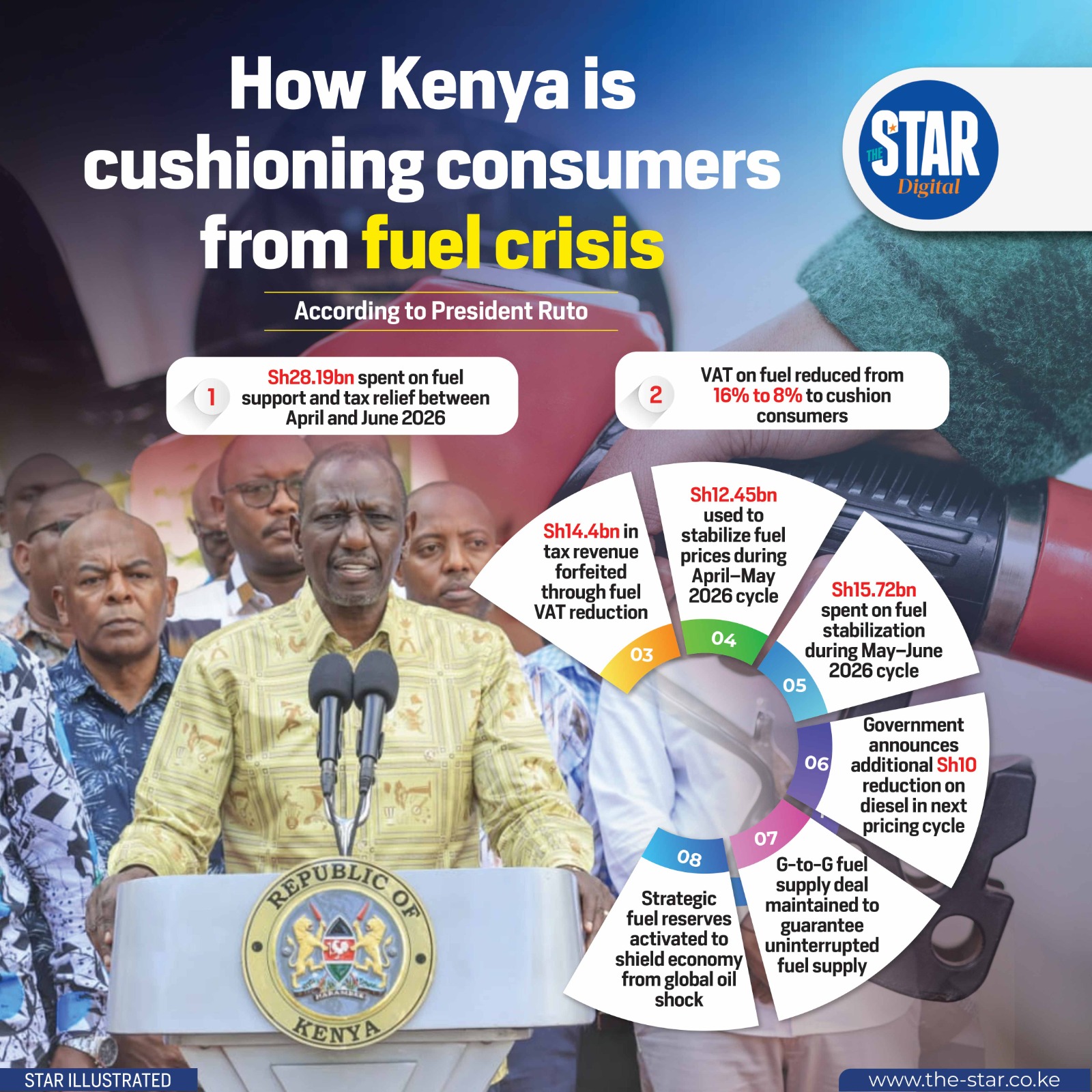
The government has rolled out a multi-billion-shilling intervention package to cushion consumers from an escalating global fuel crisis.
According to President Ruto, the state committed Sh28.19 billion toward fuel support and tax relief between April and June 2026.
A significant portion of this relief stems from a major tax policy shift, where Value Added Tax (VAT) on fuel was slashed from 16% to 8%. This tax reduction saw the government forfeit Sh14.4 billion in potential tax revenue to keep pump prices manageable.
Direct market stabilisation interventions further heavy-lifted the strategy. The state utilised Sh12.45 billion to stabilise fuel prices during the April–May 2026 pricing cycle, followed by an additional Sh15.72 billion expenditure during the May–June 2026 cycle.
Relief for motorists is set to continue into the next pricing cycle, with the government announcing an additional Sh10 reduction on diesel prices.
Beyond direct financial subsidies and tax cuts, strategic structural mechanisms have been deployed to secure long-term supply stability. Kenya has maintained its Government-to-Government (G-to-G) fuel supply deal, an arrangement designed to guarantee an uninterrupted fuel supply across the country.
Additionally, strategic fuel reserves have been officially activated to shield the domestic economy from volatile global oil shocks.