Accra, June 19 — In a landmark milestone for digital education in Ghana, 100 women educators have successfully graduated from the Women Educators in Internet and Technology (WEITech) initiative, a pioneering two-year training programme designed to bridge critical gaps in digital literacy, entrepreneurship, and educational technology. The programme, spearheaded by the DreamOval Foundation in collaboration with the Internet Society Foundation, marks a significant step toward empowering female educators to harness technology for modern teaching methodologies.
A Vision for Digital-Integrated Education
The WEITech initiative was conceived to address underemployment and digital skills deficiencies among female teachers while fostering innovation in Ghana’s education sector. By equipping educators with cutting-edge digital tools and entrepreneurial skills, the programme aims to revolutionize classroom dynamics and prepare students for a tech-driven future.
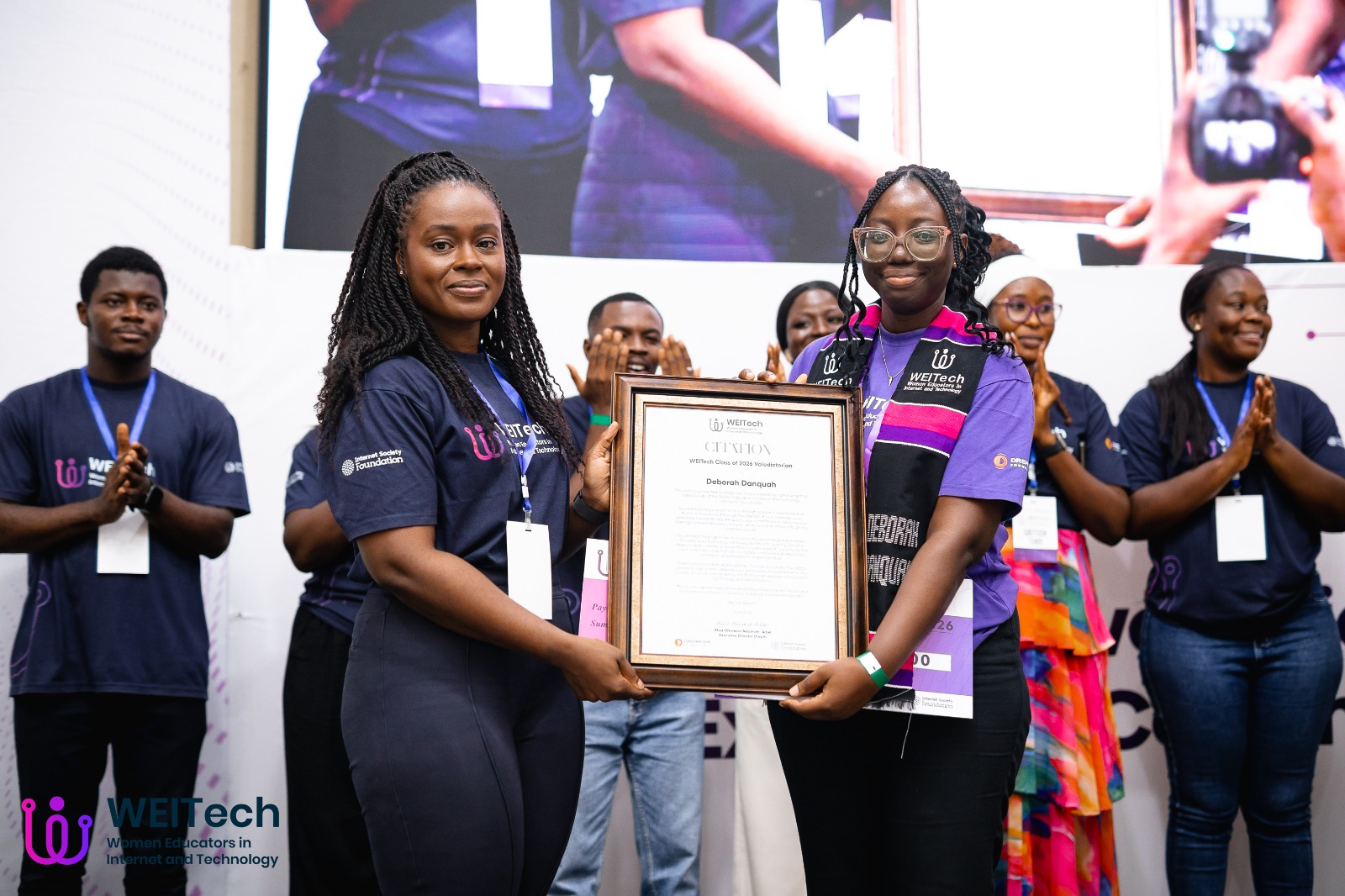
At the graduation ceremony held at the University of Ghana, participants received certificates of completion, while standout innovators—those who developed scalable digital solutions to education challenges—were awarded seed capital to further refine and deploy their projects. This dual recognition underscores the programme’s commitment to both skill development and real-world impact.
Empowering Educators, Transforming Classrooms
Ms. Afua Oforiwaa Asiamah-Adjei, Executive Director of the DreamOval Foundation, emphasized the programme’s core mission during her address:
“WEITech was designed to bridge the digital divide by ensuring women educators are not just consumers of technology but active creators and integrators of digital tools in their teaching. The modern classroom is evolving, and Ghana is at the forefront of this transformation—thanks to these dedicated women.”
Funded through the Internet Society Foundation’s Skills Grant Programme, the initiative has provided 100 women educators with practical training in internet technologies, digital pedagogy, and entrepreneurial frameworks. Ms. Asiamah-Adjei highlighted that the programme not only addresses gender disparities in technology adoption but also aligns with Ghana’s broader digital skills development agenda.
One of the most compelling outcomes of WEITech has been the unprecedented enthusiasm among participants to adopt technology in their teaching practices. The foundation has already begun exploring expansion plans to reach more educators nationwide, ensuring that the benefits of digital integration extend beyond the initial cohort.
Innovation in Action: Deborah Danquah’s Capstone Project
Among the graduates, Ms. Deborah Danquah, an English teacher and the overall valedictorian, stood out for her groundbreaking capstone project—an educational technology application designed to provide instant feedback on essay writing. Her innovation directly addresses a longstanding challenge in Ghanaian education: the lack of timely feedback for subjective assessments, particularly in exam preparation.
“Students often have access to answers for multiple-choice questions, but essay responses rarely receive the immediate guidance they need. My application fills this gap by offering real-time feedback, helping students refine their writing skills before exams,” Ms. Danquah explained.
Her project is not just limited to feedback mechanisms; it also includes features for virtual classroom management, student progress tracking, and interactive learning activities. With the seed funding received as part of the programme, Ms. Danquah plans to upgrade her digital infrastructure, ensuring smoother performance and broader accessibility for users.
A Call for Greater STEM Participation
Ms. Danquah’s success story reflects the broader vision of WEITech—to inspire more women to pursue careers in Science, Technology, Engineering, and Mathematics (STEM). She urged government stakeholders and private sector partners to invest in initiatives that encourage female participation in STEM, arguing that diverse innovation drives progress.
“When women are at the table of technological development, the solutions we create are more inclusive and impactful. I hope this programme is just the beginning of a movement that empowers more women to lead in STEM and shape Ghana’s digital future,” she stated.
Looking Ahead: Scaling Impact
The WEITech initiative represents more than just a graduation ceremony—it symbolizes a shift in Ghana’s educational landscape, where technology is no longer an option but a necessity. As the programme’s founders and participants look to the future, the focus remains on scaling these innovations, ensuring that digital literacy becomes a cornerstone of education across the country.
With 100 newly skilled educators poised to integrate technology into their teaching, Ghana is taking a bold step toward a smarter, more equitable education system. The success of WEITech proves that when women are empowered with the right tools and opportunities, they not only transform their own careers but also redefine the future of learning for generations to come.