


In a significant move to accelerate industrialization and technological advancement, Nigeria and Ghana are collaborating on joint digital innovation and technology initiatives aimed at fostering economic growth, job creation, and self-reliance. The partnership aligns with both nations’ broader agendas to reduce dependence on imports, enhance local manufacturing, and position their economies as hubs of innovation and productivity.
Nigeria’s Renewed Hope Agenda: Driving Industrialization Through Science and Technology
Nigeria’s Minister of Information and National Orientation, Mohammed Idris, recently highlighted the government’s commitment to translating policy frameworks into actionable projects under President Bola Ahmed Tinubu’s Renewed Hope Agenda. The agenda prioritizes industrialization, digital transformation, and youth empowerment as cornerstones of economic recovery.
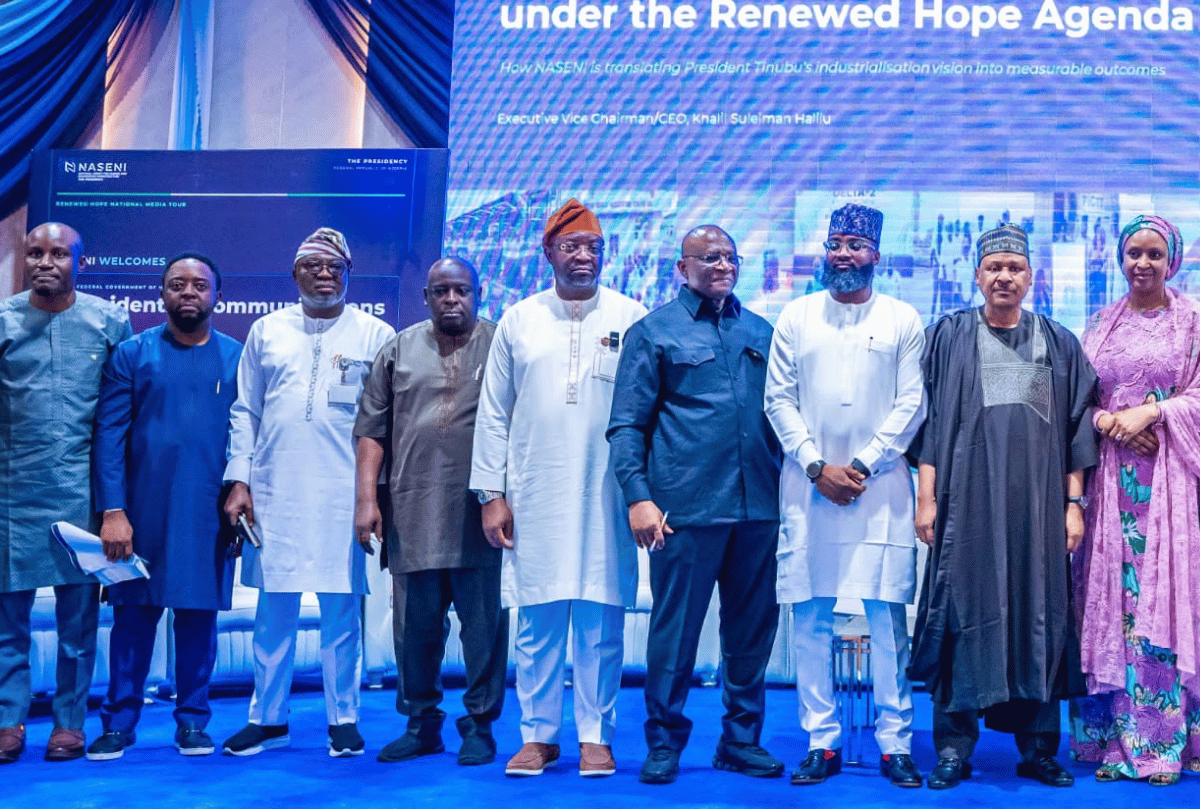
During a Presidential Media Team Tour of the National Agency for Science and Engineering Infrastructure (NASENI) headquarters in Abuja, Idris emphasized that the initiative is designed to demystify government interventions and provide Nigerians with direct insights into ongoing projects. By fostering transparency and accountability, the administration aims to ensure citizens can independently verify progress and hold institutions responsible for delivering results.
NASENI, a strategic institution in Nigeria’s industrial transformation, plays a pivotal role in local manufacturing, renewable energy, agricultural mechanization, digital technology, and skills development. The agency’s interventions are aligned with the government’s vision of building a self-sufficient, innovation-driven economy that emphasizes local value addition and industrial competitiveness.
“We want Nigerians to see how government policies are being turned into real projects, jobs, and opportunities. Transparency is strengthened when institutions engage the public, and accountability improves when citizens can assess progress firsthand. Our goal is clear: to shift Nigeria from being a consumer nation to becoming a nation of producers, innovators, and exporters.”
— Mohammed Idris, Honourable Minister of Information and National Orientation, Federal Ministry of Information and National Orientation, Nigeria
The Renewed Hope Agenda places industrialization, technology adoption, and youth empowerment at its core, creating an enabling environment for investment, enterprise development, and sustainable employment. Idris commended NASENI for promoting indigenous technological solutions, which are boosting Nigeria’s productive capacity and reducing reliance on foreign imports.
NASENI’s Industrialization Strategy: From Local Manufacturing to Global Competitiveness
Khalil Suleiman Halilu, Executive Vice Chairman and CEO of NASENI, outlined the agency’s practical industrialization strategy, which focuses on:
– Local manufacturing and technology transfer
– Healthcare innovation and research commercialization
– Expansion across eight key industrial sectors in Nigeria’s six geopolitical zones and the Federal Capital Territory (FCT)
NASENI’s approach emphasizes designing products for the Nigerian market, assembling them domestically, and gradually increasing local content to ensure global competitiveness. This strategy has already yielded tangible results, with the agency establishing over 20 factories in a short period, reinforcing Nigeria’s position as a manufacturing and innovation powerhouse.
“Our mission is to build sustainable industries by creating factories that can compete on the global stage. By producing for the Nigerian market and gradually scaling up, we are reducing import dependency while generating jobs and economic value.”
— Khalil Suleiman Halilu, Executive Vice Chairman and CEO, NASENI
Collaboration with Ghana: A Blueprint for Regional Digital Transformation
While Nigeria’s industrialization efforts are well-documented, Ghana is also making strategic advancements in digital innovation and technology. Both nations recognize that shared expertise, resource pooling, and collaborative research can accelerate progress in critical sectors such as:
– Artificial Intelligence (AI) and Machine Learning (ML) applications
– Renewable energy and smart infrastructure
– Agri-tech and precision agriculture
– Digital financial inclusion and fintech solutions
– Healthcare technology and telemedicine
The potential for Nigeria-Ghana collaboration extends beyond bilateral agreements, offering opportunities for:
– Joint research and development (R&D) centers
– Cross-border digital infrastructure projects
– Skill-sharing programs for tech workforce development
– Standardization of digital policies and cybersecurity frameworks
By leveraging each other’s strengths—Nigeria’s manufacturing prowess and Ghana’s digital governance and fintech leadership—both countries can create a regional tech ecosystem that drives economic diversification, innovation, and sustainable growth.
Key Sectors for Joint Digital Innovation Initiatives
- Renewable Energy and Smart Grids
-
Nigeria’s NASENI and Ghana’s Energy Commission could collaborate on off-grid solar solutions, battery storage technologies, and smart grid integration to enhance energy access and reduce fossil fuel dependence.
-
Agri-Tech and Agricultural Mechanization
-
Both nations could develop AI-driven crop monitoring systems, precision farming tools, and automated irrigation solutions to improve agricultural productivity and food security.
-
Fintech and Digital Financial Inclusion
-
Ghana’s success with mobile money (e.g., MTN Mobile Money, Vodafone Cash) and Nigeria’s growing fintech ecosystem (e.g., Flutterwave, Paystack) could be combined to expand digital banking, cross-border payments, and blockchain-based financial services.
-
Healthcare Technology and Telemedicine
-
A joint digital health platform could integrate Nigeria’s NASENI’s healthcare innovation projects with Ghana’s telemedicine initiatives, improving remote diagnostics, electronic health records (EHR), and medical supply chain management.
-
Education and Digital Skills Development
- Collaborative coding bootcamps, AI training programs, and vocational tech schools could bridge the digital skills gap in both countries, ensuring a future-ready workforce.
Government and Stakeholder Engagement in Nigeria’s Tech Drive
The Presidential Media Tour of NASENI was attended by senior government officials, including:
– Bayo Onanuga, Special Adviser to the President on Information and Strategy
– Sunday Dare, Special Adviser on Media and Public Communications
– Hadiza Bala Usman, Special Adviser on Policy Coordination
– Temitope Ajayi, Senior Special Assistant to the President on Media and Publicity
The event underscored the high-level commitment to industrialization, transparency, and public engagement in Nigeria’s tech-driven economic transformation. By demonstrating real-world projects—such as local manufacturing plants, renewable energy pilot programs, and digital skills training centers—the government aims to build public trust and accelerate private sector investment.
The Path Forward: A Tech-Centric Economic Future
The Nigeria-Ghana digital innovation partnership represents a model for African nations seeking to leverage technology for sustainable development. By combining Nigeria’s industrial infrastructure with Ghana’s digital governance expertise, both countries can:
✔ Reduce import dependency through localized manufacturing
✔ Boost job creation in high-tech and innovation-driven sectors
✔ Enhance regional economic integration through shared digital platforms
✔ Position Africa as a global leader in 4IR (Fourth Industrial Revolution) technologies
As both nations continue to invest in R&D, digital infrastructure, and skills development, the collaborative approach will be crucial in overcoming challenges such as funding constraints, regulatory hurdles, and talent shortages. With strong political will, private sector engagement, and international partnerships, Nigeria and Ghana can set a precedent for Africa’s tech-driven economic transformation.
The journey toward a self-reliant, innovation-powered economy has just begun, and the synergy between Nigeria and Ghana could be the catalyst for a new era of African technological excellence.
