


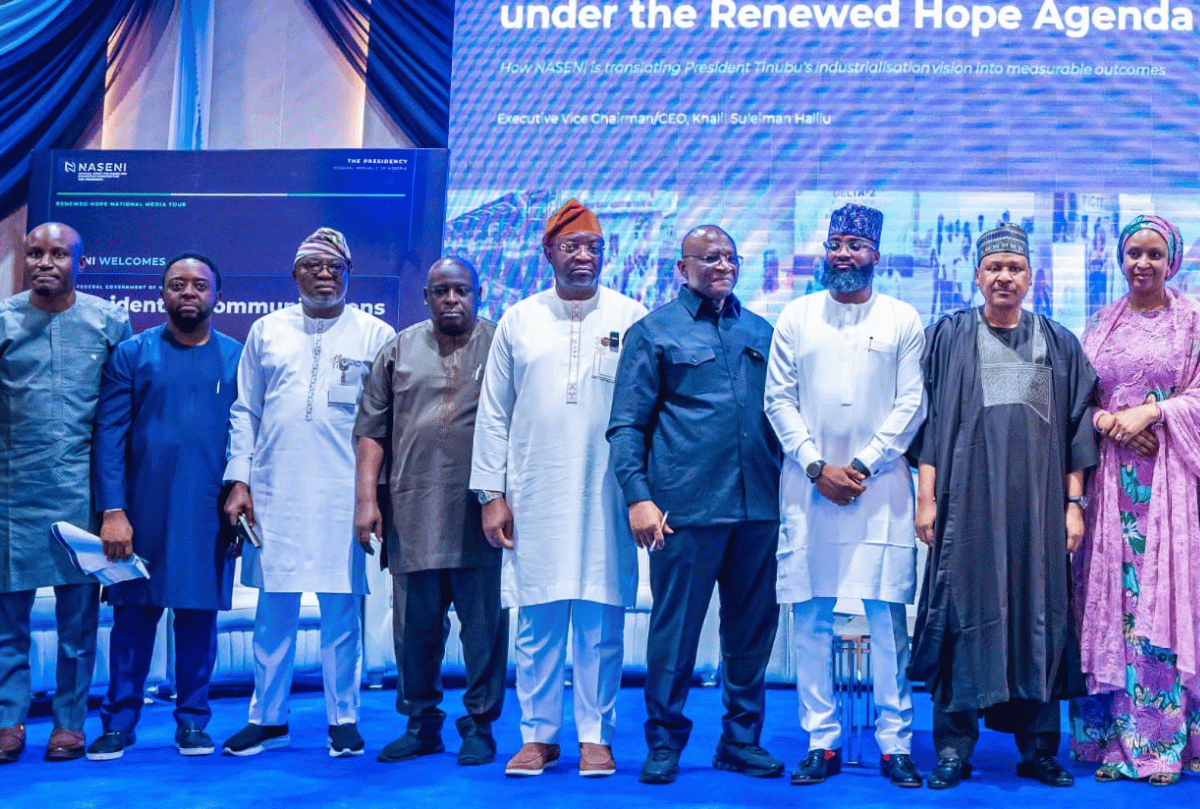
In a landmark move to accelerate industrialization and technological advancement across West Africa, Nigeria and Ghana are collaborating on groundbreaking digital innovation and technology initiatives. These efforts are part of broader national agendas aimed at fostering self-reliance, economic diversification, and sustainable growth through science, engineering, and digital transformation.
Nigeria’s Renewed Hope Agenda: Driving Industrialization Through Science and Technology
Nigeria’s Renewed Hope Agenda, spearheaded by President Bola Ahmed Tinubu, is systematically translating policy frameworks into actionable projects that drive industrialization, employment, and innovation. At the forefront of this transformation is the National Agency for Science and Engineering Infrastructure (NASENI), a strategic institution designed to catalyze Nigeria’s economic shift from a resource-dependent consumer nation to a dynamic hub of innovation and production.
During a Presidential Media Team Tour of NASENI’s headquarters in Abuja, Mohammed Idris, Nigeria’s Minister of Information and National Orientation, emphasized the agency’s pivotal role in Nigeria’s industrial transformation. NASENI’s interventions span local manufacturing, renewable energy, agricultural mechanization, digital technology, and skills development, aligning with the administration’s vision of a productive, self-sufficient economy driven by innovation and local value addition.
Idris underscored the importance of transparency and accountability in government initiatives, stating that engaging the public in project implementation fosters trust and verifiable progress. He highlighted NASENI’s contributions to reducing Nigeria’s dependence on imports by promoting indigenous technological solutions and enhancing industrial competitiveness.
“We want Nigerians to witness firsthand how government policies are being converted into real projects, jobs, and opportunities. Transparency thrives when institutions engage citizens, and accountability improves when progress is independently verifiable. Our goal is clear: to transform Nigeria from a consumer nation into a nation of producers, innovators, and exporters.”
— Mohammed Idris, Honourable Minister of Information and National Orientation, Federal Ministry of Information and National Orientation, Nigeria
The Renewed Hope Agenda prioritizes industrialization, technology adoption, and youth empowerment as cornerstones of Nigeria’s economic revival. By creating an enabling environment for investment, enterprise development, and sustainable job creation, the government aims to position Nigeria as a regional leader in technological innovation.
NASENI’s Industrialization Blueprint: Factories, Research, and Global Competitiveness
NASENI’s strategy is practical and results-driven, focusing on local manufacturing, technology transfer, healthcare innovation, and research commercialization. The agency has expanded its operations across eight key industrial sectors, covering all six geopolitical zones of Nigeria and the Federal Capital Territory (FCT).
Khalil Suleiman Halilu, Executive Vice Chairman and CEO of NASENI, revealed that the agency has successfully established over 20 factories in a short period, demonstrating its commitment to sustainable industrial growth. The approach involves:
– Designing products tailored to the Nigerian market
– Local assembly and gradual increase in local content
– Building globally competitive factories
Halilu emphasized that NASENI’s model ensures self-sufficiency in critical sectors, reducing reliance on foreign imports while fostering export-oriented industries.
“Our mission is to build industries that are not only sustainable but also capable of competing on the global stage. By manufacturing products locally and increasing our industrial capacity, we are laying the foundation for Nigeria’s economic independence.”
— Khalil Suleiman Halilu, Executive Vice Chairman and CEO, National Agency for Science and Engineering Infrastructure (NASENI)
Ghana’s Digital Transformation: A Parallel Approach
While Nigeria’s NASENI drives industrialization through engineering and manufacturing, Ghana is pursuing a complementary digital transformation strategy to enhance its economic resilience. The Ghanaian government, under President Nana Akufo-Addo, has prioritized digital innovation, fintech, and tech-driven agriculture to boost productivity and reduce poverty.
Key initiatives include:
– Digital Government Program (DGP): Streamlining public service delivery through digital platforms.
– Fintech and Mobile Money Expansion: Facilitating financial inclusion and economic participation.
– AgriTech Solutions: Leveraging technology to improve agricultural efficiency and food security.
– Skills Development in STEM: Investing in education to cultivate a tech-savvy workforce.
Ghana’s National Digital Innovation and Entrepreneurship Policy (NDIEP) aligns with Nigeria’s industrialization efforts by promoting collaborative innovation hubs and cross-border technological partnerships.
A Shared Vision: West Africa’s Tech-Driven Future
The collaborative efforts between Nigeria and Ghana represent a regional shift toward technological sovereignty and economic integration. By combining Nigeria’s manufacturing prowess with Ghana’s digital innovation leadership, both nations can:
– Reduce trade imbalances through localized production and digital trade.
– Enhance regional competitiveness by fostering a unified tech ecosystem.
– Attract foreign and regional investment in high-growth sectors like renewable energy, fintech, and smart agriculture.
Conclusion: Building a Tech-Powered West Africa
The joint digital innovation and technology initiatives between Nigeria and Ghana are not merely policy statements—they are actionable strategies to redefine West Africa’s economic trajectory. As both nations advance their industrial and digital agendas, the region stands poised to emerge as a leader in African technological innovation, ensuring sustainable growth, job creation, and self-reliance for future generations.
This strategic alignment between Nigeria’s engineering-driven industrialization and Ghana’s digital transformation sets a precedent for pan-African collaboration, proving that united technological efforts can unlock unprecedented economic potential.
