



Kenya’s economic landscape in mid-2026 is marked by a supply chain crisis that is testing the resilience of businesses across sectors. While recent data from the Stanbic Bank Kenya Purchasing Managers’ Index (PMI) reveals a silver lining—such as the fastest employment growth in nearly three-and-a-half years—it also exposes persistent vulnerabilities that are hindering sustained economic recovery. Here’s a detailed breakdown of the challenges, their implications, and potential solutions.
1. A Mixed Economic Picture: Growth vs. Operational Constraints
The July 2026 PMI report paints a complex picture of Kenya’s economy. On one hand, business confidence has surged to its highest level in years, driven by:
– Rising customer demand, particularly in sectors like manufacturing, retail, and services.
– Strategic diversification as firms expand into new markets or product lines.
– Digital transformation investments, with companies leveraging technology to improve efficiency.
– Supply chain optimizations, though these remain incomplete for many businesses.
Yet, despite these positive signals, output has declined for the fifth consecutive month. This divergence between increased demand and stagnant production highlights three critical bottlenecks:
A. Inflationary Pressures Eroding Profit Margins
Rising input costs—fueled by global commodity price fluctuations, currency volatility, and domestic price controls—have compressed margins. Businesses report that while sales are up, operational costs have outpaced revenue growth, making it difficult to scale production.
B. Tight Liquidity and Access to Finance
Kenya’s banking sector, though recovering, remains risk-averse in lending. Many SMEs—critical drivers of employment—struggle to secure working capital due to:
– Stringent collateral requirements.
– High interest rates (currently at 8.75%, as discussed below), which deter long-term investments.
– Delayed payments from government and large corporations, exacerbating cash flow crunches.
C. Operational Inefficiencies and Workforce Shortages
Companies are overwhelmed by uncompleted work, with backlogs accumulating for the second consecutive month. This is partly due to:
– Lack of skilled labor, forcing firms to rely on short-term hires (as seen in the PMI report) rather than permanent staff.
– Logistical delays, including port congestion (Mombasa Port remains a major choke point) and supply chain disruptions linked to geopolitical tensions.
– Regulatory hurdles, such as customs delays and bureaucratic inefficiencies, which slow down production cycles.
2. The Central Bank’s Dilemma: Striking a Balance Between Inflation and Growth
The Central Bank of Kenya (CBK) faces a delicate balancing act as it prepares to announce its monetary policy decision on August 11, 2026. Analysts expect the Central Bank Rate (CBR) to remain unchanged at 8.75%, citing several key factors:
A. Inflation Within Target (But Not Out of the Woods)
While Kenya’s inflation rate has stabilized around the CBK’s 5% target, underlying pressures persist:
– Food inflation remains elevated due to drought conditions in key agricultural regions (e.g., Rift Valley, Eastern Kenya).
– Fuel prices are volatile, tied to global oil markets, with Kenya’s subsidized kerosene and diesel prices creating fiscal strain.
– Imported goods inflation (e.g., electronics, machinery) remains a concern due to the weak shilling (KES/USD exchange rate).
B. Credit Growth Improving, But Not Enough
Bank lending has inched upward, with corporate and SME loans expanding by ~12% YoY. However, this growth is uneven:
– Large corporations dominate credit access, leaving smallholder farmers and micro-enterprises underserved.
– Non-performing loans (NPLs) remain high at ~12%, signaling credit risk concerns among lenders.
C. Oil Price Risks Loom Large
Kenya imports ~80% of its oil, making it highly sensitive to global crude fluctuations. A sharp rise in Brent prices (currently hovering around $85/barrel) could:
– Increase transport costs, raising inflation further.
– Squeeze government revenues, given Kenya’s heavy reliance on fuel taxes for fiscal balance.
3. The Corruption Enforcement Stalemate: A Case of Institutional Gridlock
Beyond economic challenges, Kenya’s anti-corruption efforts remain mired in bureaucratic infighting, undermining investor confidence. The Ethics and Anti-Corruption Commission (EACC) and the Office of the Director of Public Prosecutions (ODPP) are locked in a power struggle that is choking prosecutions:
A. The Numbers Tell a Troubling Story
Between May and June 2026, the EACC submitted 43 cases to the ODPP, covering:
– Embezzlement (e.g., misappropriation of public funds).
– Procurement fraud (e.g., inflated contracts, kickbacks).
– Money laundering (linked to high-profile cases in real estate and telecoms).
– Conflict of interest (e.g., officials benefiting from state tenders).
– Bribery (including cases involving government agencies and private sector collusion).
Yet, only 4 cases (9%) have progressed to prosecution, while:
– 21 cases remain pending at the ODPP, suggesting deliberate delays.
– 10 cases were returned to EACC investigators for further evidence, raising questions about case strength or political interference.
B. Who Decides What’s a “Strong Case”?
The core issue is jurisdictional ambiguity:
– The EACC’s mandate is to investigate and recommend prosecutions, but it lacks final authority over case filing.
– The ODPP’s role is to assess legal viability, but its prosecutorial discretion is often seen as arbitrary or politicized.
This institutional vacuum has led to:
– Impunity for high-profile figures, eroding public trust.
– Chilling effect on whistleblowers, who fear retaliation or case abandonment.
– Economic losses, as corrupt practices distort tender processes, inflate costs, and deter foreign investment.
4. Investing in Kenya: Opportunities Amidst Uncertainty
Despite the challenges, Kenya’s financial markets are presenting lucrative opportunities for both local and international investors. Here’s a snapshot of key developments:
A. EABL’s Record Profit and Dividend Boost
East African Breweries Limited (EABL) reported a 49.4% YoY profit growth, reaching KSh 18.23 billion (≈$130 million) in FY2026. Key drivers:
– Volume growth of 13%, driven by rising demand for beer and spirits.
– Lower finance costs, as the company refinanced debt at lower interest rates.
– Total dividend per share (DPS) increased to KSh 12.70, the highest since 2003.
This performance underscores consumer resilience in Kenya’s economy, despite inflationary pressures.
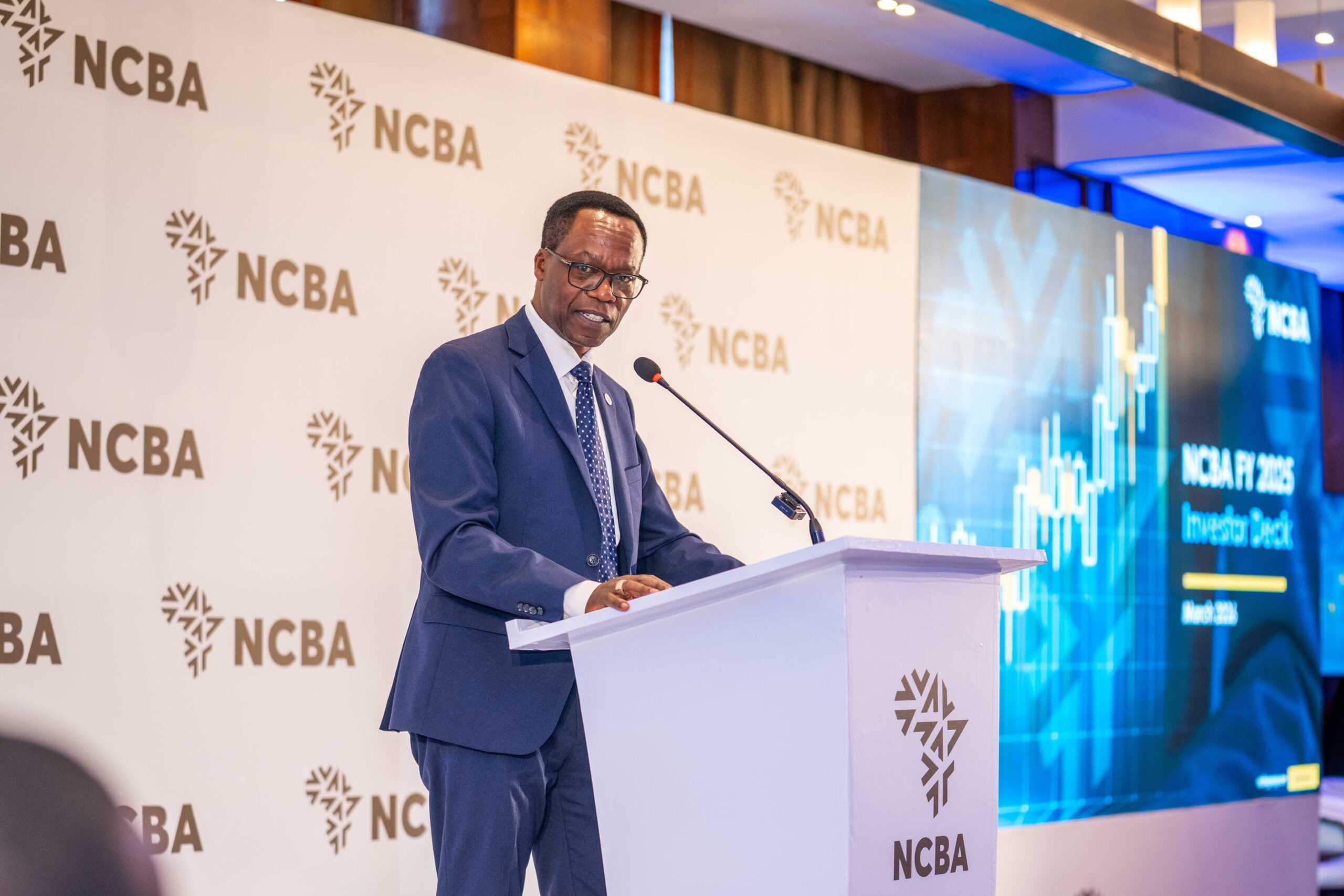
B. NCBA’s Strong Banking Performance
The NCBA Group delivered a 12.2% profit growth in H1 2026, with net profit reaching KSh 12.39 billion (≈$90 million). Highlights:
– Net interest income rose 20.4%, reflecting loan growth and higher yields.
– Loan book expanded by 15%, with SME lending seeing the most traction.
– Interim dividend increased by 50%, signaling strong capital returns to shareholders.
The bank’s digital banking expansion (e.g., M-Pesa integration, API-driven services) is positioning it as a leader in fintech-driven banking.
C. The Dangote Refinery IPO: A Game-Changer for Kenya’s Energy Sector
Nigeria’s Dangote Refinery is set to launch a $5 billion IPO in October 2026, with Kenyan investors potentially securing up to $500 million in stakes through:
– Pension funds (e.g., NSSF, private retirement schemes).
– Commercial banks (e.g., KCB, Equity Bank).
– Sovereign wealth funds (e.g., Kenya’s National Social Security Fund).
Why this matters for Kenya:
– Fuel price stabilization: The refinery will reduce Kenya’s reliance on imported diesel and petrol, potentially cutting fuel costs by 20-30%.
– Petrochemical exports: Kenya could leverage its port infrastructure to export refined products to Eastern Africa and beyond.
– Job creation: The project is expected to generate 10,000+ direct and indirect jobs, boosting local employment.
5. How Investors Can Navigate Kenya’s Market in 2026-2027
For those looking to capitalize on Kenya’s growth story, here are strategic investment avenues:
A. Diversified Portfolio Approach
Given Kenya’s volatile macroeconomic environment, a diversified portfolio is key:
– Equities: High-growth sectors include financials (NCBA, KCB), consumer staples (EABL), and renewable energy (e.g., Brookfield Renewable Energy projects).
– Bonds: Government securities (KGS bonds) offer stable returns, though yields are tied to CBK policy shifts.
– Real Estate: Commercial properties in Nairobi’s CBD and tech hubs (e.g., Spring Valley, Westlands) remain resilient.
– Digital Assets: With blockchain adoption growing, crypto and DeFi platforms (e.g., BitPesa, Chakula**) are gaining traction.
B. Leveraging Fintech for Accessible Investing
Platforms like Hisa are democratizing investing by:
– Aggregating Kenyan and US markets in a single app.
– Allowing fractional investments (as low as $1).
– Offering dollar-denominated assets, hedging against KES volatility.
This makes long-term wealth building accessible to middle-income earners.
C. Long-Term Plays: Infrastructure and Green Energy
Kenya’s infrastructure deficit (~$10 billion annually) presents high-return opportunities:
– Renewable energy: Solar, wind, and geothermal projects (e.g., Olkaria geothermal field) are government-backed and offer stable returns.
– Transportation: Rail modernization (SGR expansion), ports (Lamu Port), and logistics hubs are priority areas for foreign direct investment (FDI).
– Agritech: Precision farming, cold storage, and agribusiness tech can boost food security while delivering strong ROI.
6. The Road Ahead: Policy Recommendations for Stability
To sustain growth and mitigate supply chain strains, Kenya must:
1. Reform the ODPP-EACC dynamic by:
– Legislatively defining case prosecution criteria to reduce subjectivity.
– Establishing an independent corruption tribunal to fast-track high-profile cases.
2. Address liquidity constraints by:
– Expanding access to SME credit via guarantee schemes (e.g., KCB’s KSh 50 billion SME loan facility).
– Reducing interest rates gradually if inflation trends downward.
3. Invest in supply chain resilience by:
– Accelerating port infrastructure upgrades (e.g., Mombasa Port automation).
– Promoting local manufacturing via tax incentives and duty exemptions.
4. Strengthen fiscal discipline by:
– Reforming fuel subsidies to reduce fiscal drag.
– Boosting domestic oil exploration (e.g., Lake Turkana basin) to reduce import dependence.
7. Final Thoughts: A Nation at a Crossroads
Kenya’s economy in 2026 is a tale of two realities:
– On one hand, consumer demand is robust, financial markets are vibrant, and strategic investments (like Dangote Refinery) promise long-term gains.
– On the other, supply chain inefficiencies, corruption bottlenecks, and liquidity constraints continue to hinder sustainable growth.
The path forward requires bold policy reforms, institutional accountability, and strategic private-sector collaboration. For investors, patience and diversification will be key—those who align with Kenya’s structural growth drivers (energy, fintech, infrastructure) are poised to thrive in the years ahead.
Graph: Kenya’s PMI Employment Growth vs. Output Decline (Jan 2025 – Jul 2026)

Screenshot: Hisa App Interface – Cross-Border Investing Dashboard

Chart: EABL’s Revenue and Profit Growth (2022-2026)
Infographic: NCBA’s Loan Portfolio Breakdown by Sector (H1 2026)

Map: Dangote Refinery’s Supply Chain Impact on East African Fuel Markets
