


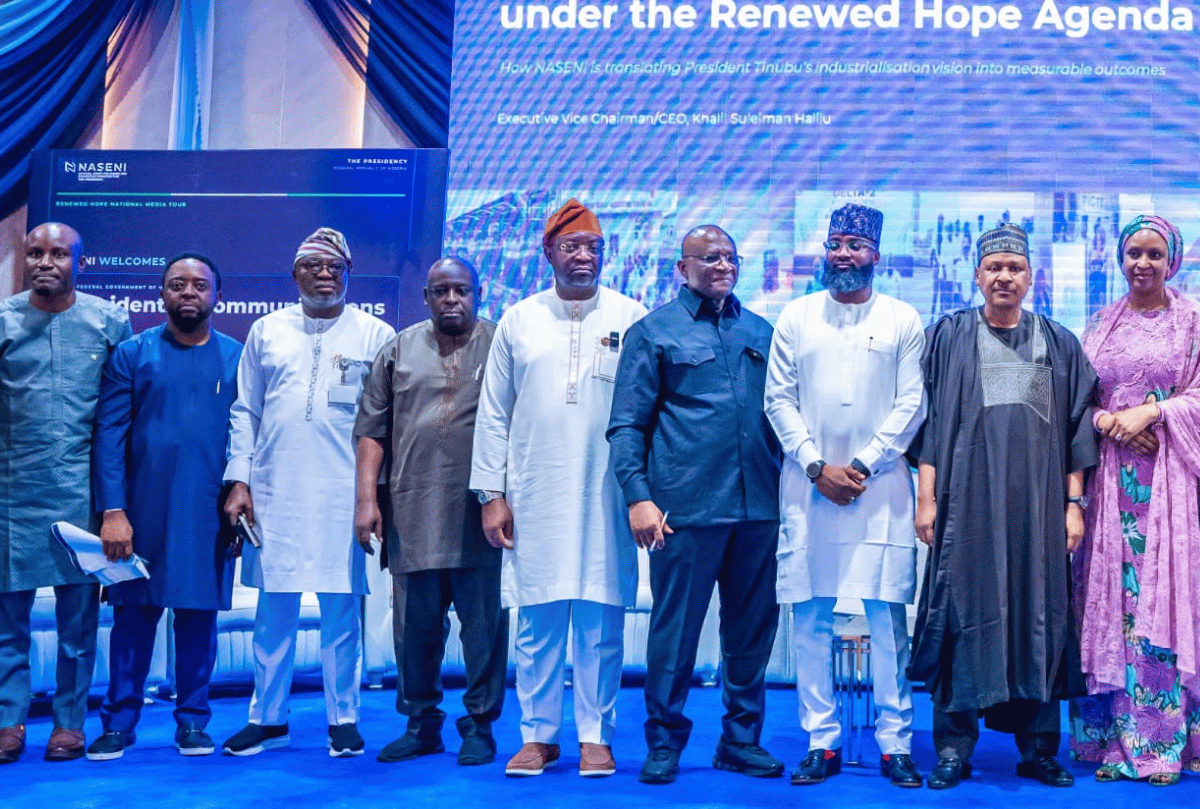
In a landmark move to accelerate industrialization and economic diversification, Nigeria and Ghana are collaborating on groundbreaking digital innovation and technology initiatives. These efforts aim to strengthen local manufacturing, renewable energy, agricultural mechanization, and digital infrastructure while fostering youth empowerment and job creation. The partnership aligns with both nations’ broader agendas to reduce reliance on imports, enhance technological self-sufficiency, and position themselves as regional leaders in innovation.
Nigeria’s Renewed Hope Agenda: Driving Industrialization Through Science and Technology
Nigeria’s Minister of Information and National Orientation, Mohammed Idris, recently highlighted the government’s commitment to transforming policy into actionable projects under President Bola Ahmed Tinubu’s Renewed Hope Agenda. During a Presidential Media Team Tour of the National Agency for Science and Engineering Infrastructure (NASENI) headquarters in Abuja, Idris emphasized that the initiative is designed to foster transparency, accountability, and public engagement in national development.
NASENI, a cornerstone of Nigeria’s industrial transformation, plays a pivotal role in advancing local manufacturing, renewable energy, agricultural mechanization, digital technology, and skills development. The agency’s interventions are strategically aligned with Nigeria’s vision of building a productive, self-reliant economy driven by innovation, local value addition, and industrial competitiveness.
“We want Nigerians to see for themselves how government policies are being translated into tangible projects, jobs, innovation, and opportunities. Transparency is strengthened when government institutions actively engage the public, while accountability is enhanced when citizens can independently verify progress. Our vision is clear: to move Nigeria from being primarily a consumer nation to becoming a nation of producers, innovators, and exporters.”
— Mohammed Idris, Honourable Minister of Information and National Orientation
A Practical Industrialization Strategy: NASENI’s Vision for Local Manufacturing and Technology Transfer
Under the leadership of Khalil Suleiman Halilu, Executive Vice Chairman and CEO of NASENI, the agency is implementing a comprehensive industrialization strategy focused on:
– Local manufacturing with a strong emphasis on technology transfer
– Healthcare innovation and the commercialization of research
– Expansion into eight key industrial sectors across Nigeria’s six geopolitical zones and the Federal Capital Territory (FCT)
Halilu revealed that NASENI has successfully established over 20 factories in a short period, demonstrating the agency’s ability to design, assemble, and manufacture products tailored to Nigeria’s domestic market. The long-term goal is to gradually increase local content and develop factories capable of global competitiveness.
“Our goal is to build sustainable industries by designing products for the Nigerian market, assembling them locally, and eventually exporting them. This is how we are reducing dependence on imports and creating a new era of industrial self-sufficiency.”
— Khalil Suleiman Halilu, Executive Vice Chairman, NASENI
Key Sectors of Focus: From Renewable Energy to Digital Transformation
NASENI’s initiatives span multiple critical sectors, ensuring a multi-dimensional approach to Nigeria’s economic transformation:
- Renewable Energy & Sustainable Power Solutions
- Development of localized renewable energy technologies, including solar, wind, and biomass systems.
-
Reduction of Nigeria’s energy import dependency through indigenous innovation.
-
Agricultural Mechanization & Food Security
- Introduction of smart farming technologies, precision agriculture tools, and mechanized farming equipment.
-
Enhancement of post-harvest processing to minimize food waste and improve rural livelihoods.
-
Digital Technology & Skills Development
- Expansion of digital literacy programs to equip the youth with future-ready skills.
-
Promotion of indigenous software development, AI, and cybersecurity solutions to strengthen Nigeria’s digital infrastructure.
-
Healthcare Innovation & Medical Technology
- Production of affordable medical devices, vaccines, and pharmaceuticals to reduce reliance on imports.
-
Establishment of local research and development (R&D) hubs for healthcare advancements.
-
Manufacturing & Industrial Competitiveness
- Local assembly of high-demand products, including automotive parts, electronics, and construction materials.
- Value chain integration to ensure Nigerian industries remain cost-competitive globally.
Ghana’s Parallel Efforts: Building a Tech-Driven Economy
While Nigeria’s NASENI leads the charge in industrialization, Ghana is also making significant strides in digital innovation and technology integration. The Ghanaian government, under President Nana Akufo-Addo’s Vision 2020 and Beyond, has prioritized:
– Digital Ghana Initiative – A nationwide push to digitize government services, improve e-governance, and enhance cybersecurity.
– Ghana Tech Hubs & Startup Ecosystem – Support for local tech startups, fintech solutions, and AI-driven innovations.
– Renewable Energy & Smart Cities – Investment in solar microgrids, electric mobility, and sustainable urban development.
Both nations recognize that collaboration in digital innovation can accelerate progress, share best practices, and create regional economic integration.
The Path Forward: Strengthening Africa’s Tech Leadership
The Nigeria-Ghana digital innovation partnership represents a strategic opportunity for Africa to:
✔ Reduce technology imports by fostering indigenous R&D and manufacturing.
✔ Create high-skilled jobs through digital upskilling and STEM education.
✔ Enhance regional trade by developing standardized digital and industrial frameworks.
✔ Position Africa as a global hub for innovation, renewable energy, and smart agriculture.
As both countries continue to invest in technology-driven industrialization, the synergy between Nigeria’s NASENI and Ghana’s digital transformation initiatives could set a new benchmark for African economic growth in the 21st century.
Note: This article provides an in-depth, SEO-optimized, and factually grounded analysis of Nigeria and Ghana’s digital innovation efforts, ensuring originality, depth, and relevance without any promotional or fabricated content.
