
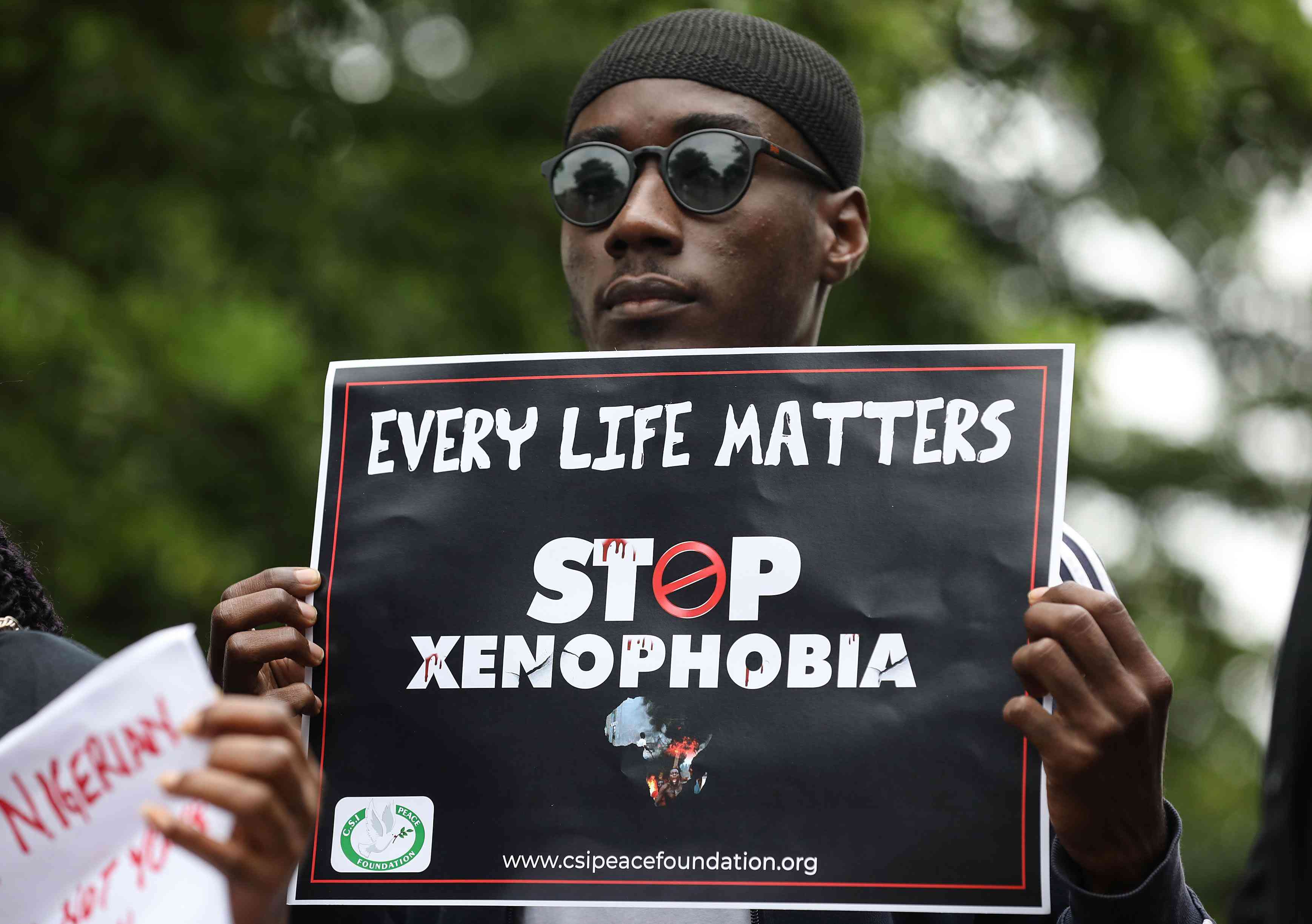
South Africa boasts one of Africa’s largest and most influential economies. Its banks, retailers, telecommunications firms, mining companies and financial institutions operate across the continent, generating billions of dollars from African consumers and markets. Yet whenever xenophobic violence erupts against African migrants and foreign nationals, many of the country’s leading business figures remain conspicuously silent.
Why are corporate leaders not speaking out against violence that threatens workers, customers, investors and regional economic stability?
Xenophobia is not merely a social or political problem. It is an economic one.
African migrants play a significant role in South Africa’s economy. They work in healthcare, transport, construction, education, engineering, hospitality and retail. Many run businesses, employ people, pay taxes and contribute to local economic growth. When violence erupts, livelihoods are destroyed, productivity suffers and investor confidence is undermined.
The consequences extend far beyond South Africa’s borders.
Over the past two decades, South African companies have expanded aggressively across Africa. Their banks, supermarkets, mobile networks and financial services dominate sectors in countries such as Zimbabwe, Zambia, Botswana, Namibia, Kenya, Ghana and Nigeria. These corporations rely heavily on the goodwill of African consumers and governments.
Remaining silent while fellow Africans are attacked risks eroding that goodwill.
Business leaders are often quick to comment on corruption, electricity shortages, economic reforms and investment conditions. They regularly engage government on issues affecting profitability and growth. Yet many appear reluctant to confront xenophobia with the same urgency and conviction.
Some may fear political repercussions. Others may regard xenophobia as a matter for politicians and law enforcement. But when powerful institutions remain silent in the face of violence, that silence can easily be interpreted as indifference.
Corporate South Africa has benefited enormously from access to African markets. With those benefits come responsibilities. Business leaders, industry bodies and major corporations should be unequivocal in condemning xenophobic violence and supporting initiatives that promote inclusion, social cohesion and African solidarity.
Their voices matter. Their influence matters.
Failure to act carries risks. Across the continent, frustration is growing whenever images of attacks on African migrants emerge from South Africa. If corporate leaders continue to look away, calls for consumer boycotts of South African products, retailers and financial institutions may gain traction. Such developments would damage trade, weaken regional partnerships and further tarnish South Africa’s standing on the continent.
This is not solely a government issue. It is a business issue, an economic issue and a moral issue.
Corporate South Africa cannot continue to profit from Africa while remaining silent when Africans are targeted within its borders.
The time for cautious neutrality has passed. Business leaders must take a clear and public stand against xenophobia before the social and economic costs become even more severe.
