


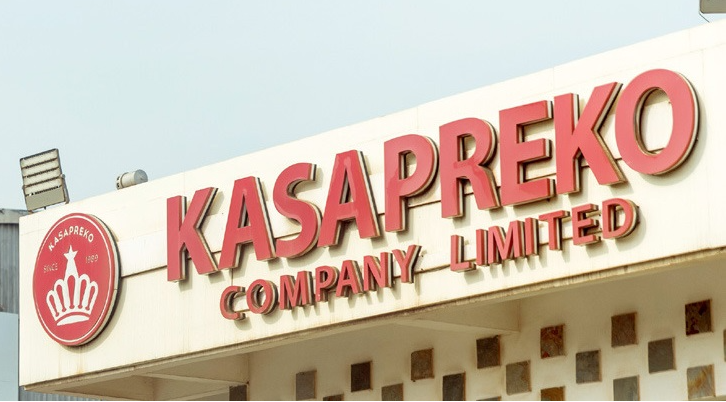
Let me start with a myth that has crippled Ghanaian business for generations. The myth says that indigenous, family-grown businesses cannot successfully scale on the public capital market without losing their identity or falling prey to management pitfalls. The myth says that family businesses are messy, that they are driven by emotion rather than data, and that investors will not trust them. This week, Kasapreko PLC completely shattered that myth. The beverage giant’s Initial Public Offering, which sought to raise GH¢700 million by offering 583.3 million shares at GH¢1.20 each, closed heavily oversubscribed, attracting total bids in excess of an impressive GH¢1.4 billion. Eager individual and institutional investors tendered more than double the capital pool the company initially targeted. That is not a success. That is a statement.
More than just a successful fundraising exercise, this spectacular performance sends a clear, undeniable message to the African corporate world. A well-managed indigenous company can confidently raise premium, long-term equity capital for expansion if it prioritises institutional structures over personality-driven leadership. Kasapreko has just written the blueprint. Every family business in Ghana should be reading it.
Let me break down Accra Street Journal’s News and why this happened, because the reasons are instructive.
Accra Street Journal’s market analysts point out that this immense oversubscription is, first and foremost, a roaring vote of confidence in Kasapreko’s robust corporate architecture. Founded over three decades ago as a homegrown enterprise, the company has successfully navigated the difficult transition from a traditional family business into a world-class corporate institution. That transition is the hard part. Many family businesses never make it. They remain dependent on the founder’s charisma, the founder’s connections, the founder’s instincts. When the founder steps back, the business stumbles. Kasapreko avoided that trap.
The secret lies in its deliberate commitment to corporate governance. While keeping its deep Ghanaian roots, Kasapreko is steered by a board packed with rich talents and diverse technical expertise. These highly independent board members proffer objective, professional advice to management, ensuring that strategic decisions are driven by data and commercial viability rather than emotion. That is the key. Emotion is for family dinners. Data is for boardrooms.
Furthermore, rather than limiting key leadership roles to family lines, the company has consistently headhunted and retained top-tier professional human resources across its financial, operational, and marketing wings. The family still owns the business. But the family does not run every department. That separation is essential. It allows the business to benefit from the best talent available, not just the talent that shares a surname.
By separating ownership from executive management and subjecting itself to the highest standards of transparency, Kasapreko built a bulletproof corporate reputation. The market responded to this structural integrity with overwhelming validation. And the numbers back it up. The company reported a 55 percent jump in net profit to GH¢73 million in the first quarter of 2026, right as the IPO was underway. That is not a company resting on its history. That is a company performing in real time.
The massive GH¢1.4 billion influx of equity capital proves that local investors are willing to fund local industrialisation when the underlying business is sound. That is a crucial lesson. For years, Ghanaian companies have complained that local capital is not available, that investors prefer government securities, that the stock market is too shallow. Kasapreko proved that the capital is there. It just needs a compelling reason to come out.
According to the company’s prospectus, the IPO proceeds will be utilised to finance the construction of a state-of-the-art production facility in Adeiso, in the Eastern Region. This expansion will significantly scale up production capacity for Kasapreko’s fast-growing non-alcoholic beverage portfolio, including carbonated soft drinks and its flagship bottled water brand, Awake. That is the kind of investment that creates jobs, reduces imports, and grows the economy. It is not financial engineering. It is real industrial expansion.
This capital raise follows a mature financing trajectory. The company previously raised expansion funds through corporate bonds, which were similarly oversubscribed by investors who have grown to trust Kasapreko’s financial discipline. The progression from bonds to equity is natural. Bonds are debt. They must be repaid. Equity is permanent capital. It stays with the company. By listing, Kasapreko has signalled that it is mature enough to accept public scrutiny, quarterly reporting, and shareholder accountability.
Historically, the main bowl of the Ghana Stock Exchange has been heavily dominated by multinational banking institutions, telecommunications giants, foreign mining conglomerates, and state enterprises. Kasapreko’s record-breaking performance as a local manufacturing company changes the game entirely. It proves that indigenous manufacturing can compete for investor attention. It proves that the GSE is not just for banks and telcos. It proves that a Ghanaian family business can stand alongside the multinationals.
This result is expected to serve as a powerful catalyst, proving to other well-managed indigenous private companies that they can look beyond short-term, high-interest commercial bank loans. Kasapreko has laid down the blueprint. Clean up your corporate governance. Open your books to independent scrutiny. Hire the best talent. Separate ownership from management. Then go to the public market. The capital will be there.
For investors who successfully secured a stake in this historic capital raise, trading is officially scheduled to commence under the ticker KPLC on June 17, 2026. Individual allotments will be credited directly to participants’ Central Securities Depository accounts immediately following the formal listing. The secondary market will then determine the true value. The IPO price of GH¢1.20 was a starting point. The market will decide where the shares should trade.
There is also potential relief for consumers. Kasapreko has hinted at a possible price cut should the cedi maintain its recent gains. A stronger cedi reduces the cost of imported inputs, such as packaging materials and concentrates. If the cedi stays strong, Kasapreko could pass some of the savings to consumers. That would be a welcome development for households that have seen beverage prices rise.
Other indigenous businesses have successfully listed on the exchange many years ago, including Camelot and Clydestone. But those listings were smaller, less visible, and less transformative. Kasapreko’s IPO is on a different scale. It is the largest IPO by an indigenous manufacturing company in Ghana’s history. It is a bellwether. If it performs well, others will follow.
The lesson for family businesses across Ghana is clear. You do not have to stay private forever. You do not have to rely solely on bank loans or reinvested profits. You can access public capital. But you must earn the right. That means building a professional board, hiring independent directors, opening your books, and proving that your business can perform without the founder’s daily presence. It is not easy. It requires humility. It requires letting go. But Kasapreko has proven that it is possible. The blueprint is written. The question is whether other family businesses will read it and follow. The answer will determine the future of Ghana’s capital markets and the next generation of indigenous industrial champions.
