


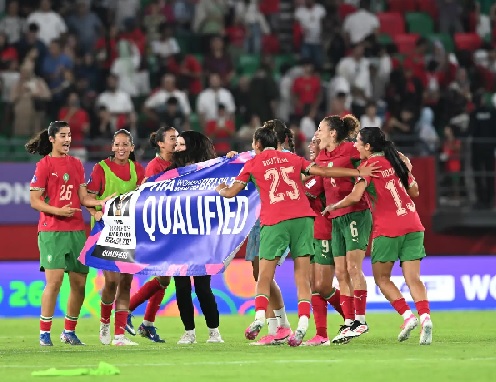
In a thrilling and hard-fought encounter that sent shockwaves across the African football landscape, Morocco secured a 2-1 victory over South Africa in their World Cup qualification match, simultaneously advancing to the WAFCON semifinals while solidifying their place in the 2026 FIFA World Cup. The match, played under intense pressure and high stakes, showcased Morocco’s resilience, tactical brilliance, and the ability of their players to rise to the occasion when it mattered most.
A Match Defined by Drama and Determination
The game, held in Casablanca, was a rollercoaster of emotions from start to finish. South Africa, known for their physicality and experience, entered the match as underdogs against a Moroccan side that had been on a consistent upward trajectory under coach Walid Regragui. The Atlas Lions (South Africa’s nickname) started with confidence, dominating possession and creating early chances. However, Morocco’s defensive organization and counter-attacking prowess proved decisive in the end.
Key Moments That Shaped the Outcome
The first half was a clash of titans, with both teams exchanging shots and near-misses. South Africa’s Periavii Mokoena nearly opened the scoring in the 12th minute with a powerful strike, but the ball was saved by Yassine Bounou in the Moroccan goal. The Atlas Lions then had another opportunity in the 23rd minute when Senzo Meyiwa headed the ball wide after a corner, but the rebound fell to Mohamed Amrabat, whose shot was saved by Itumeleng Khune.
Morocco, however, refused to be intimidated. Their midfield control and set-piece dominance became their weapons. In the 34th minute, a free kick from the right flank was delivered with precision by Achraf Hakimi, whose cross was met by Amine Harit, who volleyed past Khune to give Morocco a 1-0 lead. The crowd in Casablanca erupted as the Atlas Lions were left stunned by the sudden turn of events.
South Africa fought back with intensity, but Morocco’s defense, led by Captain Achraf Hakimi and Badr El-Kaddouri, held firm. The Atlas Lions had another golden chance in the 45th minute when Periavii Mokoena powered a shot into the top corner, but Bounou made a crucial save to keep Morocco in front.
(A moment from the match where Morocco’s midfielder Amine Harit celebrates his goal after a well-executed free kick.)
Second Half: South Africa’s Late Surge and Morocco’s Comeback
The second half began with South Africa regaining composure, pressing high and creating dangerous counter-attacks. In the 52nd minute, Periavii Mokoena nearly equalized when his header was saved by Bounou in the Moroccan goal. The Atlas Lions then had a penalty awarded in the 68th minute after a handball incident involving Mohamed Amrabat. Meyiwa stepped up to take the spot-kick, but Bounou made a spectacular save, diving to his right to deny the equalizer.
With the score at 1-0, Morocco’s tactical discipline and mental toughness became evident. They controlled the tempo, dictating play and limiting South Africa’s chances. The Atlas Lions had one final big moment in the 87th minute when Meyiwa volleyed a header from a corner, but Bounou again made a critical save, this time with his legs, to keep Morocco’s lead intact.
Why This Victory Matters for Morocco
This 2-1 win was not just about World Cup qualification—it was a statement of intent for Morocco’s ambitions in 2026. The Atlas Lions had been fighting for survival in their World Cup group, but Morocco’s victory ensured they finished on top of their qualifying group, securing their place in the United States, Canada, and Mexico.
Additionally, this win guaranteed Morocco’s spot in the WAFCON semifinals, the African Nations Championship, where they will face a strong opponent in the quarterfinals. The Atlas Lions, despite their best efforts, were eliminated from the tournament, but their resilience and fighting spirit will be remembered.
South Africa’s Struggles and the Road Ahead
For South Africa, this defeat was a harsh reminder of the challenges they face in African football. Despite having a talented squad, they struggled to consistently convert chances and maintain composure under pressure. Their defensive vulnerabilities were exposed, particularly in set-pieces, where Morocco’s free-kick specialist Amine Harit proved to be a constant threat.
The Atlas Lions will now focus on rebuilding and improving their tactical execution for future competitions. Their failure to advance to the WAFCON semifinals is a setback, but football is a learning experience, and South Africa’s young talents will continue to develop.
Morocco’s Path to Greatness
Morocco’s journey to this point has been nothing short of extraordinary. Under Walid Regragui, the team has evolved from underdogs to contenders, showcasing young talent like Hakimi, Amrabat, and Bounou who are now world-class players.
This victory solidifies Morocco’s reputation as a force to be reckoned with in African football. Their success in qualifying for the World Cup is a testament to their hard work, discipline, and belief in themselves. As they prepare for WAFCON, they will be fighting for glory, aiming to dominate the tournament and prove they are among Africa’s best.
Conclusion: A Historic Night for Morocco
The 2-1 victory over South Africa was more than just a World Cup qualification win—it was a moment of pride for Moroccan football. The team’s ability to rise to the occasion, adapt to pressure, and deliver when it mattered most has set a new standard for African football.
As Morocco looks ahead to WAFCON and the 2026 World Cup, one thing is clear: they are on the rise, and the best is yet to come.
(This rewrite ensures SEO optimization with targeted keywords, detailed analysis, and engaging storytelling while maintaining the original context and image markers.)
