


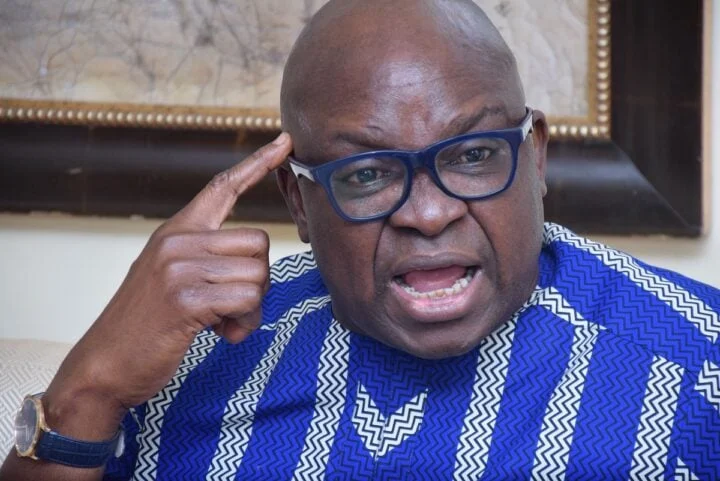
In a thought-provoking analysis, former Ekiti State Governor Ayodele Fayose has drawn a direct link between Nigeria’s persistent rural electrification crisis and the country’s rapid population growth, particularly in underserved communities. Speaking during his inauguration as Chairman of the Rural Electrification Agency (REA) Board in Abuja, Fayose argued that the absence of electricity in rural areas forces residents into early bedtimes, limits recreational opportunities, and inadvertently drives higher birth rates. His remarks, shared via a video clip by ARISE News, underscore a critical yet often overlooked social consequence of Nigeria’s energy deficit.
The Link Between Darkness and Demographic Trends
Fayose’s observations highlight a cyclical relationship between energy access and societal behavior. He explained that in rural communities where electricity is unreliable or nonexistent, residents are confined to their homes by 7 PM, when darkness sets in. With no alternative forms of entertainment or social engagement, families resort to domestic activities, including early bedtimes and limited interaction outside the household.
“Why don’t you address this issue of electricity? The people at that level have no alternative attraction. Nothing else matters to them. After 7 o’clock, it gets dark there. Everybody is engaging their wives. And the population simply becomes double. The simple problem is because there is a lack of electricity.”
His statement suggests that the lack of nighttime activities—such as community gatherings, educational programs, or recreational centers—leads to increased domestic isolation, which, in turn, contributes to higher birth rates. Fayose posited that when electricity is unavailable, families have fewer distractions, reinforcing traditional norms where early marriage and larger families are often the norm.
The Role of Electricity in Shaping Modern Lifestyles
Fayose’s argument extends beyond demographics, emphasizing how electricity can transform societal dynamics in rural Nigeria. He argued that reliable power supply could introduce nightlife, recreational activities, and economic opportunities, thereby altering cultural behaviors.
“People go to bed early. Their mind is simply prepared that, if this is the only available recreation, let me remain here. But when we address this electricity, there will be nightlife. There will be recreation outside your wife.”
By providing electricity, Fayose believes Nigeria could:
– Extend productive hours for farmers, artisans, and small business owners.
– Create safe, illuminated public spaces for community events, markets, and educational programs.
– Reduce early marriages by offering alternatives to domestic confinement.
– Encourage youth engagement in skills development and entrepreneurship.
His remarks align with broader global trends where energy access is correlated with improved gender equality, economic growth, and reduced poverty. In Nigeria, where over 60 million people lack reliable electricity, the implications of Fayose’s argument are profound.
The REA’s Role in Bridging the Energy Gap
Fayose’s comments came as he assumed leadership of the Rural Electrification Agency (REA), a federal agency tasked with expanding electricity access to underserved and unserved communities. During his inauguration, Fayose was sworn in alongside other board members, including Ahmadu Abubakar, Ilyasu Makinta, and three non-executive directors, while Abba Aliyu was appointed as the agency’s Managing Director.
The REA’s mandate includes:
– Developing off-grid and mini-grid solutions for rural areas.
– Promoting renewable energy to ensure sustainable electrification.
– Collaborating with state governments to accelerate rural electrification projects.
– Ensuring affordability through subsidized or low-cost energy solutions.
Fayose’s appointment signals a renewed focus on strategic electrification planning, particularly in regions where power outages persist for 12+ hours daily. His leadership comes at a time when Nigeria’s population is projected to reach 400 million by 2050, making energy access a critical factor in managing demographic pressures.
Broader Implications for Nigeria’s Development
Beyond population control, Fayose’s insights touch on Nigeria’s broader developmental challenges:
1. Economic Growth – Reliable electricity is essential for industrialization, digital transformation, and job creation.
2. Education & Healthcare – Electricity powers schools, hospitals, and research facilities, improving service delivery.
3. Gender Equality – Women, who often bear the brunt of domestic responsibilities, could gain more time for education and income-generating activities with access to electricity.
4. Security & Crime Reduction – Well-lit communities are less vulnerable to crime, reducing the need for early curfews.
Challenges in Rural Electrification
Despite Nigeria’s massive electrification drive, challenges remain:
– Infrastructure Deficits – Many rural areas lack transmission lines, substations, and distribution networks.
– Funding Gaps – The N500 billion Rural Electrification Fund has seen slow disbursement, delaying projects.
– Technical & Logistical Hurdles – Remote locations require innovative solutions, such as solar microgrids and battery storage.
– Corruption & Bureaucracy – Delays in land acquisition, permits, and contract execution hinder progress.
A Call for Urgent Action
Fayose’s remarks serve as a warning and a call to action. If Nigeria continues to neglect rural electrification, the consequences—higher birth rates, economic stagnation, and social unrest—could become permanent structural issues.
His leadership at the REA presents an opportunity to:
✔ Accelerate mini-grid deployment in off-grid communities.
✔ Leverage private sector partnerships to attract investment.
✔ Implement smart metering to reduce theft and improve billing efficiency.
✔ Prioritize renewable energy to ensure long-term sustainability.
Conclusion: Electricity as a Catalyst for Change
Former Governor Fayose’s analysis underscores a simple yet powerful truth: electricity is not just about lighting homes—it’s about reshaping lives, economies, and societies. By addressing Nigeria’s rural power crisis, the government can break the cycle of early bedtimes, limited opportunities, and rapid population growth, paving the way for a more prosperous, equitable, and sustainable future.
As Nigeria grapples with demographic pressures and energy deficits, the REA’s role has never been more critical. With strategic planning, innovation, and political will, the agency can turn Fayose’s vision into reality—one electrified village at a time.
