


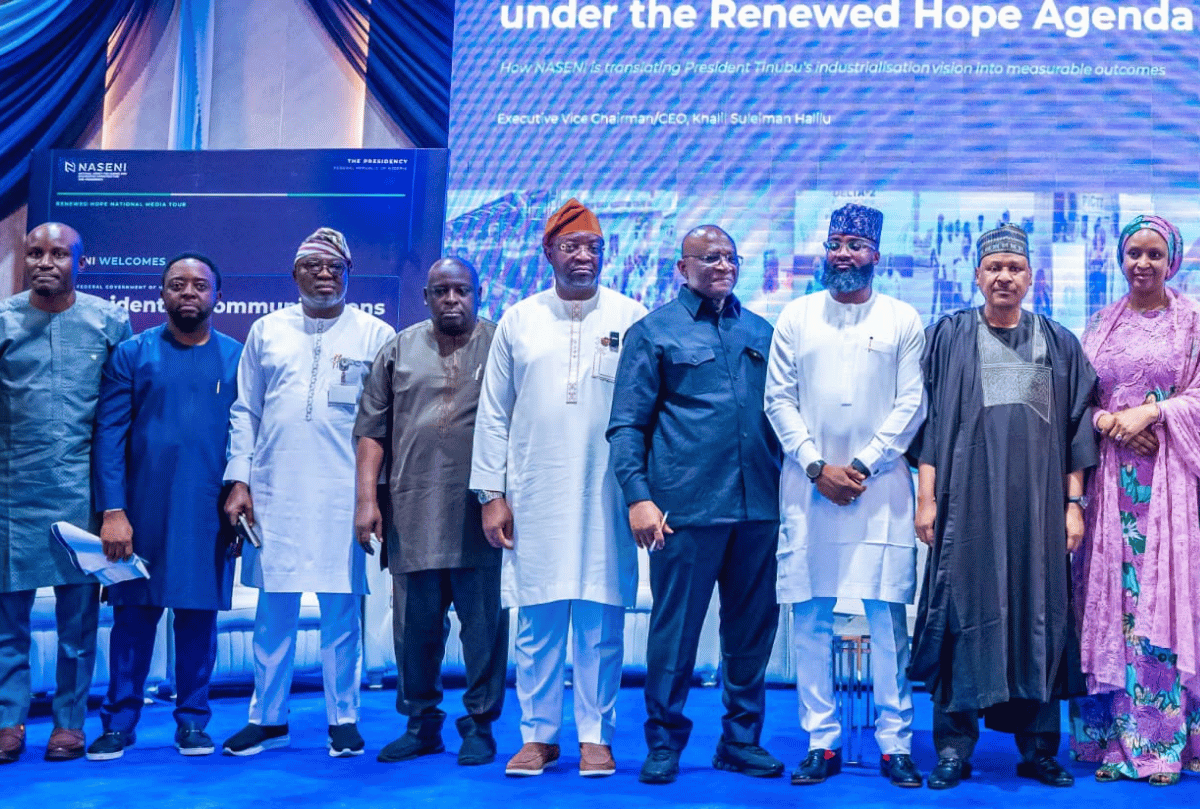
In a landmark move to accelerate industrialization and technological advancement, Nigeria and Ghana are collaborating on groundbreaking digital innovation and technology initiatives aimed at fostering economic growth, job creation, and self-reliance. The partnership aligns with both nations’ broader agendas to reduce dependency on imports, enhance local manufacturing, and position themselves as leaders in Africa’s digital revolution.
Nigeria’s Renewed Hope Agenda: A Blueprint for Technological Sovereignty
Nigeria’s Minister of Information and National Orientation, Mohammed Idris, recently highlighted the Renewed Hope Agenda under President Bola Ahmed Tinubu as a transformative framework that translates policy into actionable projects, innovation, and sustainable economic development. During a Presidential Media Team Tour of the National Agency for Science and Engineering Infrastructure (NASENI) headquarters in Abuja, Idris emphasized that the government is actively engaging citizens to foster transparency, accountability, and public trust in national initiatives.
NASENI, a cornerstone of Nigeria’s industrial transformation, plays a pivotal role in local manufacturing, renewable energy, agricultural mechanization, digital technology, and skills development. The agency’s interventions are designed to reduce reliance on foreign imports, boost local value addition, and enhance industrial competitiveness. Idris underscored that NASENI’s work is critical in shifting Nigeria from a consumer-driven economy to one of production, innovation, and export-led growth.
“We want Nigerians to witness firsthand how government policies are being converted into real projects, jobs, and opportunities. Transparency improves when institutions engage the public, and accountability strengthens when citizens can verify progress. Our vision is clear: to transform Nigeria into a nation of innovators, manufacturers, and global exporters.”
— Mohammed Idris, Honourable Minister of Information and National Orientation, Federal Ministry of Information and National Orientation, Nigeria
The Renewed Hope Agenda prioritizes industrialization, technology adoption, and youth empowerment as key drivers of economic transformation. By creating an enabling environment for investment, enterprise development, and sustainable employment, Nigeria aims to position itself as a regional hub for technological innovation.
NASENI’s Industrialization Strategy: From Local Manufacturing to Global Competitiveness
NASENI’s Executive Vice Chairman and CEO, Khalil Suleiman Halilu, revealed that the agency is executing a practical industrialization strategy focused on:
– Local manufacturing and technology transfer
– Healthcare innovation and research commercialization
– Expansion across eight key industrial sectors in Nigeria’s six geopolitical zones and the Federal Capital Territory (FCT)
Halilu highlighted that NASENI’s approach involves designing products tailored to Nigeria’s market, assembling them domestically, and gradually increasing local content to ensure global competitiveness. A testament to this strategy is the agency’s establishment of over 20 factories in a short period, demonstrating Nigeria’s commitment to self-sufficiency and industrial growth.
“Our mission is to build sustainable industries by producing for the Nigerian market, assembling locally, and eventually exporting. This is how we are fostering factories that can compete on the global stage.”
— Khalil Suleiman Halilu, Executive Vice Chairman and CEO, National Agency for Science and Engineering Infrastructure (NASENI)
Ghana’s Digital Transformation: A Parallel Vision for Africa’s Future
While Nigeria’s NASENI drives industrialization through science and engineering, Ghana is equally committed to digital transformation and technological sovereignty. The Ghanaian government, under President Nana Akufo-Addo, has been investing heavily in digital infrastructure, fintech innovation, and AI-driven solutions to enhance economic productivity and service delivery.
Key initiatives include:
– The Ghana Digital Economy Blueprint, aimed at positioning Ghana as a regional leader in digital services and innovation.
– Expansion of broadband and 5G networks to bridge the digital divide and support remote work and e-commerce.
– Collaborations with tech hubs and startups to foster entrepreneurship and job creation in the tech sector.
– Government-led digital literacy programs to upskill citizens for the fourth industrial revolution.
Ghana’s Ministry of Communications and Digital Economy has also been proactive in regulating digital platforms, promoting cybersecurity, and encouraging foreign direct investment (FDI) in tech. The country’s Digital Address System (DAS) and e-levy reforms are part of broader efforts to streamline digital transactions and reduce financial exclusion.
A Shared Vision: Nigeria and Ghana’s Collaborative Approach
Both nations recognize that shared technological advancements can accelerate Africa’s digital and industrial progress. Potential areas of collaboration include:
1. Cross-Border Digital Infrastructure – Joint investments in undersea cables, data centers, and AI research hubs to strengthen regional connectivity.
2. Fintech and Blockchain Integration – Developing pan-African payment systems, digital currencies, and secure blockchain solutions for trade and remittances.
3. Renewable Energy and Smart Grids – Collaborating on solar, wind, and hydrogen energy projects to ensure sustainable power supply.
4. Skills Development and STEM Education – Establishing joint training programs, coding academies, and vocational centers to build a tech-savvy workforce.
5. Healthcare Innovation – Leveraging AI, telemedicine, and biotech to improve healthcare delivery across both nations.
Challenges and Opportunities
While the Nigeria-Ghana tech partnership holds immense potential, challenges such as:
– Infrastructure gaps (power instability, unreliable internet)
– Regulatory hurdles (data privacy laws, cybersecurity concerns)
– Funding constraints (limited venture capital for startups)
– Workforce shortages (lack of skilled tech professionals)
must be addressed through public-private partnerships, international funding, and capacity-building initiatives.
The Path Forward: Building a Tech-Enabled Future
For Nigeria and Ghana to fully realize their digital and industrial ambitions, they must:
✅ Strengthen regulatory frameworks to attract FDI and tech investments.
✅ Invest in R&D to develop indigenous technologies rather than relying on imports.
✅ Promote entrepreneurship through incubators, accelerators, and grants for startups.
✅ Enhance digital literacy to ensure mass adoption of emerging technologies.
✅ Foster regional collaboration with other African nations to create a unified digital market.
Conclusion: A New Era of African Technological Leadership
Nigeria and Ghana’s joint digital innovation initiatives represent a bold step toward economic independence and technological sovereignty in Africa. By leveraging NASENI’s industrialization model and Ghana’s digital transformation strategies, both nations can drive sustainable growth, create millions of jobs, and position Africa as a global player in the digital economy.
As Nigeria’s Minister Idris noted, transparency and accountability are essential in building trust between governments and citizens. Similarly, collaboration between nations will be key to overcoming challenges and accelerating Africa’s digital revolution.
The future of African industrialization and technological advancement hinges on strategic partnerships, innovation, and unwavering commitment—and Nigeria and Ghana are leading the way.
