


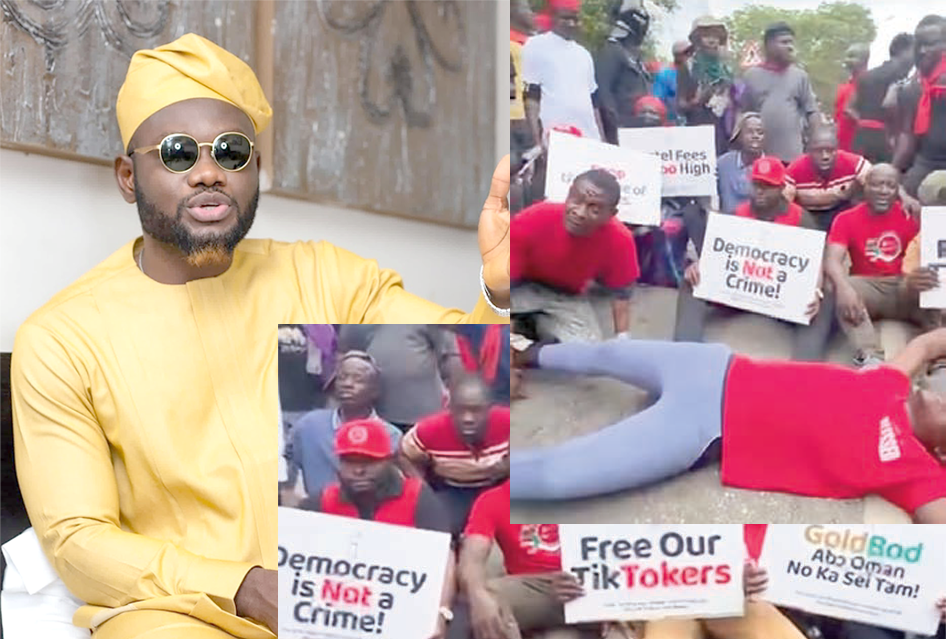
In a bold display of solidarity with Ghana’s democratic principles, Prince David Osei, a prominent actor and vocal supporter of the New Patriotic Party (NPP), has publicly endorsed the party’s “Democracy Under Attack” protest. The demonstration, held on Wednesday, August 6, 2024, in Accra, marked a significant moment in the ongoing political tensions between the ruling National Democratic Congress (NDC) and the opposition NPP. Osei’s participation, alongside thousands of NPP supporters, underscored the growing public frustration over perceived government overreach and the suppression of dissent.
A Call for Unyielding Democracy
Before the protest, Osei took to social media platforms to rally Ghanaians under a unified message of resistance. His post read:
“Our voices will never be silenced. We are not afraid. True democracy is what we seek as a nation—enough of the intimidation and arrests of citizens for exercising their constitutional rights. Ghana, wake up! Stand up for justice, freedom, and the principles that unite us.”
His words resonated deeply with a populace increasingly concerned about the erosion of democratic freedoms. The protest, which began near the Supreme Court and culminated at Jubilee House, became a symbolic stand against what the NPP describes as authoritarian tendencies under the current administration.
Key Demands and Protest Chants
The demonstration was not merely a symbolic gesture but a structured expression of grievances, with protesters holding placards that highlighted critical issues facing the nation. Among the most prominent slogans were:
- “Democracy Is Not a Crime” – A direct rebuttal to the government’s crackdown on peaceful protests and dissent.
- “Free Our TikTokers” – Referencing the arbitrary arrests and detentions of young activists and influencers, particularly those critical of the government.
- “Hostel Fees Are Too Much” – Reflecting broader public dissatisfaction with rising educational costs and economic hardship.
These chants were not isolated but part of a broader narrative of political persecution, selective justice, and the abuse of state power that the NPP alleges is being perpetuated by the NDC-led government.
NPP’s Core Arguments Against Government Policies
The NPP’s protest was not just a spontaneous outburst but a strategic mobilization to address several systemic concerns:
-
Political Persecution and Intimidation
The party accused the government of targeting NPP members, activists, and sympathizers through unjustified arrests, harassment, and prolonged detentions. Security agencies, according to the NPP, have been weaponized to suppress opposition voices, creating an environment of fear rather than free expression. -
Inconsistency in the Justice System
A highly controversial case that fueled public outrage was the acquittal of Sedina Tamakloe Attionu, the former Microfinance and Small Loans Centre (MASLOC) CEO, who was accused of financial misconduct. The NPP argued that her unexpected release raised serious questions about judicial impartiality, particularly when compared to the harsh treatment meted out to opposition figures. -
Suppression of Free Speech and Media Freedom
The protest also drew attention to the increasing restrictions on press freedom, with journalists and media houses facing legal threats, censorship, and intimidation. The NPP framed this as a direct assault on Ghana’s democratic foundations, where the right to information and public debate is being systematically undermined. -
Economic Mismanagement and Public Discontent
Beyond political repression, the NPP highlighted economic struggles, including rising living costs, job losses, and inadequate social services. The “Hostel Fees Are Too Much” chant was a microcosm of the broader economic dissatisfaction that has fueled public discontent, pushing many to align with the opposition.
A Growing Movement Against Government Policies
The “Democracy Under Attack” protest was not an isolated event but part of a larger wave of opposition-led demonstrations that have gained momentum in recent months. The NPP has consistently challenged the government’s legitimacy, arguing that its policies are undemocratic, corrupt, and detrimental to Ghana’s progress.
Security forces were deployed in large numbers to monitor the protest, reflecting the government’s unease with mass dissent. However, the NPP’s ability to mobilize thousands of supporters—including youth, professionals, and civil society groups—demonstrated the widespread public support for their cause.
Prince David Osei’s Role in Amplifying the Message
As a well-known public figure, Prince David Osei’s involvement in the protest elevated its visibility. His social media advocacy helped amplify the NPP’s grievances to a broader audience, including international observers who monitor Ghana’s democratic health. His participation was not just symbolic but strategic, reinforcing the idea that democracy in Ghana is under siege and requires collective resistance.
The Broader Implications
The “Democracy Under Attack” protest serves as a warning sign for Ghana’s democratic trajectory. If unchecked, the intimidation of opposition figures, erosion of judicial independence, and suppression of free speech could permanently damage the nation’s democratic institutions.
The NPP’s actions, backed by figures like Prince David Osei, signal that Ghana’s political landscape is entering a critical phase. Whether the government will respond with dialogue and reform or escalate repression remains to be seen. One thing is certain: the people of Ghana are no longer silent, and their demand for true democracy, justice, and accountability is growing louder.
As the nation watches, the balance between governance and dissent will define Ghana’s future—will it remain a beacon of democracy, or will it succumb to authoritarian tendencies? The answer may well lie in the outcome of this ongoing struggle for freedom.
