


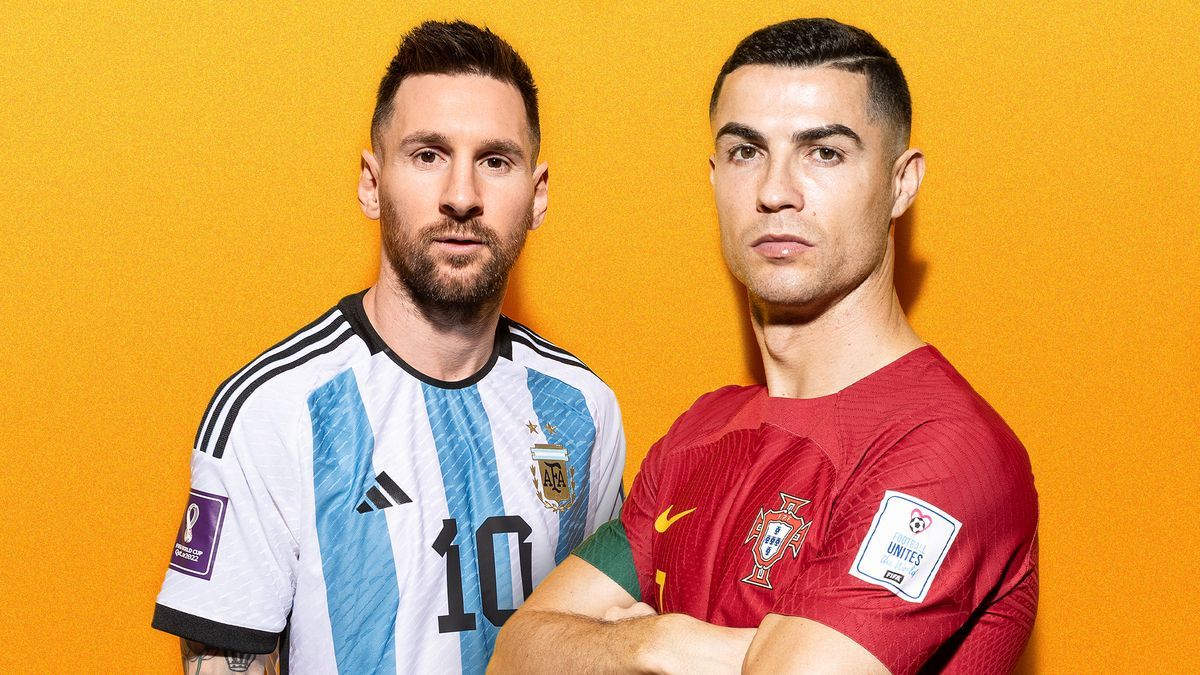
Forbes has confirmed both Lionel Messi and Cristiano Ronaldo as billionaires on the same day, completing the most extraordinary wealth story in football history.
The argument started before most of its participants were old enough to drive. Messi or Ronaldo. Barcelona or Manchester United. Eight Ballon d’Or awards each. A combined 14 Champions League titles. More than 1,500 career goals between them. Entire generations have grown up treating the rivalry as the defining question of the sport they love, and the answer, always, has depended on who you asked and what you valued.
On June 5, 2026, Forbes settled at least one dimension of it. Both Lionel Messi and Cristiano Ronaldo are billionaires. Confirmed. On the same day. By the same publication. The sport that produced them has never seen anything like it.
Forbes placed Ronaldo at approximately $1.2 billion and Messi at $1 billion, making them the first two footballers in history to simultaneously hold ten-figure fortunes. It is worth pausing on that for a moment. Football is the most watched sport on the planet. It has been played professionally for more than a century. And it has never, until today, produced two billionaires at the same time. The rivalry that defined an era of the game has delivered, as its financial finale, the most remarkable dual wealth story in sports history.
Ronaldo: how a Saudi gamble rewrote the financial record books
Bloomberg confirmed Cristiano Ronaldo’s billionaire status in June 2025, when he signed a two-year contract extension with Al Nassr in Saudi Arabia valued at between $400 million and $620 million including performance bonuses. That announcement changed the financial narrative of football permanently. Forbes is now confirming it formally today.
Understanding how Ronaldo became a billionaire requires understanding a decision that, at the time, looked like surrender. When he joined Al Nassr in January 2023, the European football establishment treated it as retirement by another name. A great player removing himself from competition that mattered. The Saudi Pro League as a well-paid farewell tour. He was 37 years old and had just been released by Manchester United following a combustible television interview. The narrative wrote itself.
What the narrative missed was the financial architecture underneath the move. Saudi Arabia has no personal income tax. A European salary of equivalent gross value would, at marginal tax rates of 45 to 52 percent across the UK, Spain or Italy, produce roughly half of what it delivers in Riyadh. When Ronaldo signed his June 2025 extension with Al Nassr, valued at between $200 million and $310 million annually including bonuses and delivering him a 15 percent equity ownership stake in the club itself, he was not just accepting a salary. He was structuring a tax-efficient wealth vehicle while simultaneously becoming a part-owner of the franchise that employs him.
That 15 percent Al Nassr equity stake is the structural innovation that elevated his wealth into billionaire territory. He is not merely a player at Al Nassr. He is a stakeholder. When the Saudi Pro League continues to attract the investment and the infrastructure spending that Crown Prince Mohammed bin Salman has committed to it, Ronaldo’s equity position appreciates alongside the league. The salary is finite. The equity is not.
His Nike lifetime deal, the first and only of its kind in the brand’s history with a footballer, contributes approximately $20 million to $30 million annually and runs for life. It is a commercial arrangement designed to survive his retirement by decades. His Pestana CR7 hotel chain, launched in 2016 in partnership with the Pestana Hotel Group and now operating in Lisbon, Madeira, New York, Madrid and Marrakech, gives him ownership stakes in premium hospitality real estate across some of the world’s most commercially valuable city markets. His CR7 fashion and fragrance portfolio, his YouTube channel with more than 60 million subscribers, and his Instagram following of more than 630 million, commanding sponsored post rates of $2 million to $3 million per placement, make him a media empire as much as an athlete.
His real estate holdings, anchored by a $21.6 million megamansion in Portugal with a 30-car garage and properties across Manchester, Madrid and Lisbon, add several hundred million dollars more. The number Forbes has confirmed today as $1.2 billion is, by most independent assessments, a conservative floor rather than a ceiling.
Messi: the Miami structure that conventional football never offered
Lionel Messi’s path to the billion-dollar threshold was quieter, slower and structurally different. Where Ronaldo got there on the strength of a single transformational contract and two decades of personal brand-building around his own initials, Messi got there through accumulated career earnings, a real estate empire formalised through a publicly listed REIT, and a contract structure in Miami that conventional European football would never have allowed him to negotiate.
The decision that defined his financial future came in 2023 when he turned down a reported $400 million per year offer from a Saudi Pro League club, said no to the most lucrative contract ever offered to any athlete in any sport, and went to Miami instead. At the time, the financial logic was not obvious. The Saudi offer was better on every salary metric. What it could not offer was what the Inter Miami structure delivered: equity.
Messi’s contract with Inter Miami gives him a $28.3 million annual salary per the 2026 MLS Players Association disclosures, the highest in MLS history by a margin. But the salary is the least interesting part of the arrangement. His contract also includes a revenue-sharing component tied to Apple TV’s MLS Season Pass deal. When Messi arrived in Miami, MLS subscriptions surged. A contractual portion of that streaming revenue flows back to him. He holds a no-cost equity option in Inter Miami CF itself, exercisable at retirement. Inter Miami’s franchise valuation has risen from approximately $585 million before his 2023 arrival to approximately $1.35 billion to $1.45 billion. The appreciation in that equity position, which Messi holds the option to convert into ownership at no cost, accounts for a significant share of the $70 million to $80 million total annual package that Inter Miami co-owner Jorge Mas has cited publicly.
His extended Inter Miami contract, signed in October 2025 and running through the 2028 MLS season, was announced with a video of Messi signing documents in the shell of Miami Freedom Park, the $1 billion stadium under construction that will be his new home from 2026. The caption on the club’s post was three words: He’s Home.
His Adidas partnership, a lifetime deal signed in 2017, pays approximately $25 million annually and like Ronaldo’s Nike arrangement, will outlast his playing career. His broader endorsement portfolio, including Mastercard, Pepsi, Apple, Gatorade, Hard Rock Cafe, Royal Caribbean, Saudi Tourism, Konami and others, generated total annual endorsement income that Forbes placed at approximately $75 million in 2025.
The most structurally sophisticated piece of his portfolio is Edificio Rostower Socimi, a Spanish real estate investment trust that his family office took public on the Portfolio Stock Exchange, a small Spanish digital exchange, in December 2024 at a valuation of approximately $232 million. The REIT holds hotels, apartments and commercial properties across Spain and represents the formalisation of a real estate empire built over two decades of European football earnings into a publicly visible, institutionally structured asset. Combined with his MiM Hotels investments across Spain, his properties in Barcelona, Buenos Aires, Miami and Ibiza, and his stake in the Kings League, the 7-a-side competition co-founded by former Barcelona teammate Gerard Piqué, and investments in El Club de la Milanesa restaurant chain, the portfolio is considerably more diversified than the headline figures suggest.
The rivalry that built two different kinds of empires
What Forbes confirmed today is not simply that two famous footballers are rich. It is that two men who have spent their entire adult lives competing for the same individual honours pursued entirely different financial philosophies and arrived, against considerable odds, at the same destination on the same calendar day.
Ronaldo built his empire loudly. He put his initials on everything it touched, built a personal brand so ubiquitous that CR7 functions as a globally recognised commercial identifier independent of any football result, and made a single bold financial decision at 37, the Saudi move, that accelerated his wealth accumulation beyond what any European contract could have produced. His empire is vertical: salary at the top, Nike below it, hotels and fashion and social media creating layers of revenue that compound over time.
Messi built his empire quietly. He turned down more money than any athlete in history has ever been offered and went to Miami instead, trusting that a carefully constructed equity and revenue-sharing arrangement would deliver more long-term value than the Saudi billions ever could. His real estate REIT is a vehicle that most football fans have never heard of. His Apple revenue-share deal is a financial instrument, not a brand deal. His Inter Miami equity option is an asset that will appreciate for years after he stops playing. His empire is horizontal: diversified, structured, less visible and, arguably, more durable.
Both philosophies worked. Forbes confirmed them both today. The argument about which of them is the greater player will run for another century. The argument about which of them built the smarter financial empire is just getting started.
DISCLAIMER: The Views, Comments, Opinions, Contributions and Statements made by Readers and Contributors on this platform do not necessarily represent the views or policy of Multimedia Group Limited.
DISCLAIMER: The Views, Comments, Opinions, Contributions and Statements made by Readers and Contributors on this platform do not necessarily represent the views or policy of Multimedia Group Limited.
