


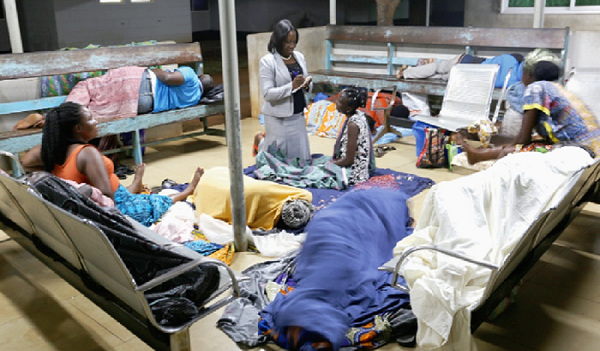
In the early hours of the morning at many of Ghana’s major hospitals, scenes of overcrowding have become all too familiar. Patients wait for treatment on benches, in corridors, and sometimes even in vehicles outside emergency units because there is no available space inside the hospital.
This situation, widely known as “No Bed Syndrome,” has become one of the most visible challenges facing Ghana’s healthcare system. Although it is not an official medical diagnosis, the term describes a reality in which patients requiring urgent admission are unable to access hospital beds due to overcrowding and capacity constraints.
For affected families, it often means prolonged waiting times, delayed treatment, and, in some cases, tragic outcomes.
Understanding No Bed Syndrome
No Bed Syndrome occurs when the number of patients requiring admission exceeds the available beds, trolleys, and clinical spaces within a healthcare facility.
The problem is particularly evident in emergency departments, maternity wards, pediatric units, and surgical wards across the country’s major referral hospitals, including Korle Bu Teaching Hospital, Komfo Anokye Teaching Hospital, and Tamale Teaching Hospital.
In emergency units, accident victims, stroke patients, and individuals suffering severe asthma attacks may wait hours before being allocated a bed. In maternity and pediatric wards, overcrowding sometimes forces healthcare workers to improvise under difficult conditions, while post-operative patients may spend extended periods in temporary recovery spaces because wards are already full.
Healthcare professionals warn that delays in admission and treatment can significantly affect patient outcomes, particularly during medical emergencies where every minute matters.
How the Crisis Develops
The causes of No Bed Syndrome extend far beyond the walls of hospitals themselves. Rather, the phenomenon is the result of multiple pressures across the healthcare system.
One major factor is the weakness of primary and district-level healthcare services. Many Community-based Health Planning and Services (CHPS) compounds and district hospitals lack specialist personnel, advanced diagnostic equipment, and essential treatment capacity. As a result, large numbers of patients are referred to regional and teaching hospitals, creating immense pressure on facilities that are already operating near capacity.
Another challenge is the prolonged occupation of hospital beds by patients who are medically stable but unable to leave. Delays in settling bills, limited rehabilitation services, and the absence of step-down care facilities often mean patients remain in acute-care beds far longer than medically necessary.
Hospital administrators also face difficulties with patient flow management. Delays in discharge procedures, administrative bottlenecks, and paperwork can slow the turnover of beds, even when patients are ready to leave.
At the same time, infrastructure expansion has not kept pace with Ghana’s rapid population growth. While the country’s population has increased dramatically over the past four decades, many major hospitals continue to operate within facilities originally designed for much smaller populations.
The Deeper Structural Causes
Experts argue that No Bed Syndrome is not simply a matter of insufficient buildings or hospital wards. It reflects broader structural challenges within the health sector.
Investment has historically been concentrated in tertiary healthcare facilities, while district hospitals and primary healthcare centres often struggle with limited resources. This imbalance pushes patients toward teaching hospitals for conditions that could be managed closer to their communities if adequate services were available.
Financial pressures also play a role. Delays in reimbursements from the National Health Insurance Scheme (NHIS) can strain hospital finances, affecting the ability of facilities to maintain services, expand capacity, and manage patient care efficiently.
The shortage of rehabilitation and long-term care facilities further compounds the problem. Patients recovering from strokes, major surgeries, or other serious illnesses frequently remain in acute-care wards because there are few alternative facilities available for ongoing recovery and support.
Urban concentration of healthcare specialists presents another challenge. Most specialists are based in Accra, Kumasi, and a few regional centres, leading many patients from rural communities to travel long distances in search of treatment. By the time they arrive, their conditions are often more severe and require longer hospital stays.
The Human Impact
Behind the statistics are thousands of personal stories.
Families often describe the distress of watching loved ones wait hours for admission despite requiring urgent care. Pregnant women, accident victims, children with severe illnesses, and elderly patients are among those most affected by overcrowding.
Healthcare workers are equally impacted. Doctors, nurses, and emergency personnel frequently operate under intense pressure, balancing overwhelming patient numbers with limited resources and space. Many report frustration when they know what treatment is needed but lack the physical capacity to provide it immediately.
The emotional and professional strain associated with these conditions has become a growing concern within Ghana’s public health sector.
Pathways to Reform
Addressing No Bed Syndrome requires a comprehensive approach that goes beyond simply increasing the number of hospital beds.
Strengthening district hospitals and primary healthcare facilities would reduce unnecessary referrals to teaching hospitals. Expanding access to diagnostic services, specialist outreach programs, and emergency care at the district level could significantly ease pressure on tertiary facilities.
Improving the financial sustainability of healthcare institutions through timely NHIS reimbursements would help hospitals manage resources more effectively and maintain critical services.
Investment in rehabilitation centres and step-down care facilities could also free acute-care beds more quickly, allowing hospitals to admit new patients in need of urgent treatment.
In addition, the adoption of digital bed-management systems could enable real-time tracking of available hospital space nationwide, helping ambulance services and healthcare providers direct patients to facilities with capacity.
A National Challenge
No Bed Syndrome represents more than a shortage of hospital beds. It highlights broader challenges relating to healthcare planning, infrastructure, financing, and service delivery.
Ghana’s healthcare professionals continue to demonstrate remarkable dedication under difficult circumstances. However, sustainable solutions will require coordinated investments across the entire healthcare system—from community clinics and district hospitals to rehabilitation centres and teaching hospitals.
As demand for healthcare services continues to rise, the question facing policymakers is no longer whether the problem exists, but how urgently the country is prepared to address it.
The answer will have profound implications for patient care, public confidence in the health system, and ultimately, the health and wellbeing of millions of Ghanaians.
