


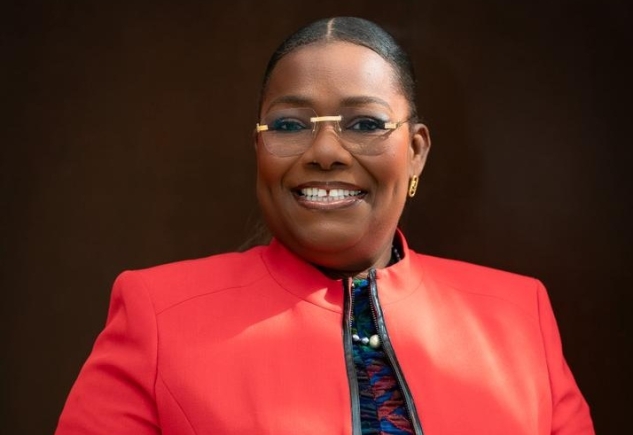
Nana Oye Bampoe Addo, Esq.
Opinion
7 minutes read
Her name is Abena. She wakes at 4 am in Kumasi, prepares her wares, and heads to Kejetia Market. She has done this for twenty-two years. She employs two young women, feeds her children, and supports her mother. By any measure, Abena is a productive member of Ghana’s economy.
But Abena has no pension. When her stall burned down, she had no insurance. When she needed capital, she borrowed from a moneylender at 60 per cent interest, not because she was unworthy, but because no bank would lend without collateral she did not have. Abena’s story is not exceptional. It is the story of millions of Ghanaians.
This article documents what the evidence tells us about Ghana’s informal sector, what was inherited, and the concrete steps President John Dramani Mahama’s government has already taken to build an economy that leaves no worker behind.
The scale of Ghana’s informal sector
Over twelve million workers (about 80 per cent of Ghana’s workforce) operate in the informal economy, contributing approximately 58% of GDP. Across Sub-Saharan Africa, 85 per cent of all employment is informal. Yet fewer than 5% of Ghana’s informal workers have any form of formal pension. Less than 12 per cent access formal credit. Over 70% have no business or life insurance beyond NHIS.
Women carry a particularly heavy burden within this gap. Ghana’s female labour force participation stands at 63.4%, with the majority working informally. Market women, seamstresses, and food vendors contribute an estimated 40% of informal sector output but receive less than 10% of formal financial services. Credit without insurance means one illness or fire wipes out both loan and business. Insurance without pensions means workers survive shocks but retire into poverty. Pensions without credit means workers cannot grow today. Inclusive transformation requires all three, and it requires them together.
The region shows what is possible. Rwanda’s Ejo Heza savings scheme grew from 37,000 subscribers in 2018 to 2.9 million by 2022, reaching 87 per cent informal workers and 49 per cent women. Kenya’s mobile credit ecosystem reached over 30 million users. Ghana, with 80% of its workforce in the informal economy, has a comparable and arguably larger opportunity. Economists estimate the potential tax revenue from a formalised informal sector could exceed GH₲15 billion annually. President Mahama’s administration is pursuing that opportunity now.
The legacy inherited, 2014-2023
To appreciate what is being built, we must be honest about what was inherited. Between 2014 and 2023, Ghana’s informal sector was not prioritised in economic policy. The national pension system reached only a small slice of formal workers, while the far larger informal workforce had limited pension provision, no credit policy, and limited insurance safety net.
The financial sector reforms of 2018 to 2020, though necessary, wiped out many informal savings institutions and micro-credit providers without a replacement safety net. COVID-19 in 2020 then exposed just how exposed informal workers were, with no buffer of any kind when income stopped. The Domestic Debt Exchange Programme of 2022 further eroded the value of pension funds, affecting many ordinary Ghanaians including informal savers. The result was a generation of older Ghanaians with no pension income, relying entirely on family support or continued labour well into old age.
The World Bank has documented that economic inclusion programmes combining credit, insurance, training, and social protection increase household income by 15 to 30% among the poorest households. Ghana largely missed that window. President John Dramani Mahama’s administration is opening it now.
The Mahama administration’s commitments
On December 7, 2024, Ghanaians made a clear choice. The NDC’s 2024 Resetting Ghana Manifesto placed the informal sector worker at the centre of economic policy for the first time in Ghana’s democratic history.
The Women’s Development Bank will provide low-interest loans and tailored financial services to women-owned businesses, treating Ghana’s female workers as economic actors who deserve a dedicated institution. The 24-Hour Economy Policy, built on the principle of same job, three shifts, three people, aims to unlock an estimated 500,000 additional jobs in manufacturing, agriculture, hospitality, and services. The Mo-Ne-Yo Initiative will create dedicated pension schemes for commercial drivers, Okada riders, farmers, fishermen, traders, market women, creatives, and artisans, the people who have waited longest for a safety net.
From promise to concrete action
Since taking office, the administration has moved on several fronts.
On March 14, 2025, Ghana’s 24-Hour Economy Act was passed into law. In its first three months, 47 companies signed up for extended operations. The ILO estimates that shift-work economies can increase GDP by 4 to 6% over five years. The Women’s Development Bank was operationalised with seed capital of GH₲500 million, offering interest rates of 5 to 8% against a market rate of 30 to 35%, specifically designed for market women, seamstresses, food vendors, and women-led cooperatives.
The legalisation of commercial motorcycles has been one of the most consequential acts of recognition for informal workers. Hundreds of thousands of Okada riders are now formally recognised, opening the door to health insurance, pension enrolment, and structured tax participation through mobile platforms. New regulatory frameworks for digital financial services have also been put in place, making it easier for fintechs to reach informal workers safely and at scale.
On pensions, NPRA has published Tier 3 informal sector regulatory guidelines. SSNIT has launched a 50-district outreach programme. The Mo-Ne-Yo pilot in the first quarter of 2025 enrolled 12,000 market women in voluntary pension schemes. Digital registration via USSD and mobile money is removing the need for paperwork and physical branches. The government’s target is 500,000 informal workers enrolled in pension schemes by the end of 2026. Rwanda enrolled 2.9 million in four years. Ghana is on course.
At the level of the Presidency, the Presidential Policy Delivery Unit tracks implementation across all ministries and flags where progress is stalling, ensuring that commitments made on paper are followed through in practice.
A shared mission: Government leading a national coalition
President Mahama’s administration has been clear from the outset: building an inclusive economy is not government’s work alone. The Office of the President has brought together ministries, civil society, development partners, and the private sector around a shared agenda.
The Kwahu Forum, championed by the Office of the Chief of Staff, has produced concrete results: businesses committing to 24-hour models, financial institutions designing informal credit products, and technology companies building USSD-based pension tools. The private sector is an active participant.
Ghana’s diaspora remittances exceeded $4.7 billion in 2023. An interagency committee including the Millennium Development Authority, civil society, and the Office of the Chief of Staff is developing a structured Philanthropy Framework to be presented to Cabinet, channelling domestic and diaspora resources into pension enrolment drives, insurance literacy campaigns, and women’s credit facilities nationwide.
Civil society, including the Centre for Social Justice, is already partnering with NPRA to drive pension registration in markets and transport terminals. Development partners including the ILO and World Bank are providing technical assistance to support SSNIT’s digital transformation and informal pension expansion. The administration works actively with all these partners.
Conclusion: A nation that includes all its people
In their landmark study of why some nations prosper and others do not, economists Acemoglu and Robinson argued that the difference lies in institutions: whether a country builds systems that reward participation, investment, and hard work. In Why Nations Fail (2012), argued that nations fall behind not because their people lack ability but because their institutions fail to create the conditions for people to save, invest, and grow. Ghana’s informal workers are not outside the economy. Abena in Kejetia, Kofi the carpenter in Tamale, Yaa the food vendor in Accra, the Okada rider in Kumasi, the fisherman in Elmina: they are the economy.
Inclusive credit, insurance, and pensions are not welfare. They are the foundational institutions that allow a nation to grow and keep the promise of prosperity for every citizen. President John Dramani Mahama’s administration has made that commitment in law, in budget, and in action. Ghana is building, deliberately and with evidence, an economy that works for every worker, starting with the millions who have waited the longest.
The author Nana Oye Bampoe Addo, Esq. is the Deputy Chief of Staff (Finance and Administration) at the Office of the President of the Republic of Ghana.
