


By Eric Appah Marfo, GNA
Accra, April 16, GNA – Professor Smile Afua Gavua Dzisi, the Deputy Director-General in charge of Management Services, Ghana Education Service (GES), has urged teachers to embrace Artificial Intelligence (AI) and remote learning to enhance academic outcomes.
She said the rapid transformation of education, driven by technology, globalisation and changing learner needs, required teachers to adapt continuously and equip themselves with modern skills to remain relevant.
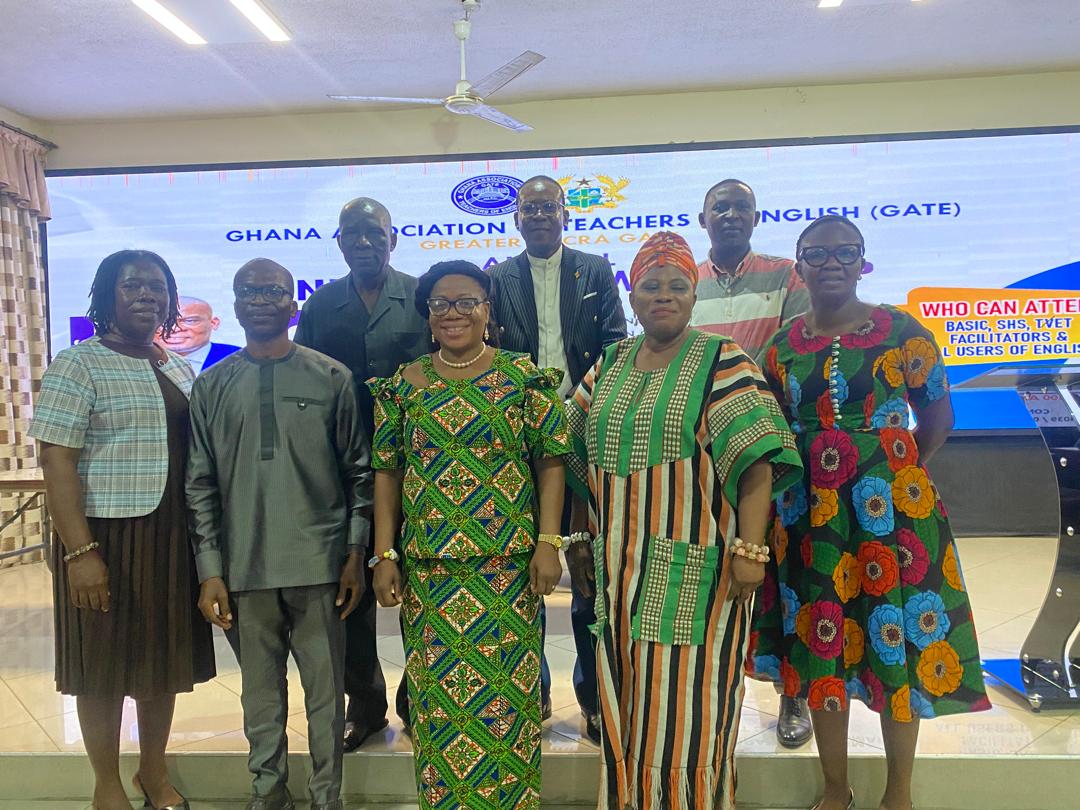
Prof Dzisi gave the advice on Wednesday at the 2026 Annual Conference and Workshop of the Ghana Association of Teachers of English (GATE), Greater Accra branch, held on the theme: “Adapting to Evolving Teaching and Learning Paradigms: A Collaborative Imperative for the State, Educators and Parents.”
The conference brought together teachers, education administrators, language coordinators, curriculum experts and facilitators to discuss emerging trends in education and strengthen the capacity of English teachers through practical training sessions.

Prof Dzisi said the era when teachers were the sole source of truth in the classroom was over, as information was now widely accessible through digital platforms and other sources.
“Our new paradigm demands that we become mentors and guides. The learners must be encouraged to direct their curiosity to interconnectivity. Our job is now to teach students how to think, not what to think,” she said.
She urged teachers of English to use technology to personalise learning and allow students to progress at their own pace.
Prof Dzisi said computers and high-speed internet were no longer luxuries, but fundamental requirements for equitable and inclusive education.
She cited the “One Teacher, One Laptop” and “One SHS Student, One Tablet” as initiatives that had improved access to digital learning tools for both teachers and students.
Prof Dzisi said the current curriculum sought to build foundational literacy and numeracy while placing emphasis on critical thinking, innovation, emotional intelligence and adaptability to prepare learners for the future world of work.

The government continued to invest significant resources annually in teacher training and the modernisation of school facilities to ensure the effectiveness of the national workforce, she noted.
Prof Dzisi described the English Language as more than just a school subject, therefore, improving its teaching was directly linked to improving overall academic performance across all subjects.
The Deputy Director-General expressed concern over declining reading culture and gaps in language proficiency, adding that the challenges required strategic collaboration among government, teachers, parents and associations such as the GATE.
She said parents also had a critical role to play in supporting learning at home, noting that education did not end at the school gate.
Prof Dzisi urged parents to work closely with teachers to support the holistic development of children, adding that while the State provided resources and teachers provided knowledge, parents must provide character formation.
Madam Constance Baaba Boateng, Greater Accra Regional Language Coordinator, commended the organisers for creating a platform for subject-specific teachers to receive updated professional training.
She said technology had made lesson preparation and delivery easier, unlike previous years when teachers had to rely solely on handwritten schemes of work and lesson plans.
Madam Boateng urged participants to use the knowledge gained from the Conference to transform teaching and learning outcomes in their schools.
Mr Isaiah K. Adzigodie, Greater Accra Regional President of GATE, said the theme was carefully chosen to reflect the realities of a technology-driven era in which teaching and learning had become increasingly borderless and dynamic.
He said educators had a responsibility to make knowledge readily accessible to learners, fortify themselves with relevant skills and creatively impact students with the support of technology and AI.
Mr Adzigodie traced the revival of GATE in Greater Accra from a period of inactivity before 2010 to its current growth, attributing the progress to the sacrifice and commitment of dedicated members who used personal resources to rebuild the association.
He said despite challenges such as inadequate infrastructure, lack of language laboratories, limited ICT facilities and instances where non-specialists were assigned to teach English, the Association had continued to create opportunities for members through professional development, further studies and networking.
Mr Adzigodie called for more investment in language laboratories and proper laptops for teachers to strengthen English Language teaching in schools.
Workshop sessions at the Conference covered techniques of script marking, grammar, comprehension, writing, literature, summary writing and classroom management skills.
Facilitators included experienced professionals such as WAEC Chief Examiners and authors, who provided practical guidance to improve teaching standards.
Participants were encouraged to adopt innovative teaching methods, collaborate more effectively with parents and stakeholders, and embrace lifelong learning in a rapidly changing educational environment.
GNA
Edited by Agnes Boye-Doe
