


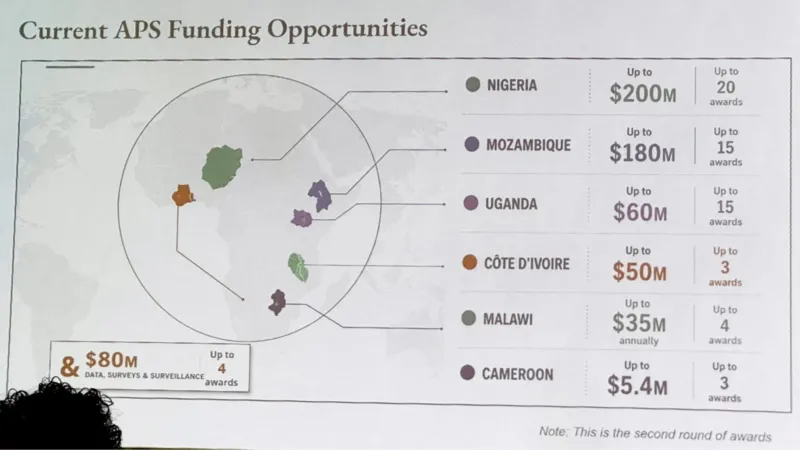
The United States has formally apologized following the revelation that a State Department presentation at an international HIV/AIDS conference featured a highly inaccurate and AI-generated map of Africa, incorrectly depicting Nigeria and six other nations as landlocked or misplaced. The error, which surfaced during a session on the President’s Emergency Plan for AIDS Relief (PEPFAR), Washington’s largest global HIV/AIDS funding initiative, has sparked widespread criticism and raised concerns about the competence and oversight of U.S. diplomatic and health programs.
The Inaccurate Map and Its Consequences
The flawed map was displayed during a virtual presentation on Sunday at the International AIDS Society Conference in Brazil, where a senior U.S. official—likely overseeing PEPFAR—addressed global HIV funding strategies. The visual error was so glaring that it distorted the geographical identity of multiple African countries, including:
- Nigeria, Africa’s most populous nation, was incorrectly labeled as landlocked, despite being bordered by the Gulf of Guinea.
- Mozambique and Ivory Coast (Côte d’Ivoire) were misplaced and deformed, with their borders appearing artificially stretched or overlapping.
- Malawi and Uganda were roughly positioned correctly but exhibited unrecognizable, misshapen outlines.
- Cameroon was mentioned in the text but not linked to any visible country on the map, leaving attendees confused about its location.
The error was first exposed when HIV/AIDS expert Emily Bass shared a screenshot of the slide on her Substack newsletter, prompting immediate backlash on social media. An independent analysis by Reuters later confirmed that the map contained an AI-generated watermark, suggesting it was likely produced using automated design tools rather than verified cartographic sources.
State Department’s Response and Admission of Fault
In a formal statement released on Friday, a U.S. State Department spokesperson acknowledged the “unfortunate error” and admitted that a team member had “hurriedly altered” the slide deck before the presentation, leading to the misinformation and confusion among attendees—including African partners relying on accurate data.
The spokesperson emphasized that the department “took full responsibility for the confusion and misrepresentation it caused,” though they did not specify whether the AI-generated map was intended as a placeholder or a finalized visual aid.
Broader Implications: Staffing Cuts and Diplomatic Reputation
The incident has reignited debates about the impact of recent U.S. foreign policy restructuring under President Donald Trump’s administration, which has seen significant reductions in global health funding and massive layoffs of career diplomats and health experts.
A former State Department and National Security Council (NSC) official, Cameron Hudson, criticized the error as a “reflection of what happens when you fire one-third of the State Department, eliminate critical oversight, and rely on under-supervised junior staff.”
Hudson argued that while cost-cutting measures may appear efficient, they come at a substantial reputational and operational cost, particularly in diplomatic and humanitarian efforts. He warned that similar missteps in critical negotiations—such as nuclear deals with Iran—could have far more severe consequences than a mislabeled map.
“There isn’t just a cost savings when eviscerating staff and expertise. There’s a real cost in reputation and effectiveness.”
The criticism extended beyond former officials, with Senator Jeanne Shaheen (D-NH), the ranking member of the Senate Foreign Relations Committee, calling the error “an embarrassment” and questioning the role of AI in diplomacy.
“This is what happens when [the State Department] fires career experts and tries to have AI conduct diplomacy.”
Why This Mistake Matters
Beyond the humiliation of misrepresenting African nations, the error underscores systemic weaknesses in U.S. global health and diplomatic operations. PEPFAR, which has saved millions of lives since its inception in 2003, relies on precise data and professional expertise to allocate resources effectively. A single mislabeled map—especially one generated by AI without proper verification—undermines trust in U.S. leadership on the continent.
Moreover, the incident raises ethical concerns about the unsupervised use of AI tools in official communications, where accuracy and credibility are non-negotiable. While AI can assist in data visualization, human oversight remains essential to prevent deliberate or accidental misinformation, particularly in health and humanitarian contexts.
Conclusion: A Lesson in Accountability and Precision
The U.S. apology, while necessary, does little to restore confidence in its diplomatic and health programs unless accompanied by meaningful reforms. The case of the AI-generated, inaccurately labeled map serves as a cautionary tale about the dangers of rushed decision-making, understaffing, and the unchecked use of technology in sensitive international engagements.
As the U.S. continues to navigate global health crises, diplomatic negotiations, and geopolitical challenges, ensuring accuracy, transparency, and professional expertise must remain non-negotiable priorities. The mislabeling of Nigeria and other African nations on a single slide is not just an error—it is a symbol of deeper systemic issues that demand immediate attention.
