


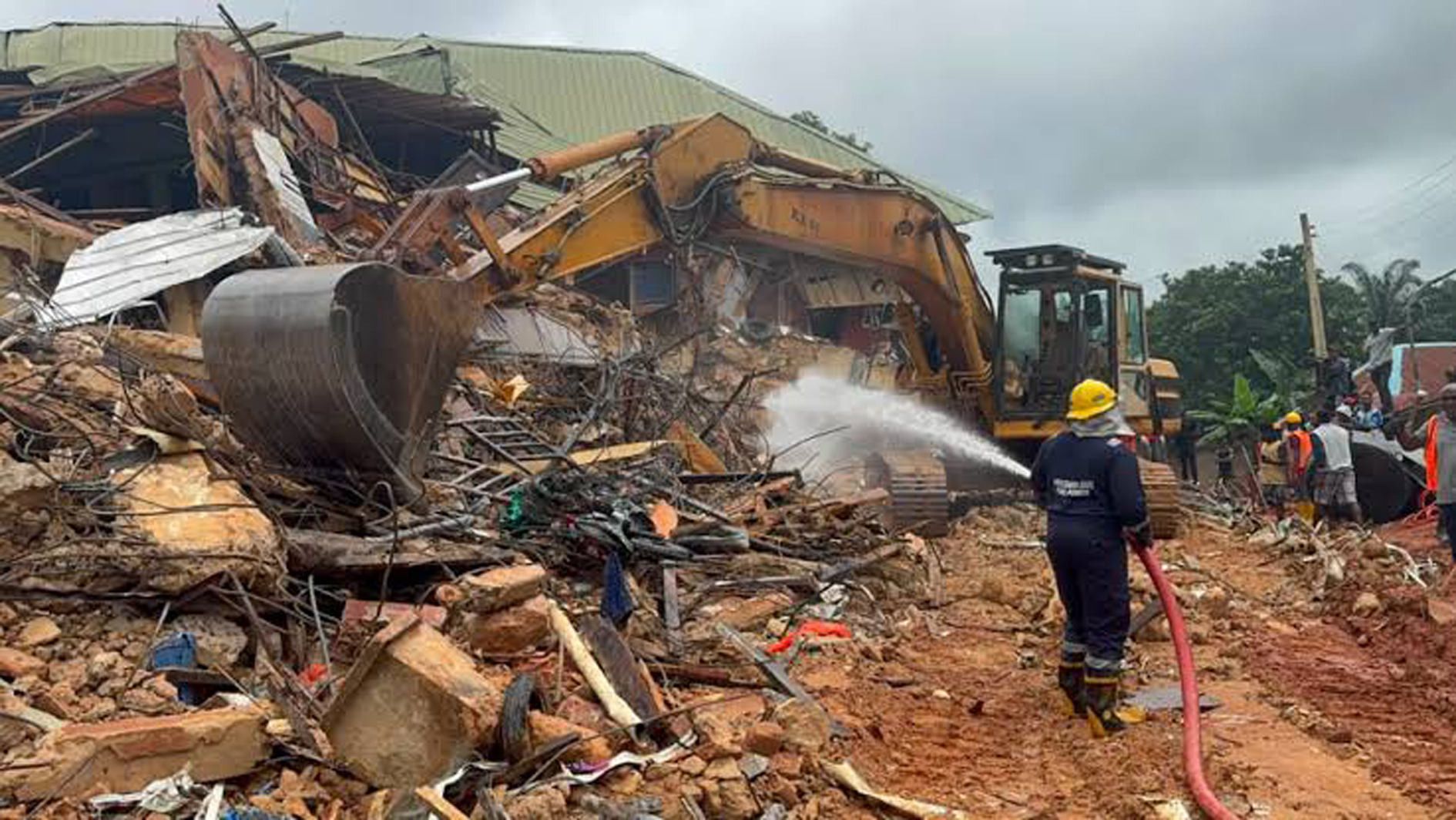
The catastrophic collapse of a private hostel in Amaokpala, Orumba North Local Government Area of Anambra State, near the Federal Polytechnic, Oko, has left a trail of devastation, claiming lives, injuring dozens, and plunging families into unimaginable grief. The incident, which unfolded with alarming speed, has reignited urgent calls for stricter enforcement of building safety standards across Nigeria, with religious leaders, government officials, and civil society groups demanding immediate action to prevent future tragedies.
At the forefront of these calls is Bishop Ignatius Nnabuike Orizu, the National President of Anambra Prays International and the Redeemed Israel Community of Nazarene Association (RICONA). In a solemn statement issued from his Bishop’s Court in Akwu-Anozie, Uruagu, Nnewi, Orizu condemned the disaster as a “tragic loss” that has left communities in mourning. His words reflect the deep sorrow felt by many as families grapple with the loss of loved ones and the physical and emotional toll of the incident.
A Call for Accountability and Reform
The bishop’s statement underscored the systemic failures that contributed to the collapse, emphasizing that poor construction practices, substandard materials, and lax regulatory oversight are to blame. He urged government agencies, developers, engineers, and property owners to take immediate and decisive action to ensure compliance with approved building codes, mandatory structural inspections, and the use of high-quality construction materials.
“Effective regulatory oversight and strict adherence to safety standards are not optional—they are non-negotiable,” Orizu declared. “Avoidable building failures continue to inflict needless suffering on families and communities, and this must stop.”
His appeal comes at a critical time, as Nigeria has faced multiple building collapses in recent years, including residential apartments, commercial buildings, and educational institutions. Each tragedy has exposed glaring weaknesses in the country’s construction regulatory framework, where enforcement remains patchy at best and nonexistent at worst.
Prayers, Condolences, and Solidarity
Beyond calling for systemic change, Bishop Orizu extended heartfelt condolences to the families of the victims, praying for divine comfort and strength in their hour of grief. He also urged Nigerians to stand in solidarity with the affected families through prayers, financial support, and emotional encouragement.
“The brokenhearted need Yahweh’s presence, and those crushed in spirit must find healing,” he quoted from Psalm 34:18, reinforcing the spiritual dimension of the crisis. His prayers included eternal rest for the departed, swift recovery for the injured, and divine strength for rescue workers still engaged in search-and-rescue operations.
Commendation for First Responders
While condemning the structural failures that led to the disaster, Orizu praised the swift and selfless efforts of emergency responders, security personnel, medical teams, volunteers, and members of the host community. Their rapid response helped mitigate the worst outcomes, saving numerous lives and providing critical assistance to the injured.
“Their dedication and bravery are commendable,” the bishop stated. “In moments of crisis, it is the courage of ordinary citizens and professionals who ensure that lives are spared. Their work must be recognized and supported.”
A Cry for National Action
The Amaokpala tragedy is not an isolated incident but part of a larger pattern of preventable disasters in Nigeria. From the 2022 collapse of the Ikeja GRA apartment complex to the 2021 disaster at the Lagos State University (LASU) hostel, these incidents have consistently revealed flaws in construction ethics, regulatory enforcement, and public safety protocols.
Bishop Orizu’s statement serves as a wake-up call, demanding that:
1. Government agencies (such as the National Building Control Council (NBCC) and state-level regulatory bodies) strengthen enforcement mechanisms and conduct unannounced inspections of high-risk structures.
2. Developers and contractors must prioritize safety over cost-cutting, ensuring that certified engineers oversee construction and approved materials are used.
3. Property owners must maintain and upgrade existing buildings to meet current safety standards, rather than ignoring structural defects due to financial or administrative neglect.
4. Public awareness campaigns must be launched to educate citizens on what to look for in safe buildings and how to report violations without fear of retaliation.
The Human Cost of Negligence
Beyond the statistical toll of the Amaokpala collapse—multiple fatalities, dozens injured, and families displaced—the tragedy carries a profound human cost. Children, students, and young adults who were living, studying, or working in the hostel are now permanently scarred by the experience. The psychological trauma of surviving a building collapse is often underreported, yet it lingers, affecting mental health for years.
“Every life lost is a tragedy,” Orizu remarked. “Every family left in mourning is a community in pain. We must ask ourselves: How many more disasters must occur before we act?”
A Call to Collective Responsibility
The path forward requires more than just policy changes—it demands a cultural shift in how Nigeria approaches construction, urban planning, and public safety. Developers must be held accountable, regulators must enforce laws without bias, and citizens must demand transparency.
Bishop Orizu’s plea is clear: Nigeria cannot afford another Amaokpala. The time for half-measures and empty promises is over. Stricter laws, rigorous enforcement, and a society that prioritizes lives over profits must become the new standard.
As rescue operations continue and the nation mourns, the lesson of Amaokpala remains a sobering reminder—prevention is not just a regulatory requirement; it is a moral obligation. The question now is whether Nigeria will learn from this tragedy or repeat the same mistakes in the future.
