


Questions are being raised over how a company incorporated only this year, with no publicly known track record in telecommunications, has qualified to proceed to the next stage of Ghana’s 5G spectrum licensing process.
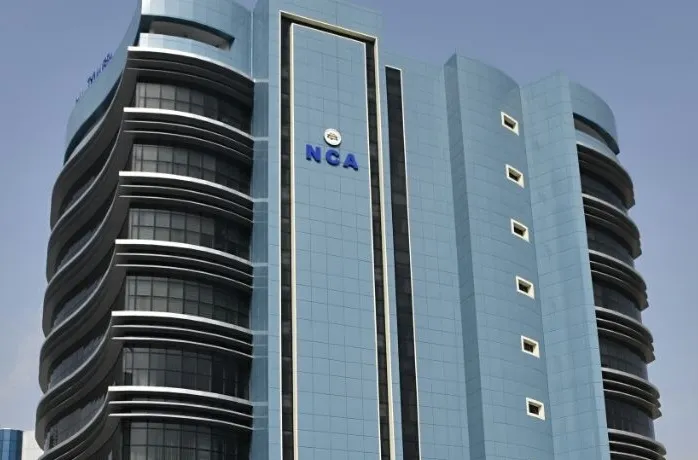
The National Communications Authority (NCA) announced on Wednesday (9 September) that three of the four applicants for spectrum licences in the 700MHz, 2.3GHz and 3GHz bands had passed its eligibility review and technical qualification assessment.
The successful applicants are Scancom Plc (MTN Ghana), Ghana Telecommunications Company Limited (Telecel Ghana) and Goal Telecommunications Ltd. The fourth applicant, Infrava Ltd, was disqualified.
While MTN Ghana and Telecel Ghana are established telecommunications operators, the inclusion of Goal Telecommunications has set tongues wagging within industry circles.
Checks conducted so far indicate that Goal Telecommunications was registered only this year. It has no readily identifiable website, publicly disclosed operational history or known track record in Ghana’s telecommunications industry.
Searches on two individuals listed as directors and shareholders of the company, Samuel Appiah Kubi and Michael Boateng, also produced little publicly available information linking either of them to previous telecommunications operations or major technology infrastructure projects.
The development has prompted questions about the experience, technical partnerships, financing and operational capacity Goal Telecommunications presented to satisfy the NCA’s eligibility and technical qualification requirements.
The only unsuccessful applicant, Infrava Ltd, was led by Edith Whitman, whose publicly identifiable business activity in Ghana appears to be associated principally with poultry farming rather than telecommunications. Infrava’s technical submission will not be opened after it failed to pass the qualification stage.
In its statement, the NCA said the assessment covered both an eligibility review and a technical qualification assessment under Envelope A of the Request for Applications. It added that all applicants had been informed of its decision and given reasons where applicable.
The three qualified applicants will now proceed to Stage Three, involving the opening and ranking of their best-price offers.
The fact that a company is newly incorporated does not, by itself, make it ineligible to bid for a spectrum licence. However, given the strategic importance and considerable commercial value of Ghana’s 5G spectrum, industry observers say the NCA must provide sufficient transparency to assure the public that every successful applicant possesses the required technical competence, financial capacity and beneficial ownership structure.
Central to the emerging controversy are several unanswered questions: Who are the technical and financial partners behind Goal Telecommunications? What telecommunications experience does the company or its promoters possess? What evidence of financing and rollout capacity was submitted? And what specific criteria enabled the company to qualify alongside two established network operators?
The NCA has not suggested that Goal Telecommunications failed to meet any requirement. Its published decision states expressly that the company passed the qualification stage. Nevertheless, greater disclosure could help dispel growing suspicion and reinforce confidence in the integrity of the licensing process.
