


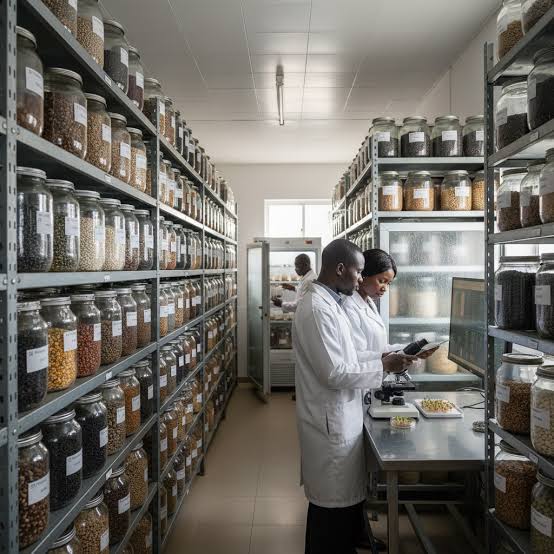
Ghana has taken a monumental step toward securing its agricultural future by depositing 422 crop genetic samples into the Svalbard Global Seed Vault in Norway—the world’s most extensive and secure seed preservation facility. This strategic move aims to protect the nation’s vital plant genetic resources from existential threats such as climate change, pest infestations, and disease outbreaks, ensuring food security for generations to come.
The initiative, spearheaded by the Council for Scientific and Industrial Research–Plant Genetic Resources Research Institute (CSIR-PGRRI) in Bunso, Eastern Region, marks a significant milestone in Ghana’s efforts to preserve biodiversity. The institute invested approximately $15,000 to duplicate and store these genetic materials under an international conservation program designed to safeguard crop diversity against evolving environmental and biological challenges.
A Strategic Move for Long-Term Food Security
In an exclusive interview, Dr. Rashied Tetteh, Deputy Director of CSIR-PGRRI, emphasized the critical importance of this safety duplication exercise. He explained that Ghana leveraged support from the Global Crop Diversity Trust (GCDT) in Germany to duplicate and preserve 422 germplasm accessions in October 2023.
Dr. Rashied Tetteh, Deputy Director of CSIR-PGRRI, discusses the significance of Ghana’s seed vault contributions.
“This duplication ensures that Ghana’s most valuable plant genetic resources are shielded from emerging threats,” Dr. Tetteh stated. “The seeds are now stored in the Svalbard Global Seed Vault, serving as a global backup that guarantees their survival even in the face of catastrophic events.”
Part of a Pan-African Initiative
Ghana was one of five African nations selected to participate in the Seeds for Resilience Project, alongside Nigeria, Kenya, Ethiopia, and Zimbabwe. The program, funded by the Global Crop Diversity Trust, aims to enhance food security across the continent by preserving essential crop varieties.
Dr. Tetteh revealed that each participating country was tasked with selecting five key crop species for duplication. Ghana’s chosen varieties—maize, rice, cassava, cowpea, and indigenous garden egg (Okra) types—were strategically selected due to their high demand in research and crop improvement programs.
“These crops are among the most frequently requested from our national gene bank for scientific studies and breeding programs,” he explained. “Their selection was based on their critical role in Ghana’s agriculture and their potential to adapt to future challenges.”
A Multi-Layered Protection Strategy
Before the seeds were shipped to Norway, Ghana conducted a first-level duplication at the International Institute of Tropical Agriculture (IITA) in Ibadan, Nigeria, adhering to international conservation standards. This step ensures an additional layer of security, as the seeds are now preserved in two distinct locations—IITA and the Svalbard vault.
Dr. Tetteh highlighted that while the duplication process was costly, limiting the number of accessions, the long-term benefits far outweigh the expenses. “Maintaining optimal storage conditions locally is a challenge due to funding constraints,” he noted. “By depositing these seeds abroad, we ensure redundancy and accessibility, even if our national gene bank faces unforeseen disruptions.”
Legal Safeguards and Future Access
Before the materials were shipped, Ghana signed a formal agreement guaranteeing its right to retrieve the seeds whenever necessary. This legal framework ensures that Ghana retains full ownership and control over its genetic resources, even in storage.
“The collections at Svalbard and IITA provide multiple layers of protection,” Dr. Tetteh affirmed. “This global backup is essential for preserving Ghana’s invaluable plant genetic diversity and ensuring resilience against climate change and other future threats.”
A Blueprint for Global Agricultural Security
The Svalbard Global Seed Vault, located in the Arctic archipelago of Norway, is renowned for its ultra-low temperatures (-18°C) and geological stability, making it one of the safest repositories for seeds worldwide. Since its establishment in 2008, the vault has stored over 1 million seed samples from more than 1,000 institutions, including national gene banks and research centers.
Ghana’s contribution to this global effort underscores its commitment to sustainable agriculture and food sovereignty. By securing these genetic resources, the country not only protects its economic interests but also contributes to global food security, ensuring that future generations have access to diverse, resilient crop varieties.
As climate change intensifies and agricultural threats grow, initiatives like this serve as a critical safeguard, reinforcing the importance of international cooperation in preserving biodiversity. Ghana’s proactive approach sets a precedent for other nations to follow, demonstrating that investing in seed conservation is an investment in the future of humanity.
