


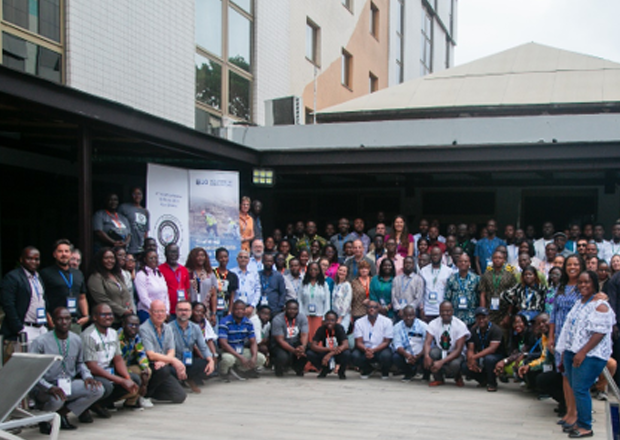
The global demand for gold, lithium, cobalt, and other critical minerals is accelerating at an unprecedented rate, driven by the transition toward renewable energy, electric vehicle manufacturing, and advanced technological infrastructure. As nations scramble to secure these finite resources, Africa—particularly Ghana—stands at a crossroads. A recent International Association for Structural Geology and Tectonics (IASGT) conference hosted in Accra has reignited discussions about how geological research, scientific innovation, and strategic partnerships could position Africa as the next frontier in mining exploration. Beyond mere resource extraction, the event underscored the need for advanced geological knowledge, sustainable mining practices, and regional expertise to ensure long-term economic growth and environmental stewardship.
The Strategic Importance of Geological Research in Africa’s Mining Boom
For decades, Africa has been a major player in global mining, particularly in gold, diamonds, and base metals. However, the continent’s potential extends far beyond what has been traditionally exploited. Structural geology—the study of rock deformation, fault systems, and tectonic processes—plays a pivotal role in identifying concealed mineral deposits, particularly in regions where surface exploration is limited. The IASGT conference, organized in collaboration with the University of Ghana’s Department of Earth Science, the Centre for Exploration Targeting (University of Western Australia), and Agate Project (Australia), brought together international geoscientists, mining executives, and policymakers to discuss how enhanced geological research can unlock Africa’s untapped mineral wealth while mitigating risks associated with exploration and extraction.
Professor Manish Mamtani, a leading structural geologist from the Indian Institute of Technology (IIT) Kharagpur, emphasized that Africa’s participation in global geoscience research has historically been underrepresented. Most major scientific conferences are held in Europe and North America, limiting opportunities for African researchers to engage with cutting-edge research. The IASGT conference, held in Ghana, was a deliberate effort to bridge this gap by fostering collaboration between local institutions, international experts, and industry stakeholders.
“Our goal is to promote structural geology research, particularly in developing countries, where many of the world’s future mineral discoveries will occur,” Mamtani stated. “By bringing world-class scientists to Africa, we ensure that local researchers gain exposure to advanced methodologies and can contribute meaningfully to global knowledge.”
The Role of Technology and Human Expertise in Modern Exploration
While artificial intelligence (AI) and machine learning (ML) are revolutionizing mineral exploration by analyzing vast datasets, fieldwork and geological interpretation remain indispensable. AI models can process satellite imagery, seismic data, and drone surveys, but they rely on accurate geological interpretations to make meaningful predictions. Professor Mamtani highlighted that technology alone cannot replace human expertise—geologists must still conduct ground-truthing surveys, fault mapping, and structural analysis to validate AI-driven insights.
In Ghana, where gold production has surged and interest in lithium and rare earth minerals is growing, the integration of AI with traditional geology could significantly improve exploration efficiency. Professor Prince Ofori Amponsah, Head of the University of Ghana’s Department of Earth Science, noted that the conference was not just an academic event but a strategic opportunity to strengthen Ghana’s scientific capacity.
“Structural geology is the backbone of mineral exploration,” Amponsah explained. “Understanding how rocks deform, how faults control fluid movement, and how mineral deposits form allows us to predict where new resources might be found. This knowledge is critical for both exploration and sustainable mining.”
Industry Collaboration: Bridging the Gap Between Research and Practice
One of the most notable aspects of the conference was the strong participation from Ghana’s mining sector, including Asante Gold Corporation, AngloGold Ashanti’s Obuasi Mine, and Turaco Gold. These companies recognized that scientific research is no longer a luxury but a necessity in an era where easily accessible deposits are dwindling, and hidden ore bodies require advanced detection techniques.
Daniel Apau, a representative from Asante Gold, described the conference as a “platform for knowledge exchange” that directly benefits exploration strategies. “The discussions on cutting-edge technologies in structural analysis have been invaluable,” he said. “The more we understand about the subsurface, the better we can target exploration efforts and reduce risks.”
This collaboration aligns with a global trend where mining companies are increasingly investing in geoscience research to improve discovery rates. In Ghana, where gold remains the dominant export, the potential for lithium and other critical minerals—essential for batteries and green energy technologies—could make the country a regional hub for mineral processing and innovation.
Structural Geology: The Key to Unlocking Africa’s Hidden Resources
Professor Mark Jessell, a distinguished geologist from the University of Western Australia, provided insights into why structural geology is indispensable for mineral exploration, particularly in West Africa. “The rocks we see today are a result of millions of years of tectonic activity,” he explained. “Faults and fractures act as pathways for mineral-rich fluids, transporting gold, lithium, and other valuable elements from deep within the Earth’s crust.”
In Ghana, tectonic structures—such as shear zones and fault systems—have historically controlled the formation of gold deposits in regions like Obuasi and Tarkwa. Understanding these structures allows geologists to predict where new deposits might form, reducing the need for high-risk, high-cost exploration drilling.
Beyond mineral exploration, structural geology also plays a crucial role in mine stability, groundwater management, and environmental planning. “When engineers design mines, they must account for hidden faults that could lead to collapses or water infiltration,” Jessell noted. “Geological knowledge ensures that mining operations are not only efficient but also safe and sustainable.”
Beyond Mining: Geoscience for Disaster Resilience and Infrastructure Development
The conference also highlighted the broader societal benefits of Earth science research. Professor Tolulope Olugboji, a geophysicist from the University of Rochester, argued that geological studies are essential for disaster preparedness, particularly in regions prone to earthquakes, landslides, and volcanic activity.
While Ghana is less seismically active than East Africa, it still lies near active fault systems that could pose risks in the future. “Geophysics helps us understand the Earth’s internal structure,” Olugboji said. “By monitoring tectonic movements, we can predict seismic hazards and design infrastructure that is resilient to natural disasters.”
This dual-purpose approach—mineral exploration and disaster mitigation—demonstrates how investment in geoscience benefits both the economy and public safety. Governments across Africa must prioritize scientific research infrastructure, including seismic monitoring networks, geological surveys, and training programs, to ensure long-term sustainability.
Ghana’s Ambition: Becoming Africa’s Geoscience Hub
The IASGT conference in Accra was more than just an academic gathering—it was a strategic move to position Ghana as a leader in African geoscience. Professor Ofori Amponsah expressed ambition to turn the University of Ghana’s Department of Earth Science into a regional center of excellence, attracting international collaborations, research funding, and industry partnerships.
“We want the world to recognize that Ghana is not just a mining nation but a hub for geological research,” Amponsah stated. “By hosting conferences like this, we are sending a message: Africa has the expertise, the potential, and the capacity to lead in mineral exploration and Earth sciences.”
This vision aligns with Ghana’s broader economic strategy to move beyond raw material exports and instead add value through processing, technology, and knowledge transfer. If successful, such initiatives could reduce reliance on foreign expertise, create high-skilled jobs, and attract foreign investment in both mining and geoscience research.
The Future: AI, Geology, and the Next Mining Revolution
The convergence of geology, AI, and data science is set to redefine mineral exploration in the coming decades. Professor Jessell emphasized the need for stronger collaborations between geologists, computer scientists, and industry professionals to harness this potential.
“The future of mining lies in interdisciplinary research,” he said. “Geologists provide the fundamental understanding of Earth systems, while computer scientists develop the algorithms that process data. By working together, we can accelerate discovery and improve sustainability.”
For Ghana, this means investing in digital mining technologies, training the next generation of geoscientists, and fostering public-private partnerships to ensure that the country captures maximum value from its mineral resources.
Conclusion: A Turning Point for Africa’s Mining Sector
The IASGT conference in Accra marked a pivotal moment for Ghana and Africa’s mining future. While the continent is rich in minerals, its ability to unlock this potential sustainably depends on scientific innovation, strategic investments, and global collaboration.
By strengthening geological research, integrating AI with traditional geology, and positioning itself as a regional geoscience leader, Ghana could not only secure its economic future but also set a benchmark for the rest of Africa. The message from Accra is clear: Africa’s mining boom will not be defined by what lies beneath the surface, but by the knowledge and expertise developed above it.
