


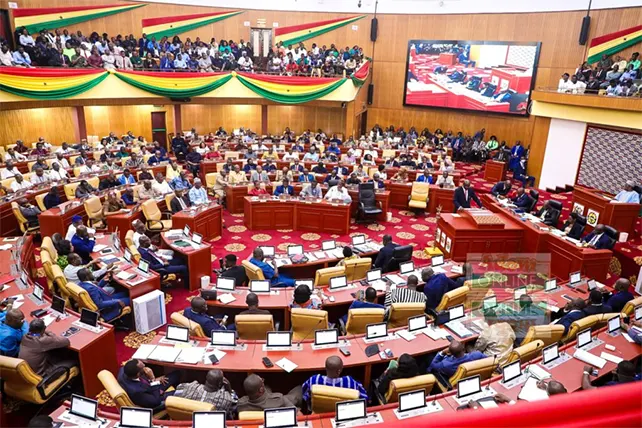
On a historic legislative milestone, Ghana’s Parliament has unanimously passed the Ghana Cocoa Board (COCOBOD) Bill, 2026 under a certificate of urgency, marking a pivotal transformation for the nation’s cocoa sector. The decision, reached after extensive deliberation, aligns with the Finance Committee’s recommendation to expedite the bill ahead of the 2026/2027 cocoa season, which begins in early September. This legislative overhaul introduces a comprehensive legal framework to restructure COCOBOD’s operations, ensuring greater regulatory oversight, financial autonomy, and strategic value addition across the cocoa value chain.
A New Legal Foundation for COCOBOD’s Evolution
The Ghana Cocoa Board Bill, 2026 was formally introduced in Parliament on Tuesday, July 28, 2026, by Deputy Minister for Finance, Thomas Nyarko Ampem. The bill was subsequently referred to the Finance Committee for assessment under Article 106(13) of the 1992 Constitution and Parliament’s Standing Orders. The urgency of the legislation was justified by the imminent start of the cocoa pricing window, necessitating swift legislative action to avoid disruptions in the sector’s financial and operational mechanisms.
The Chairman of the Finance Committee, Isaac Adongo, emphasized that the bill’s urgency was non-negotiable due to the critical timing of the new cocoa season. The proposed reforms aim to modernize COCOBOD’s governance, enabling it to regulate, monitor, and optimize activities from farm-level production to export, while fostering domestic value addition—a long-standing priority for Ghana’s economic diversification.
Key Reforms: Financial Autonomy, Farmer Protection, and Local Processing
The bill introduces three transformative policy measures that will redefine Ghana’s cocoa industry:
- A New Domestic Financing Model for Cocoa Purchases
- Under the current system, COCOBOD relies heavily on foreign financing to fund cocoa purchases, exposing the sector to currency fluctuations and geopolitical risks.
-
The new legislation eliminates this dependency by authorizing COCOBOD to raise funds through commercial papers, bonds, and other domestic financial instruments. This shift is expected to reduce reliance on external lenders, stabilize pricing, and boost investor confidence in Ghana’s cocoa market.
-
Guaranteed 70% FOB Price for Farmers
- One of the most contentious yet progressive provisions is the legal mandate for COCOBOD to pay farmers 70% of the Free-on-Board (FOB) price—a significant improvement over previous payment structures.
-
The Finance Committee highlighted that this fixed percentage guarantee will eliminate arbitrary deductions and ensure transparency in farmer compensation, a long-standing demand from cocoa-producing communities.
-
50% Cocoa Allocation for Local Processing
- To boost domestic value addition, the bill reserves 50% of Ghana’s cocoa production for local processors, reducing reliance on raw cocoa exports.
- This policy is projected to create thousands of jobs, stimulate industrial growth, and increase export earnings from processed cocoa products (such as cocoa butter, powder, and confectionery ingredients).
Financial Mechanisms and Economic Implications
The domestic financing framework proposed in the bill is designed to strengthen COCOBOD’s financial resilience. By leveraging commercial paper issuances and domestic debt instruments, the board will no longer be constrained by foreign exchange volatility or lender conditions. This approach is expected to:
– Reduce interest rate risks associated with foreign borrowing.
– Enhance liquidity for cocoa purchases during peak seasons.
– Attract private sector investment in cocoa processing and infrastructure.
The 70% FOB guarantee is particularly significant, as it protects farmers from price manipulation and ensures predictable income, which is crucial for sustainable cocoa farming. Historically, fluctuations in cocoa prices have led to payment delays and disputes, undermining farmer trust in COCOBOD. The new law seeks to permanently address these issues through legally binding payment terms.
Stakeholder Debate: Urgency vs. Comprehensive Review
While the Majority Party supported the fast-tracking of the bill, the Minority Party raised serious concerns about the lack of sufficient stakeholder consultation and the sudden introduction of a revised draft after an earlier version was considered in 2025.
Key objections included:
– Insufficient Public and Stakeholder Engagement: Minority members argued that cocoa farmers, processors, and industry experts had not been adequately consulted on the new financial and processing policies, raising fears of unintended consequences.
– Rushed Legislative Process: They warned that rushing the bill without detailed scrutiny could lead to public backlash and erode confidence in Parliament’s decision-making.
– Discrepancies in Drafting: The Minority pointed out that the 2025 version had undergone extensive committee reviews, yet the 2026 bill appeared significantly revised, suggesting last-minute changes without proper justification.
In response, Majority Leader Mahama Ayariga defended the urgency, stating that most stakeholder concerns had already been addressed in joint committee reviews involving the Finance, Economy, and Agriculture Committees. He assured the House that amendments were incorporated before the bill’s final presentation, ensuring that key reforms were legally sound and practical.
Broader Economic and Sectoral Impact
The passage of this bill is expected to have far-reaching economic implications for Ghana:
– Increased Farmer Incomes: The 70% FOB guarantee will boost disposable income for over 800,000 cocoa farmers, many of whom operate in rural and economically vulnerable regions.
– Industrial Growth: The 50% local processing mandate will stimulate job creation in cocoa processing plants, logistics, and related industries, reducing unemployment in Ashanti, Eastern, and Western Regions, where cocoa farming is dominant.
– Currency Stabilization: By reducing foreign borrowing, Ghana will mitigate exchange rate risks, ensuring more stable cocoa trade finances.
– Global Competitiveness: The domestic value addition push aligns with global trends in cocoa processing, positioning Ghana as a preferred supplier of high-value cocoa derivatives.
Challenges Ahead: Implementation and Monitoring
While the legislative victory is significant, the success of these reforms hinges on effective implementation. Key challenges include:
– Infrastructure Development: Local processors will need modernized facilities to handle increased cocoa volumes.
– Financial Literacy for Farmers: Ensuring farmers understand the new payment structure and benefit maximization will require agricultural extension services.
– Market Access for Processed Goods: Ghana must strengthen export markets for processed cocoa to realize economic gains from the 50% allocation.
– Transparency in Financing: COCOBOD must demonstrate accountability in domestic fund-raising to maintain public and investor trust.
Conclusion: A New Era for Ghana’s Cocoa Sector
The passage of the Ghana Cocoa Board Bill, 2026, represents a bold step toward modernizing Ghana’s cocoa industry, moving beyond raw material exports toward value-added economic empowerment. By securing farmer incomes, promoting local processing, and ensuring financial independence, the reforms could transform cocoa from a cash crop into a driver of sustainable development.
However, the real test will be in execution. If implemented efficiently and transparently, this legislation has the potential to elevate Ghana’s cocoa sector to global leadership, ensuring economic stability, job creation, and long-term prosperity for cocoa-dependent communities. The coming months will be critical in determining whether this legislative vision translates into tangible benefits for farmers, processors, and the nation as a whole.
