


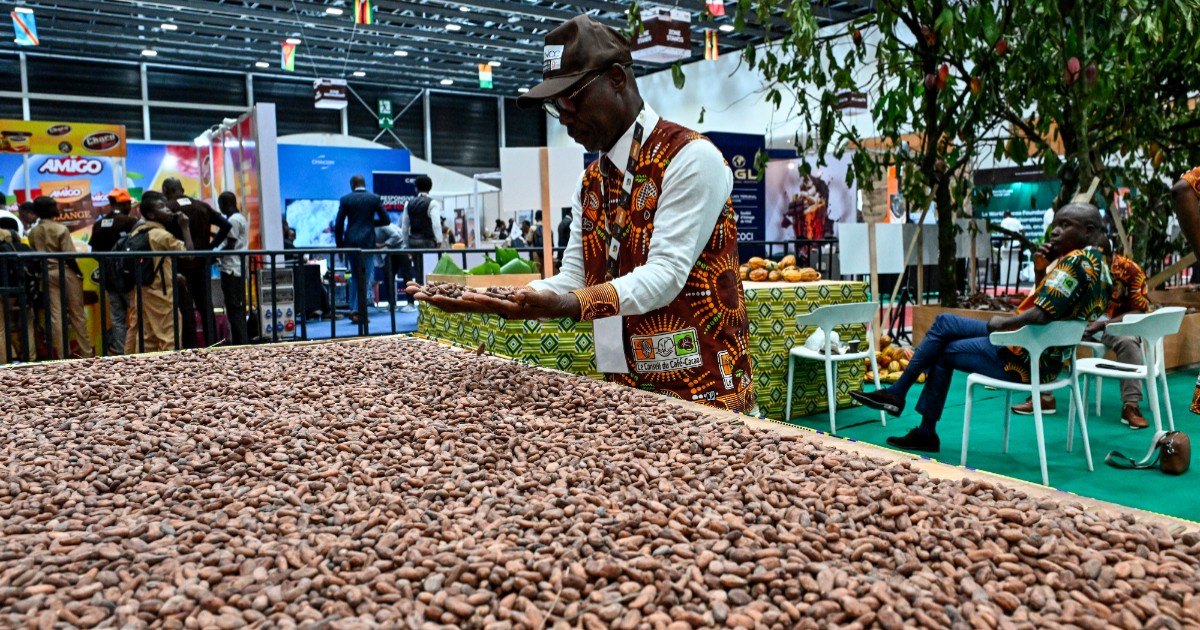
Ghana, the world’s second-largest cocoa producer, has issued a stark warning: its cocoa output could plummet by 16% in the 2026/2027 harvest season, a decline that could send shockwaves through global chocolate markets and trigger a surge in consumer prices. The projection, announced by the Ghana Cocoa Board (COCOBOD), underscores a perfect storm of climate variability, disease outbreaks, aging plantations, and illegal mining—all converging to threaten the nation’s agricultural backbone.

A Multifaceted Crisis: Why Ghana’s Cocoa Yields Are Collapsing
COCOBOD attributes the projected decline to three interlinked challenges:
-
El Niño and Extreme Weather Patterns
The board cites the return of El Niño conditions, coupled with unseasonal heavy rains in May and June 2024, as primary culprits. These climatic disruptions disrupt pollination, reduce flowering, and weaken cocoa pods, directly impacting yield. Historical data shows cocoa trees exhibit a physiological bearing pattern, alternating between high- and low-yield years—a cycle now exacerbated by erratic weather. -
Cocoa Swollen Shoot Virus Disease (CSSVD) and Plantation Decline
The Western and Western North regions, which together produce over 50% of Ghana’s cocoa, are under siege from CSSVD, a devastating viral disease that causes stunted growth, leaf curling, and premature death of trees. Compounding the issue, a significant portion of Ghana’s cocoa groves are aging beyond peak productivity, with many plantations operating past their optimal yield window. -
Unchecked Galamsey Mining and Land Degradation
Illegal small-scale gold mining (galamsey) has become a silent saboteur of cocoa production. Beyond the physical destruction of farmland, galamsey operations displace established cocoa groves, contaminate water sources, and disrupt soil fertility—all of which further suppress yields. Environmentalists warn that without intervention, these activities could permanently degrade up to 20% of Ghana’s arable cocoa land by 2030.
Government Response: Can Rehabilitation Save the Season?
In an attempt to mitigate the crisis, COCOBOD has outlined a multi-pronged intervention strategy for the 2026/2027 crop cycle:
-
Farm Rehabilitation and Disease Control
The board is accelerating the clearance of infected trees in high-risk zones while introducing enhanced surveillance and quarantine measures to contain CSSVD. Additionally, targeted replanting programs are being rolled out in degraded regions to restore productivity. -
Expanded Chemical Defense
A nationwide fungicide and insecticide spraying campaign will be intensified to protect crops from pests and fungal infections, which have historically exacerbated yield losses. -
Restoration of Free Fertilizer Distribution
After a three-year hiatus, COCOBOD has reinstated its free fertilizer subsidy program, providing smallholder farmers with nutrient-rich inputs to boost soil health and tree vigor. The initiative aims to offset the nutritional deficiencies caused by galamsey-induced soil degradation. -
Strategic Crop Rotation and Diversification
To reduce vulnerability to climate shocks, COCOBOD is promoting alternative cash crops such as cashew and shea nuts in cocoa-growing regions, ensuring farmers have multiple revenue streams during low-yield cocoa seasons.
Regional Cooperation and the Broader Cocoa Crisis
Ghana’s warning comes at a critical juncture for West Africa’s cocoa sector, as neighboring producers face parallel challenges:
- Côte d’Ivoire, the world’s top cocoa supplier, has also reported declining yields due to climate change and disease, prompting calls for regional pricing coordination to stabilize markets.
- Cameroon and Nigeria, the continent’s third and fourth-largest producers, are shifting focus toward value addition, with Nigeria recently banning raw cocoa bean exports to encourage domestic processing into cocoa butter, powder, and chocolate. This move aims to double processing revenues by 2030, reducing dependence on raw material exports.
Earlier this year, cocoa regulators from Cameroon, Côte d’Ivoire, Ghana, and Nigeria convened in Abuja to discuss unified pricing mechanisms, smuggling crackdowns, and supply chain transparency. The goal? To prevent speculative price hikes and ensure fair compensation for farmers amid supply shortages.
Global Implications: What Does This Mean for Chocolate Consumers?
The 16% production drop—if realized—could tighten global cocoa supplies by nearly 2 million metric tons, equivalent to ~10% of global demand. Historically, such shortages have led to:
– Price spikes (e.g., cocoa futures surged 30% in 2021 during a similar supply crunch).
– Shortages in confectionery markets, particularly in Europe and Asia, where chocolate consumption is highest.
– Increased reliance on synthetic cocoa alternatives, which may alter the taste and texture of popular brands.
Industry analysts warn that without intervention, Ghana’s cocoa sector could face a long-term decline, similar to Ivory Coast’s struggles in the 1990s, when overproduction led to price collapses and farmer poverty.
The Road Ahead: Can Sustainability Save the Sector?
Experts emphasize that Ghana’s cocoa crisis is not just a production issue—it’s a sustainability challenge. Solutions require:
✅ Stronger enforcement of anti-galamsey laws to protect farmland.
✅ Investment in climate-resilient cocoa varieties that thrive under erratic weather.
✅ Expanded farmer training in precision agriculture and disease management.
✅ Regional cooperation to prevent smuggling and price manipulation.
For now, the 2026/2027 season hangs in the balance. If COCOBOD’s interventions succeed, the decline may be mitigated—but if climate extremes persist, the consequences for Ghana’s economy and global chocolate lovers could be severe.
One thing is certain: The world’s second-largest cocoa producer is at a crossroads, and its choices will ripple far beyond Ghana’s borders.
