


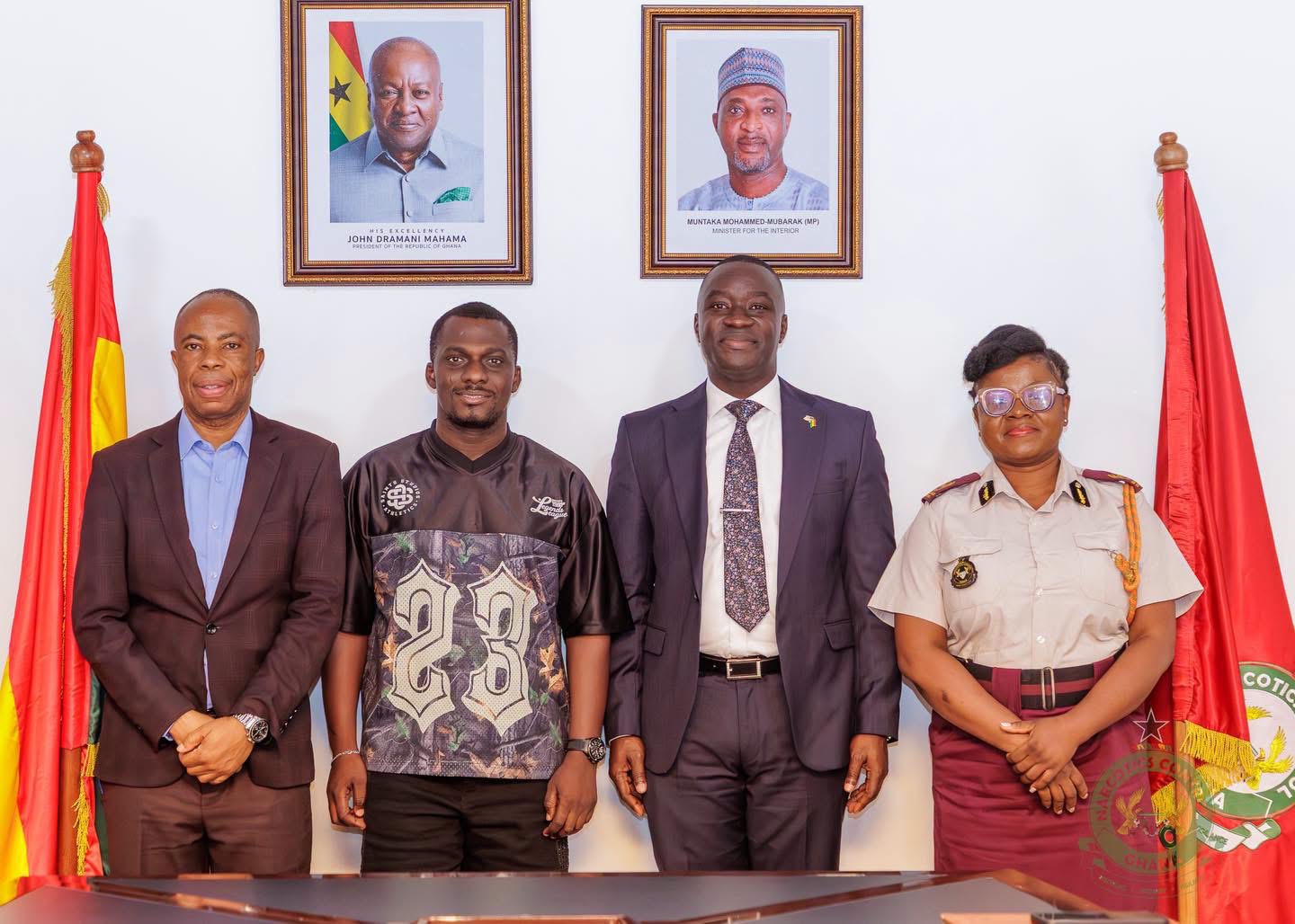
Accra, July 28 – In a landmark initiative to combat drug abuse among Ghana’s youth, the Narcotics Control Commission (NACOC) has formally engaged Zion Felix, one of the country’s most influential digital content creators and media personalities, to spearhead a nationwide drug-free lifestyle advocacy campaign. The collaboration, announced through a statement to the Ghana News Agency (GNA), marks a strategic shift in NACOC’s approach to public education, leveraging the power of social media and digital storytelling to reach young audiences effectively.
A Strategic Alliance for Youth Empowerment
The engagement was formalized during a high-level meeting led by Mr. Alexander Twum-Barimah (Esq.), the Deputy Director-General in charge of Enforcement, Control, and Elimination at NACOC. Twum-Barimah emphasized the critical role of digital influencers in shaping behavioral trends among Ghanaian youth, noting that their platforms offer unparalleled access to millions of young people who are often more receptive to messages delivered through relatable, engaging, and culturally resonant content.
“The fight against drug abuse cannot be won through enforcement alone,” Twum-Barimah stated. “Prevention must be proactive, and partnerships with media personalities like Zion Felix are indispensable in delivering impactful messages that resonate with our youth. Together, we can foster a culture of responsibility and informed decision-making.”
The Power of Prevention: A Call for Collective Action
Twum-Barimah underscored that prevention remains the most sustainable solution to drug abuse, urging stronger collaborations between government agencies, media personalities, and civil society. He highlighted how digital influencers—with their ability to craft compelling narratives—can dismantle misconceptions about substance use while promoting healthy alternatives such as sports, education, and creative pursuits.
“Young people today are bombarded with conflicting information,” he added. “By working with influencers who understand their language and lifestyle, we can ensure that our prevention messages are not just heard but internalized.”
Zion Felix’s Commitment to Public Health Advocacy
In response to the invitation, Zion Felix expressed wholehearted support for NACOC’s mission, pledging to utilize his broad digital reach to educate Ghanaian youth on the devastating consequences of drug abuse. Felix, known for his engaging content and deep connection with young audiences, emphasized the importance of trust and authenticity in health communication.
“As someone who has built a career on connecting with young people, I see this as a responsibility—not just an opportunity,” Felix remarked. “Drug abuse is a silent epidemic that destroys lives, families, and futures. By using my platforms, I can help shift perceptions, provide accurate information, and inspire healthier choices.”
His commitment aligns with NACOC’s multi-pronged strategy, which includes community outreach, school-based programs, and digital campaigns, all aimed at reducing demand for illicit substances while strengthening Ghana’s drug control framework.
Key Stakeholders in the Campaign
The meeting, held at NACOC’s headquarters in Accra, was attended by several senior officials, including:
– PNCO Ernestina Adjei, the Acting Director of Drug Demand Reduction, who oversees NACOC’s prevention and rehabilitation programs.
– Mr. Felix Agariga, the Director of Intelligence, whose team focuses on monitoring drug trends and emerging threats.
– The Head of the Public Affairs Department, responsible for media engagement and public communication strategies.
Together, these stakeholders discussed tactical approaches for integrating Felix’s influence into NACOC’s existing campaigns, including:
– Social media awareness drives targeting high-risk groups.
– Collaborative content creation, such as documentaries, podcasts, and interactive Q&A sessions.
– Partnerships with schools and youth organizations to reinforce messaging in real-world settings.
A Vision for a Drug-Free Future
This partnership is part of NACOC’s broader efforts to modernize drug prevention strategies in Ghana. By engaging digital natives like Zion Felix, the Commission aims to bridge the gap between traditional public health messaging and the digital-first mindset of today’s youth.
“We are not just fighting an epidemic; we are building a culture,” Twum-Barimah concluded. “And culture is shaped by the stories we tell, the role models we celebrate, and the values we prioritize. With Zion Felix by our side, we are one step closer to that vision.”
As Ghana continues to grapple with rising drug abuse rates, particularly among adolescents, this collaboration signals a new era of prevention—one that combines authority with influence, policy with storytelling, and duty with digital innovation.
NACOC Deputy Director-General Alexander Twum-Barimah (Esq.) addresses stakeholders during the engagement meeting with Zion Felix.
Zion Felix shares insights on drug prevention strategies with NACOC officials, highlighting the importance of youth engagement.
A snapshot of NACOC’s headquarters in Accra, where the strategic partnership was formalized, located near the Registrar General’s Department.
