


Aksa Enerji’s Rise: From Turkish Powerhouse to African Expansion Through Alleged Bribery
In the heart of Brooklyn’s federal courtroom, a high-stakes trial has brought to light one of the most brazen cases of international corruption involving a Turkish energy conglomerate, Aksa Enerji Üretim A.Ş. (Aksa), and its alleged role in a $700,000 bribery scheme to secure a lucrative electricity contract in Ghana. The case, centered around Asante Kwaku Berko, a former Goldman Sachs investment banker and dual US-Ghanaian citizen, has exposed how a company deeply connected to Turkish President Recep Tayyip Erdoğan’s inner circle allegedly used bribes, shell companies, and political influence to penetrate Africa’s energy markets.
The trial, which began in early 2026, is not just a legal battle against Berko but also a scrutiny of Aksa’s business practices, its government-backed expansion strategy, and the role of Turkish political elites in facilitating foreign contracts through questionable means. As prosecutors present evidence of money laundering, conspiracy, and violations of the US Foreign Corrupt Practices Act (FCPA), the case raises critical questions about how state-linked Turkish firms operate abroad and whether similar schemes have been employed in other African nations.
The Ghanaian Power Contract: A $700,000 Bribery Scheme Unfolded
Background: Erdoğan’s 2016 Ghana Visit and the Birth of a Controversial Deal
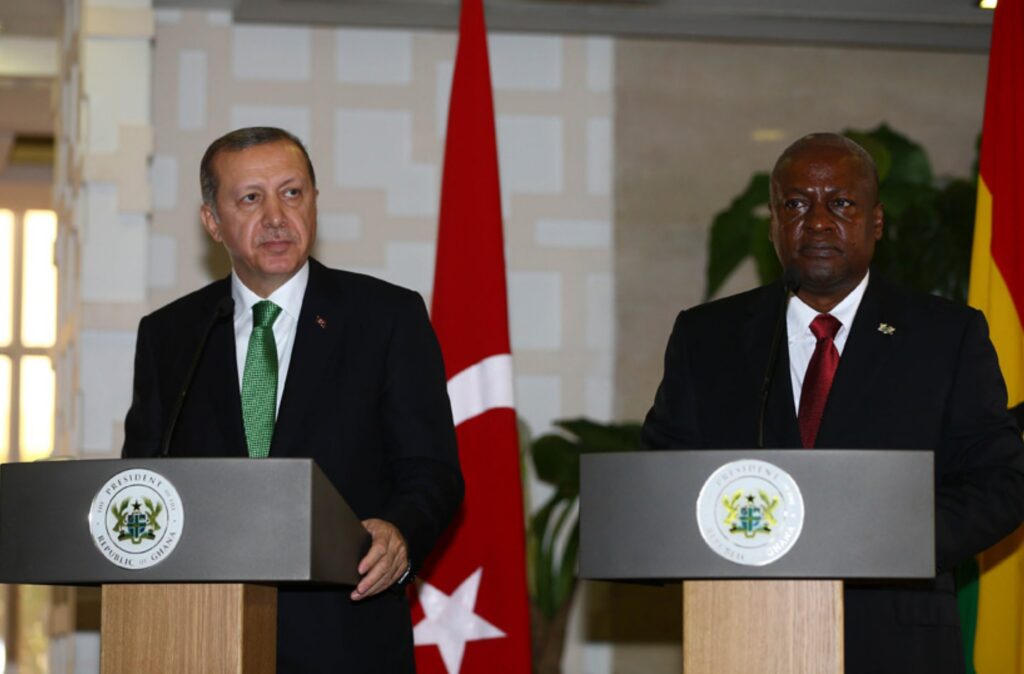
In March 2016, Turkish President Recep Tayyip Erdoğan visited Ghana to strengthen trade and investment ties with then-President John Dramani Mahama. Little did the world know that behind the scenes, Aksa Enerji, a company with deep ties to Erdoğan’s government, was already in advanced negotiations to secure Ghana’s 370-megawatt Tema power plant—a deal that would later become the epicenter of a US federal bribery trial.
Aksa, a subsidiary of Kazancı Holding, a family-controlled Turkish conglomerate with operations spanning 25 countries, had positioned itself as Turkey’s largest independent power producer. By March 2026, the company operated 40+ power plants across seven countries, generating 3,188 megawatts of electricity using natural gas, coal, wind, hydroelectric, and biogas technologies. Its African expansion, however, was built on a foundation of alleged bribery, political favors, and opaque financial dealings.
The Role of Asante Kwaku Berko: A Goldman Sachs Banker Turned Conspirator
The case against Berko reveals how a former Goldman Sachs executive became the linchpin in a bribery and money-laundering conspiracy. Prosecutors allege that Berko, while working at Goldman Sachs in London (2014-2017), facilitated the $700,000 bribery scheme to secure the Tema power plant contract for Aksa.
Goldman Sachs, which had advised Aksa and held a 16% stake in the company, was initially set to arrange a $190 million loan for the project. However, after uncovering suspicious financial transactions, the bank withdrew its financing, forfeiting potential fees of over $11 million.
The US grand jury indictment paints a detailed picture of how Berko, in collaboration with Aksa executives and Ghanaian intermediaries, orchestrated a multi-layered bribery operation:
- Shell Companies as Money Laundering Vehicles
- Two Ghanaian consulting firms, Tricorp Group Ltd. and RMG De Ghana Ltd., were used as front companies to launder bribe money.
- Tricorp allegedly collected bribes and reimbursed payments made to Ghanaian officials.
-
RMG submitted false invoices for “consulting services,” allowing Aksa to reimburse bribes after they had already been paid.
-
The Money Trail: From Turkey to Ghana via US Banks
- Funds originated from Turkish bank accounts, passed through New York correspondent banks, and ended up in Ghanaian accounts, including those controlled by Berko.
-
Key transactions included:
- April 14, 2015: A $500,000 “consulting fee” was wired to RMG, with instructions to route it to Ghana.
- May 22, 2015: Aksa transferred $1.5 million to RMG, which later funneled $75,000 into Berko’s account.
- September 2015: A $140,000 reimbursement was sent to a Ghanaian intermediary, who then transferred $99,900 to Berko.
- February 2016 & September 2016: Additional $200,000 and $1 million were transferred to Ghanaian accounts linked to Berko.
-
The “Consulting Contract” as a Bribe Disguise
- In September 2015, Aksa’s parent company, Kazancı Holding, signed a $42 million “services agreement” with Tricorp.
- The contract was not for genuine consulting but served as a legal cover for bribes and kickbacks.
- Prosecutors allege that tens of millions were paid under this agreement, with milestone payments tied to contract approvals, letter of credit completion, and plant operations.
Aksa’s Business Model: Political Connections and Non-Competitive Bidding
How Erdoğan’s Government Backed Aksa’s African Expansion
Aksa’s rapid growth under Erdoğan’s presidency (since 2002) has been linked to political favors, including non-competitive government contracts in Turkey. The company’s international expansion strategy relied heavily on:
– Government-backed power purchase agreements (PPAs) with long-term, dollar-denominated guarantees.
– Leveraging political influence to secure contracts in emergency energy markets (e.g., Ghana, Mali, Congo).
– Using Turkish intelligence and diplomatic channels to facilitate deals.
By March 2026, Aksa operated in nine African countries, with Ghana as its most strategic base:
– Tema Power Plant (370 MW): Commissioned in 2017, extended for 15 more years in 2022.
– Kumasi Power Plant (350 MW): Under construction since 2023, with 130 MW operational by January 2026.
– Total Ghanaian capacity: 500 MW, making Ghana central to Aksa’s African strategy.
The Role of Turkish Executives: From Finance Minister to CEO
Aksa’s senior leadership reflects its deep ties to Turkey’s political establishment:
– Naci Ağbal, a former Turkish finance minister and central bank governor, became Aksa’s CEO and chairman in January 2026.
– Ağbal also serves as vice chairman of Kazancı Holding, while Şaban Cemil Kazancı (head of the Kazancı family) chairs the boards of Aksa Enerji and Kazancı Holding.
The company’s financial reports (as of March 2026) highlight its heavy reliance on African contracts:
– $3.12 billion in total assets, with $1.57 billion in shareholders’ equity.
– $1.19 billion in net financial debt, largely funded by long-term, dollar-denominated PPAs.
– Overseas operations contributed nearly 50% of sales and 84% of EBITDA, proving how African contracts drive Aksa’s profitability.
The Legal Battle: Prosecutors vs. Berko’s Defense
Evidence Presented by the Prosecution
The government’s case rests on:
1. Financial Records & Email Correspondence
– Thousands of emails between Berko, Aksa executives, and Ghanaian intermediaries.
– Bank transfer records showing $700,000+ in suspicious payments.
– iCloud and device data extracted from Berko’s personal accounts.
- The “Confidential Source” Controversy
- A FBI-assisted recording of a meeting between Berko and an unnamed confidential source was admitted as evidence.
- The source allegedly claimed:
- Relatives of Ghana’s then-President Mahama initially demanded $50 million for support.
- $40 million was later discussed in negotiations.
- $1 million was paid to a technical adviser to the power minister.
-
Berko’s defense argued the source was unreliable, but prosecutors maintained corroborating evidence existed.
-
Goldman Sachs’ Due Diligence Failures
- The bank withdrew from financing after discovering suspicious communications between Berko and Ghanaian officials.
- Aksa executives lied to Goldman Sachs, claiming payments were for “routine services” (e.g., visa arrangements, car rentals).
- One executive reportedly said: “Sorry. We don’t have time for this.” when pressed for documentation.
Berko’s Legal Struggles & the Road to Trial
- May 2017: Berko voluntarily met with US investigators in New York.
- August 2020: A federal grand jury indicted him (just before the statute of limitations expired).
- November 2022: Arrested at London’s Heathrow Airport and extradited to the US in July 2024.
- December 2025: Judge Diane Gujarati rejected Berko’s motions to suppress evidence, allowing the trial to proceed.
Berko faces:
– One count of conspiracy to violate the FCPA.
– One substantive FCPA count.
– One count of conspiracy to commit money laundering.
Broader Implications: Turkey’s Corruption Network in Africa
A Pattern of Bribery in African Energy Deals?
The Berko case is not an isolated incident. Aksa’s business model—leveraging political influence, shell companies, and bribes—raises questions about whether similar schemes have been used in other African nations.
In 2022, a former Turkish intelligence officer, Ali Burak Darıcılı, inadvertently revealed that MİT (Turkish intelligence) used bribes to facilitate the abduction and forced return of Gülen movement members in Africa and Central Asia. His remarks suggested that knowing whom to bribe was a key part of intelligence operations.
If Aksa’s Ghana deal is proven, it could set a precedent for future FCPA cases against Turkish executives, even if their companies operate under Erdoğan’s political protection.
The Risk for Turkish Nationals: US Justice’s Long Arm
The case serves as a warning to Turkish businesspeople and executives:
– US prosecutors can pursue FCPA violations even if the corruption occurs abroad.
– Money laundering, conspiracy, and wire fraud charges can be brought under US jurisdiction if funds pass through American banks.
– Aksa’s executives, including Naci Ağbal and Şaban Kazancı, could face criminal charges if evidence links them to direct bribery or reimbursement schemes.
Aksa’s Future: Can the Company Survive the Scandal?
Despite the legal storm, Aksa remains a major player in Africa’s energy sector. Its financial health (as of March 2026) shows:
– Strong cash flow from dollar-denominated PPAs.
– Expansion into new markets (e.g., Burkina Faso, Guinea, Madagascar).
– Subsidiaries in 10+ African countries, with local ownership structures to obscure financial flows.
However, the Ghana trial could:
1. Damage Aksa’s reputation, making future contracts harder to secure.
2. Trigger investigations in other African nations, where similar schemes may have occurred.
3. Lead to stricter US and EU scrutiny of Turkish state-linked companies.
Conclusion: A Case That Exposes the Dark Side of Turkish-Africa Energy Deals
The Aksa Enerji bribery trial is more than just a legal battle—it is a window into how state-backed Turkish firms operate abroad. By bribing officials, using shell companies, and laundering money through international banks, Aksa allegedly secured lucrative contracts in Ghana, setting a precedent for future corruption cases involving Turkish businesses.
As the trial progresses, the world will watch closely to see whether:
– Aksa executives face criminal charges.
– Similar schemes in other African countries are uncovered.
– US prosecutors expand investigations into Turkish state-linked corruption.
One thing is certain: this case has already exposed the risks of doing business in Africa with little regard for transparency—and the consequences when the law finally catches up.

Turkish President Recep Tayyip Erdoğan meets with Ghana’s former President John Dramani Mahama in 2016, during a visit aimed at boosting trade and investment ties.

Aksa Enerji’s 370-megawatt Tema power plant in Ghana, the center of the US bribery trial.

Asante Kwaku Berko, the former Goldman Sachs banker at the center of the US federal indictment.

Aksa Enerji’s corporate headquarters in Turkey, led by former finance minister Naci Ağbal.

A map of Aksa’s African operations, including Ghana, Mali, Congo, Cameroon, and Senegal.

Financial documents from Aksa’s 2026 earnings report, highlighting its reliance on African contracts.

A screenshot of an email exchange between Berko and a Ghanaian intermediary, discussing bribe payments.

The Brooklyn federal courthouse where the trial is taking place.

Aksa’s Kumasi power plant under construction, part of the company’s 350-megawatt natural gas project.

Kazancı Holding’s global operations, including its subsidiaries in Africa, Europe, and Asia.

A timeline of key events in the bribery scheme, from 2014 to 2017.

Nordic Monitor’s logo, the independent research network covering extremist movements and corruption cases.
