


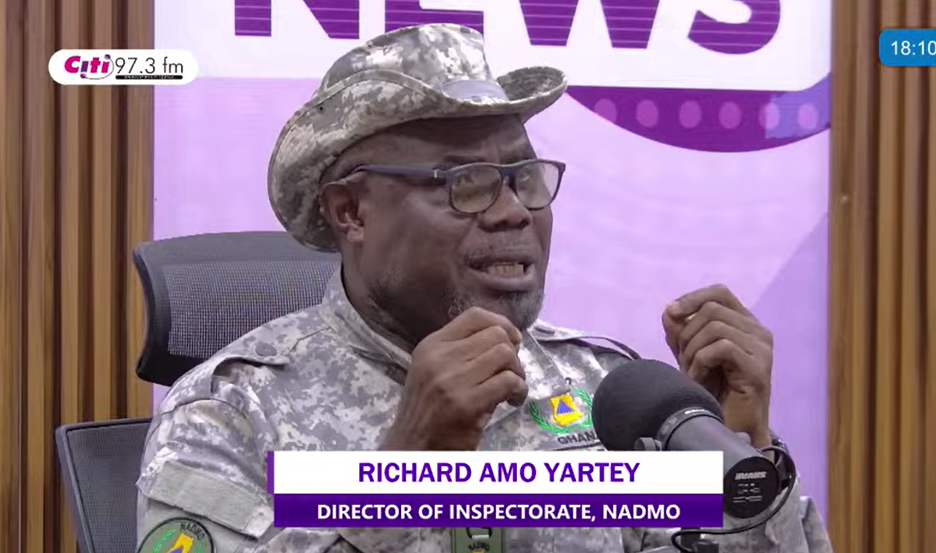
The National Disaster Management Organisation (NADMO) has urged Ghanaians to closely monitor traditional and social media platforms for timely weather updates and flood warnings to reduce the impact of disasters.
According to Richard Amo Yartey, Director of Inspectorate at NADMO, many people fail to pay attention to weather forecasts and early warning alerts, leaving them unprepared when heavy rains and flooding occur.
His comments follow a series of incidents in the Greater Accra Region, including the collapse of a two-storey building at Adenta New Site in the La Nkwantanang-Madina Municipality, a major fire outbreak in Accra’s Central Business District and widespread flooding in parts of the capital.
Speaking on Citi FM’s Eyewitness News with Sammie Wiafe on Thursday, June 4, Mr. Yartey advised residents to familiarise themselves with emergency contact numbers and the locations of NADMO offices in their communities to facilitate prompt reporting and response during emergencies.
“Thanks to technology, we’re able to forecast and even warn of imminent floods. Listen more to weather information. Citizens must listen to the radio and check social media for weather warnings and abide by the directions.
“Where you live, there’s a NADMO office close to you; there’s a NADMO office in every district and zone. Visit the nearest NADMO office, and you will be shown safe places so that you will be protected during floods. The national emergency hotline is 112; or directly to NADMO on 0302964884/0291913077, people must be able to call whenever they are in distress,” he said.
Mr. Yartey also rejected suggestions that NADMO has failed in its public sensitisation efforts, insisting that the organisation continues to educate the public on disaster preparedness and response.
“Failed, I would say no, we’re doing the very best we can. Just that people don’t listen, they don’t pay attention,” he stated.
He reiterated the need for greater public cooperation and adherence to safety advisories to minimise the effects of flooding and other disasters, particularly during the rainy season.
