


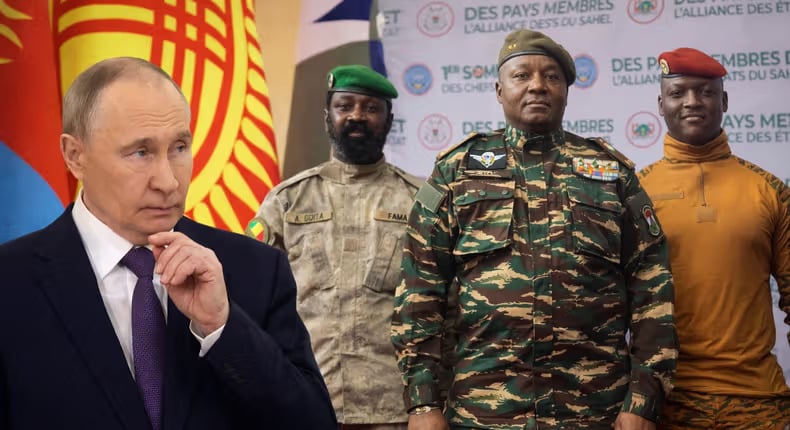
Let me start with a date that should be on the calendar of every African leader and every Western diplomat. October 2026. That is when Russia will host its third major Africa summit since 2019, marking Vladimir Putin’s most ambitious effort yet to expand Moscow’s political, military, and economic footprint across the continent.
The venue has not been officially confirmed, but preparations are already underway for a series of cooperation agreements that could reshape Russia’s growing partnerships with African governments. Among the most anticipated deals are new energy and economic agreements with Mali, a country that has rapidly strengthened ties with the Kremlin after cutting military cooperation with France and other Western allies. This will be Russia’s third summit. The first was in Sochi in 2019. The second was in St Petersburg in 2023, held despite international pressure linked to the war in Ukraine.
That summit still drew representatives from 49 countries, including 17 heads of state. The message was clear. African nations were not isolating Russia, no matter how hard the West pushed. Now, with a third summit on the horizon, the message is even clearer. Russia is here to stay in Africa.
Let me explain what makes this summit different from the previous two. The geopolitical context has shifted. In 2019, Russia’s engagement with Africa was still emerging. In 2023, it was defensive, conducted under the shadow of sanctions and diplomatic isolation. In 2026, it is assertive. Russia has established a track record in the Sahel. It has replaced French troops in Mali and Burkina Faso with its own military advisers and mercenaries from the Wagner group, now absorbed into Russia’s Ministry of Defence. It has cultivated relationships with military juntas in Mali, Burkina Faso, and Niger, all of which have cut ties with former colonial power France. And it has positioned itself as the go-to partner for African governments that feel abandoned or lectured by the West. The October summit will showcase these gains.
One of the most anticipated announcements is a series of major cooperation agreements between Russia and Mali. Russian Energy Minister Sergey Tsivilev has confirmed that Moscow and Mali are preparing to finalise deals spanning energy, mining, and infrastructure, with potential financing mechanisms that bypass Western financial networks. For Mali, a landlocked, impoverished country battling a decade-long Islamist insurgency, Russian support is a lifeline. For Russia, Mali is a gateway to the Sahel. The agreements are expected to be signed at the summit, cementing a relationship that has already seen Russian military advisers deployed and Russian gold mining operations expanded.
But the most ambitious project on the table involves not just Mali, but its Sahel neighbours. Burkina Faso, Mali, and Niger are partnering with Russia to develop the region’s first shared telecommunications satellite. This is not a small project. A satellite that provides communications, earth observation, and potentially navigation services would transform digital connectivity in one of the most poorly connected regions of the world. It would enable better security coordination among the three countries, allow for more efficient disaster response, and support regional economic integration. For Russia, it is a strategic investment. It deepens dependency on Russian technology, provides a platform for intelligence gathering, and demonstrates that Russia can deliver high-tech solutions, not just guns and grain.
The anti-colonial rhetoric that Russia deploys is central to its appeal. Putin has repeatedly invoked the fact that Russia never colonised African territory, contrasting its “respect for sovereignty” with the “neocolonial practices” of Western powers. In francophone Africa, where memories of French colonial rule are still raw, and where recent French military interventions have been deeply unpopular, that message finds fertile ground. The military juntas in Mali, Burkina Faso, and Niger have expelled French troops, ended military cooperation agreements, and turned to Russia as an alternative. The satellite project is the latest chapter in that realignment. It moves the relationship beyond security and into technology and development.
Now, let me talk about the Western reaction. The United States and its European allies have watched Russia’s advance in the Sahel with alarm. They have imposed sanctions on Wagner and its affiliates. They have cut aid to countries that partner with Russian mercenaries. They have launched diplomatic offensives to try to keep African governments in their orbit. But none of it has worked. The Sahel juntas have not reversed course. Other African countries, including Ghana, have maintained balanced relationships with both Russia and the West. The October summit will be a reminder that Western tools of leverage are limited. Sanctions have not isolated Russia. Aid cuts have not forced Sahel governments to capitulate. And diplomatic pressure has not stopped African leaders from attending Russian summits.
Let me also address the criticism of Russia’s role in Africa. Human rights groups have documented abuses by Wagner mercenaries in the Central African Republic, Mali, and elsewhere. Accusations include civilian killings, torture, and resource theft. The juntas that Russia partners with are not democracies. They seized power by force and have suppressed political opposition. And the satellite project, while promising, carries risks. The Sahel states have limited technical capacity. They will rely heavily on Russian expertise, creating new dependencies. If the project fails, it will be an expensive embarrassment. If it succeeds, it will tie them even closer to Moscow. There are no free lunches in great power competition.
The broader context is that Africa has become a theatre of competition. China is the dominant economic force, with trade volumes exceeding 280 billion dollars annually and massive infrastructure investments. Russia is the rising military and security partner, particularly in the Sahel. The United States and the European Union are struggling to maintain relevance, their influence eroded by history and perceived double standards. African governments are diversifying their partnerships. They are no longer forced to accept Western terms. They can shop around. That has led to better deals in some cases, but also to a race to the bottom in governance standards, where juntas that have seized power by force can still find willing partners.
For Ghana, the October summit matters even though we are not in the Sahel. Ghana shares a border with Burkina Faso, one of the three countries in the satellite project. Instability in the Sahel has already spilled over into coastal West Africa, with extremist groups launching attacks in northern Ghana. Ghana’s government has balanced its traditional Western partnerships with pragmatic engagement with Russia and China. The summit will be watched closely in Accra. Ghana will want to see what Russia is offering, what the Sahel states are getting, and whether there are opportunities for Ghanaian businesses or security cooperation. Ghana is not likely to pivot away from the West, but it is also not going to ignore a major power that is investing in the neighbourhood.
The October summit is also a test of Russia’s capacity to deliver. Russia has a track record of over-promising and under-delivering in Africa. The 2019 Sochi summit produced many agreements, some of which have not been fully implemented. The 2023 St Petersburg summit produced dozens more, with mixed progress. The satellite project is ambitious. Whether it will be completed on time and on budget is uncertain. The security partnerships have stabilised some regimes but have not defeated insurgencies. The grain and fertiliser deals have helped, but Russia’s exports are subject to its own production and export constraints. African governments are pragmatic. They will continue to work with Russia as long as it serves their interests. If Russia fails to deliver, they will look elsewhere.
So what should the ordinary Ghanaian take from all of this? First, understand that global power dynamics are shifting. The world is no longer unipolar. Russia, China, Turkey, and the UAE are all competing for influence in Africa. That competition can benefit African countries, but it also creates risks. Second, watch the Sahel. What happens in Mali, Burkina Faso, and Niger will affect Ghana’s security. The satellite project, if successful, could improve regional coordination against extremists. If it fails, it will be a setback. Third, do not romanticise any partner. Russia is not a saviour. The West is not a colonial master. African countries must pursue their own interests, build their own institutions, and avoid becoming dependent on any single external power. The ideal scenario is a multipolar Africa that trades with all, works with all, and is dominated by none.
The October Russia-Africa summit will generate headlines. There will be photo opportunities, signed agreements, and speeches about friendship and cooperation. But the real test will come after the cameras leave. Will the satellite be built? Will the energy projects materialise? Will security improve? Those are the questions that matter. And they will be answered not in Moscow, but in Bamako, Ouagadougou, Niamey, and Accra. That is where Africa’s future will be decided. Not in the halls of a summit, but on the ground, in the lives of ordinary people. Let us hope that the promises of October lead to real progress. Because the Sahel cannot afford more empty agreements. And neither can the rest of us.
.
