FMD2-RFP-051826
Farmers in South Africa that have already vaccinated their cattle for foot and mouth disease (FMD) are seeing them become reinfected with the disease, raising tensions amid the agricultural industry.
The government’s vaccination program has received regular criticism from farmers that it is not being implemented fast enough to protect their herds.
So far, only 2.1 million cattle, just 14% of the country’s 14 million cattle, have received their first vaccination.
The main issues voiced by farmers is the slow speed at which the government vaccination plan is being rolled out and the sourcing and distribution of vaccines.
Just recently two herds, that were already vaccinated with the Turkish manufactured Aftodoll oil based vaccine, have become reinfected with FMD sending alarm bells ringing among the farming community.
POORLY RUN PROGRAM
However, the general concern is not down to the vaccine being ineffective, but more because of the poorly run government vaccination program, as these herds were reinfected by close herds that were not vaccinated at all.
One of those herds belongs to Tom Turner, who milks 1,350 cows near the town of Nottingham Road, in KwaZulu-Natal Province.
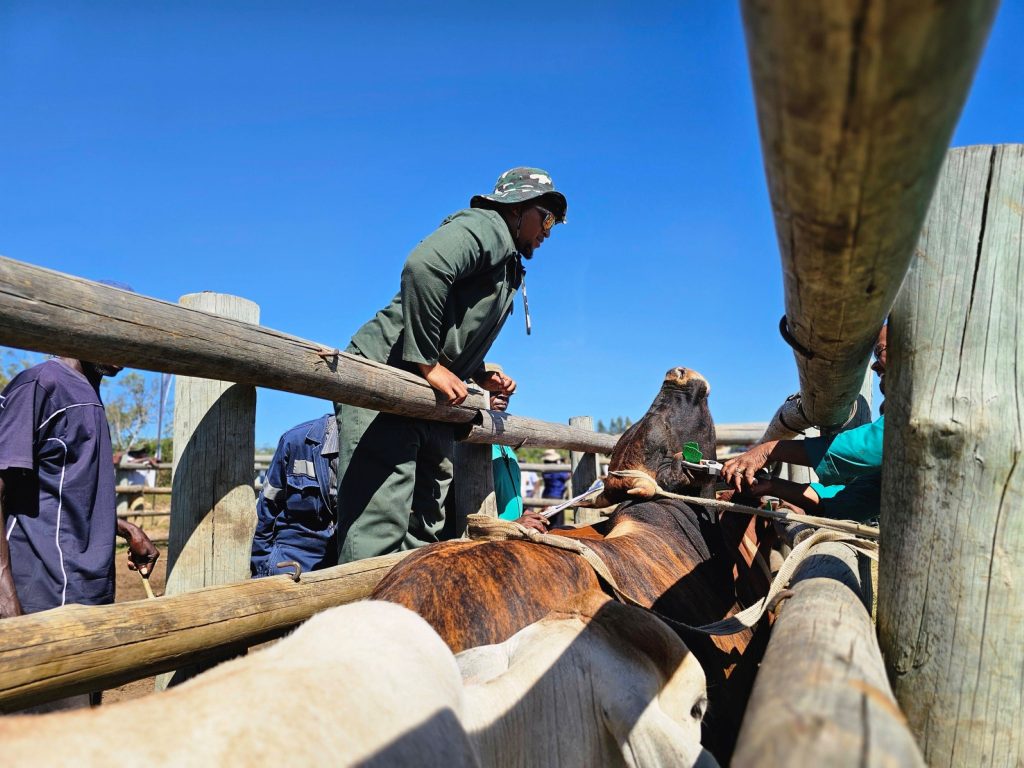
Using a private vet, Turner and his team vaccinated over 2,700 cattle on March 13, 2026, but by May 8, 2026, some cattle were showing typical FMD symptoms including teat blisters and mouth lesions.
Turner said, “All contiguous neighbors are beef farmers or smallholders. None of their cattle have been vaccinated and most are positive for FMD.”
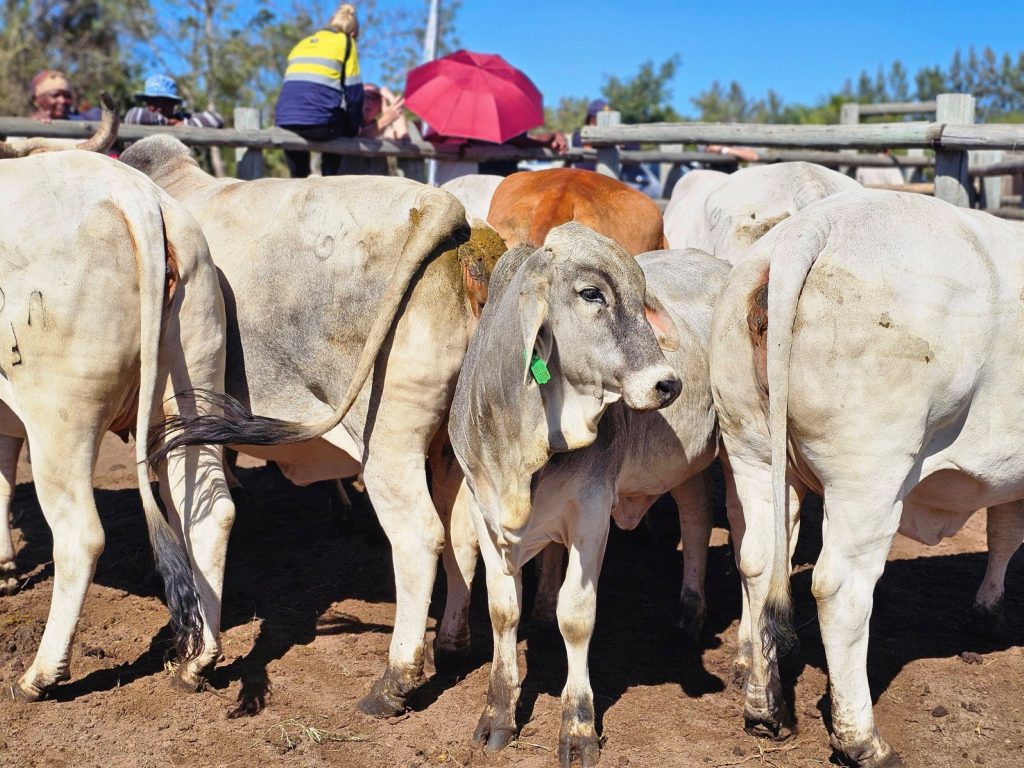
This appears to be a common pattern across South Africa where some main herds have been vaccinated, but many smaller herds, who are described as being “full of FMD,” have yet to be vaccinated for the first time.
South Africa’s Department of Agriculture said it has now successfully imported 8 million vaccine doses since late February.
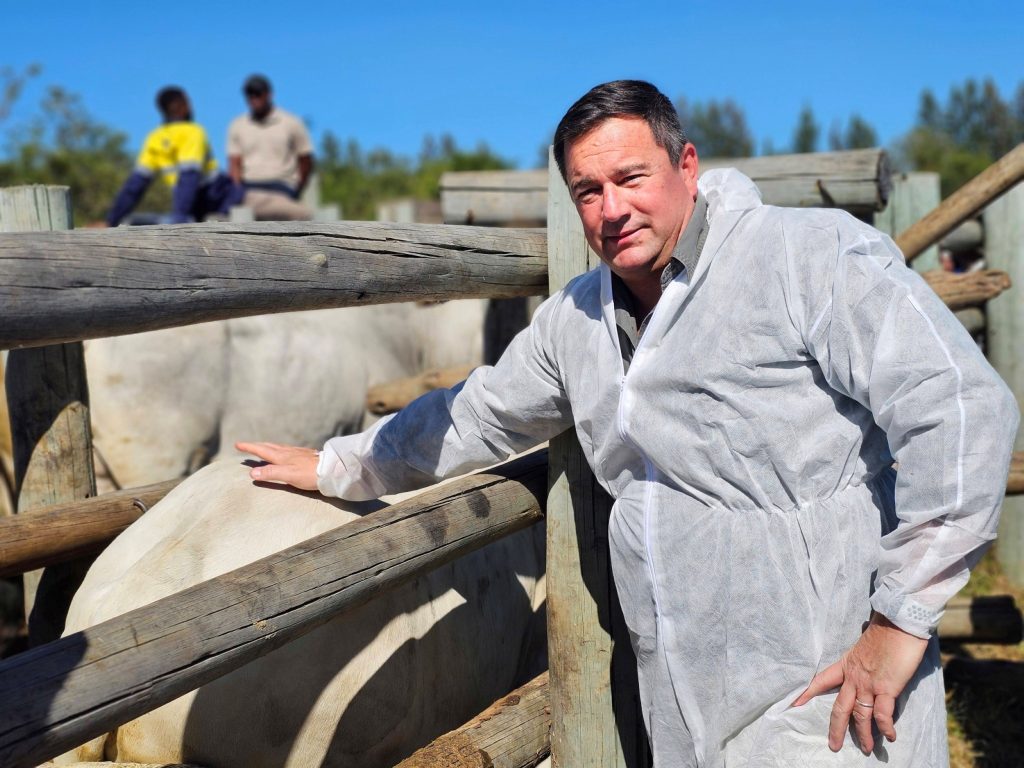
The Minister of Agriculture, John Steenhuisen, says the vaccination program is on track with the arrival of a further 2 million doses of the Dollvet vaccine from Turkey on May 12, 2026.
Minister Steenhuisen said, “With an additional 5 million doses expected to arrive shortly, South Africa’s total imported vaccine volume will rise to 13 million doses.
“When combined with the 2 million BVI vaccine doses secured last year, the country will have landed 15 million doses by the end of May 2026.
“This sends a clear signal of our determination to protect the national interest, defend our livestock industry, and win the war against FMD,” he said.
The department had set objectives to vaccinate 80% of the national herd, comprising approximately 14 million cattle, by the end of December 2026.
BUILDING COLLECTIVE IMMUNITY
Critics say this rollout is too long and that realistically there is only a six to eight week window in which all cattle in the country must be vaccinated, in order to gain maximum protection and prevent reinfections.
The farmer led lobby group, FMD Response SA, said that in order to control FMD, the national herd needs to be vaccinated twice a year, within tight, eight-week windows that build collective immunity before the virus can exploit the gaps.
A spokesman said, “That means 14 million doses procured and ready before each window opens, not arriving gradually, ready, so vaccination can move fast across the country at the same time.
“Since the minister announced the national vaccination program four months ago, South Africa has received approximately 3.8 million doses through the state’s single centralized procurement channel.
“That’s 3.8 million doses in four months, against a requirement of 14 million per campaign. At that rate, the target is not delayed, it is unreachable.
“FMD is not controlled by vaccinating some animals some of the time. It is controlled by vaccinating enough animals, fast enough and at the same time, so the virus runs out of room to move.”
Craig and Carol Houston run two separate dairy farms in KwaZulu-Natal at Mooi River with over 2,200 cattle on both. They managed to source and purchase their own FMD vaccine early after cows started showing symptoms.
However, their cattle now require boosters and are concerned the state will not be able to send them supplies.
Carol said, “It is getting quite close to the time for us to boost the vaccinations and we are just worried that we won’t get the vaccine in time.
“We previously used the Turkish vaccine, but the state seems to have tied up with the Brazilian government to source its vaccines. However, that vaccine doesn’t have SAT 3 like the Turkish one does. Lots of pigs and beef cows seem to be still getting infected but now the dairy herds are starting to get infected again.
“The government does send out info but they miss all the deadlines. We are awaiting the court ruling from the Sakeliga court case to see if we can purchase the vaccine ourselves.
“The state is receiving vaccines but there are big delays in getting them from the state vet and distribution,” she said.