
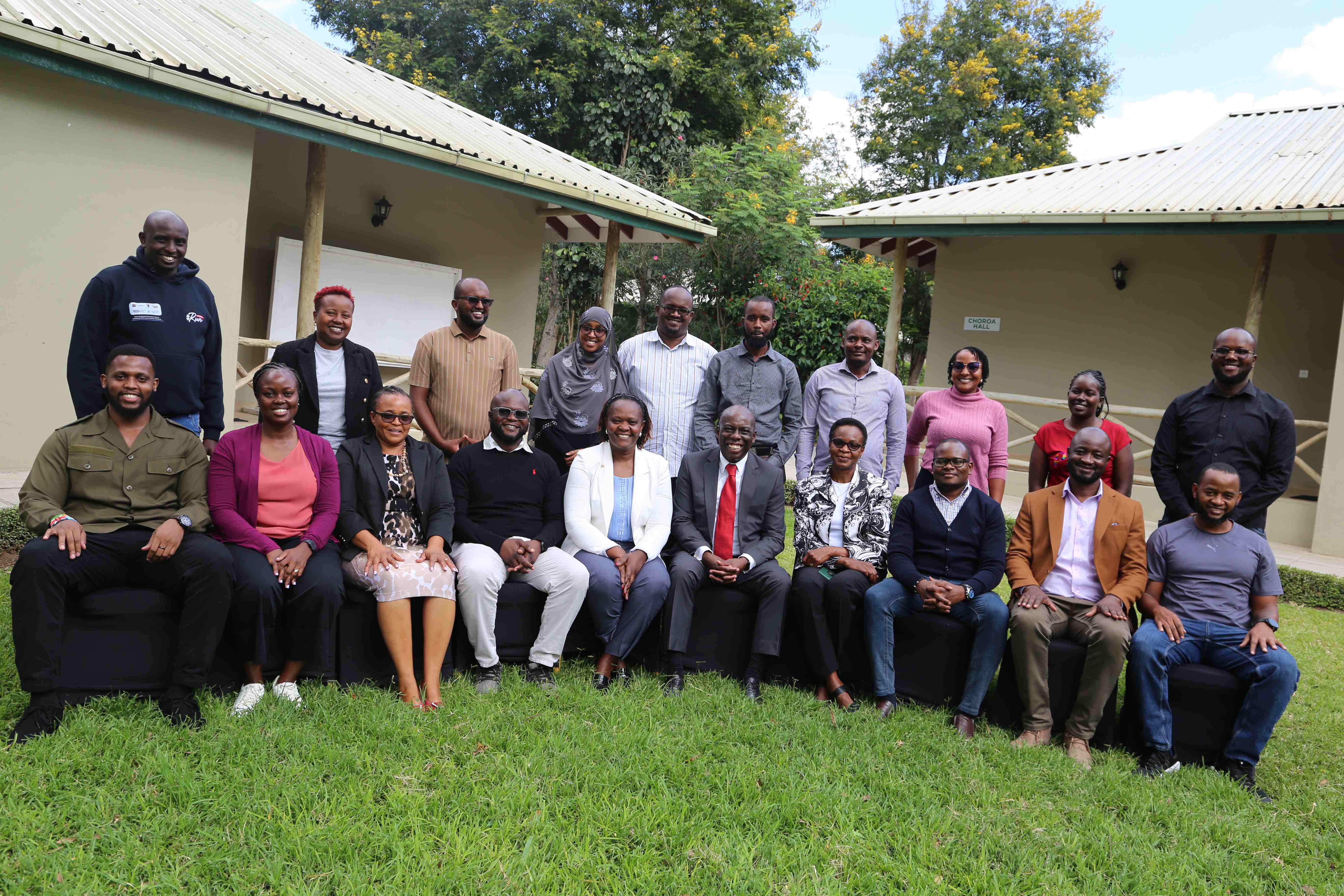
 Members of the Anti-doping Agency of Kenya (ADAK) and Sports Disputes Tribunal (SDT) during the final day of the capacity building workshop/ HANDOUT
The Anti-Doping Agency of Kenya has intensified efforts to fortify Kenya’s anti-doping fight after concluding a three-day capacity-building workshop for members of the Sports Disputes Tribunal in Machakos County on Friday.
The high-level forum was geared towards sharpening adjudicative consistency, strengthening institutional alignment and ensuring Kenya remains fully compliant with the global anti-doping framework ahead of the implementation of the 2027 World Anti-Doping Code.
The SDT, an independent legal body established under the Sports Act, handles sports-related disputes, including anti-doping appeals and governance matters.
The workshop drew a heavyweight cast from Kenya’s sports law and arbitration circles, including Court of Arbitration for Sport arbitrator John Ohaga, Continental Results Management Panel chair Njeri Onyango, SDT acting chairperson Allan Mola, Tribunal CEO Dr. Leah Kaburu and ADAK chief executive Peninah Wahome.
Participants underwent training on critical anti-doping operations, including whereabouts management, results management, sample collection, education and research, as well as intelligence and investigations, key pillars in handling athlete-related doping cases.
Ohaga hailed the initiative as a major boost for tribunal members tasked with delivering informed and harmonised rulings.
“Non-analytical cases are as important as analytical cases. An athlete sanctioned for presence is equally culpable as one sanctioned for whereabouts because all Anti-Doping Rule Violations are legal wrongs,” said Ohaga.
He further noted that Kenya has built one of Africa’s strongest Results Management systems, while stressing the need for continued training of legal practitioners in sports law to ensure rulings remain aligned with international standards.
“ADRVs are not criminal jurisprudence; they are governed by global standards that require harmonization in interpretation and rulings,” he added.
Onyango lauded Kenya’s progress in anti-doping governance, pointing to the steady evolution of the 2016 Anti-Doping Act and athlete education programmes.
“Today’s athletes are more empowered and better equipped to Stay Clean and Win Right,” she said.
Wahome underscored the importance of closer collaboration between ADAK and the Tribunal, especially with newly appointed SDT members and the incoming 2027 World Anti-Doping Code reforms.
She also applauded Ohaga and Onyango for continuing to support Kenya’s anti-doping agenda even after their tenure at the Tribunal.
Participants emphasised that consistent interpretation and application of anti-doping regulations remains vital in safeguarding fairness, transparency and integrity across Kenya’s sporting landscape.
