

POOR infrastructure, inadequate access to potable water, and persistent logistical constraints continue to undermine the operations of the Ghana Immigration Service (GIS) in the Bono Region, raising concerns about the effectiveness of border management in the area.
Personnel stationed at both border posts and inland checkpoints are working under harsh and challenging conditions, which officers say are negatively affecting service delivery and morale.
In several locations, officers are compelled to operate from dilapidated structures with limited access to basic amenities, a situation that poses risks to both efficiency and security.
At the Tainso inland checkpoint in the Tain District, for example, officers reportedly trek long distances to neighbouring communities in search of drinking water.
They are also housed in an uncompleted building with poorly fitted doors and windows, while a makeshift structure serves as a kitchen, exposing them to adverse weather conditions.
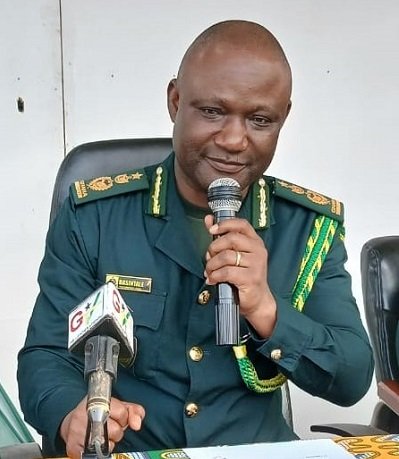
These concerns came to light during a three-day working visit to the region by the Comptroller-General of the Ghana Immigration Service, Samuel Basintale Amadu, who toured selected operational areas to assess conditions on the ground.
The familiarisation tour, which commenced in Sunyani, took the Comptroller-General to five key border posts: Yaakrom, Gonokrom, Sampa, Banda, and Kofi Badukrom, where he interacted with personnel and inspected existing facilities.
Expressing concern about the conditions under which officers operate, Mr Basintale Amadu assured personnel of management’s commitment to improving infrastructure and welfare.
“I want to assure you that before I retire, I will ensure that I leave behind befitting and standard infrastructure to improve the working conditions of personnel,” he stated.
The Comptroller-General was accompanied by the Bono Regional Commander of the Ghana Immigration Service, Deputy Commissioner of Immigration (DCOI) Eric Quartey; DCOI Maud Anima Quainoo, Director of Human Resource; and other senior officers.
During the tour, officers highlighted a range of operational challenges, including inadequate office accommodation, poor residential facilities, a shortage of vehicles and motorbikes for patrol duties, limited communication equipment, and poor road networks leading to some checkpoints.
According to personnel, these constraints hinder effective patrols and surveillance activities, making it difficult to monitor movements along the borders and combat irregular migration and trans-border crime.
As part of his visit, Mr Basintale Amadu paid a courtesy call on authorities in Wenchi, where he commended municipal and district assemblies in the region for their support to the Service and appealed for sustained collaboration to improve the working environment of officers.
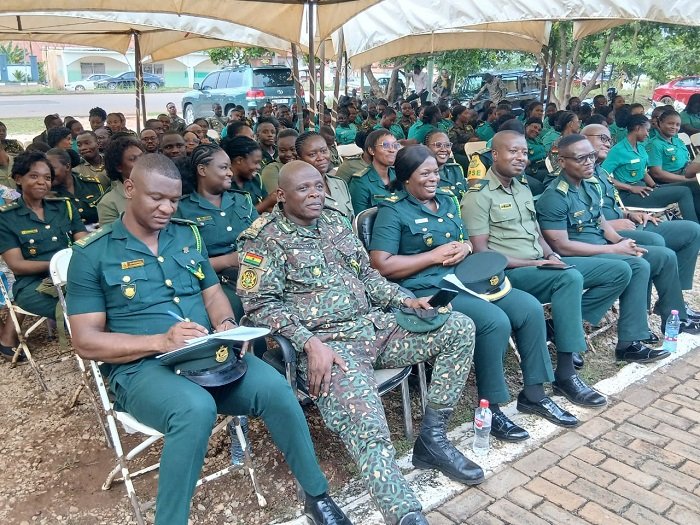
Addressing personnel at a staff durbar in Sunyani, he reiterated that the current administration of the Service was prioritising welfare and infrastructure development as part of broader reforms to strengthen border management nationwide.
He acknowledged the numerous challenges confronting personnel and assured them of the government’s commitment to addressing the issues.
On infrastructure, the Comptroller-General disclosed that the Service was constructing modern office facilities in seven regions, with completion expected by next year.
In his welcome address, DCOI Eric Quartey noted that despite the logistical constraints, officers in the Bono Region remained dedicated to their mandate of safeguarding the country’s borders.
He expressed optimism that ongoing and planned interventions would significantly enhance operational efficiency and improve conditions of service for personnel in the region.
FROM DANIEL DZIRASAH, WENCHI
Follow our WhatsApp Channel now!
