


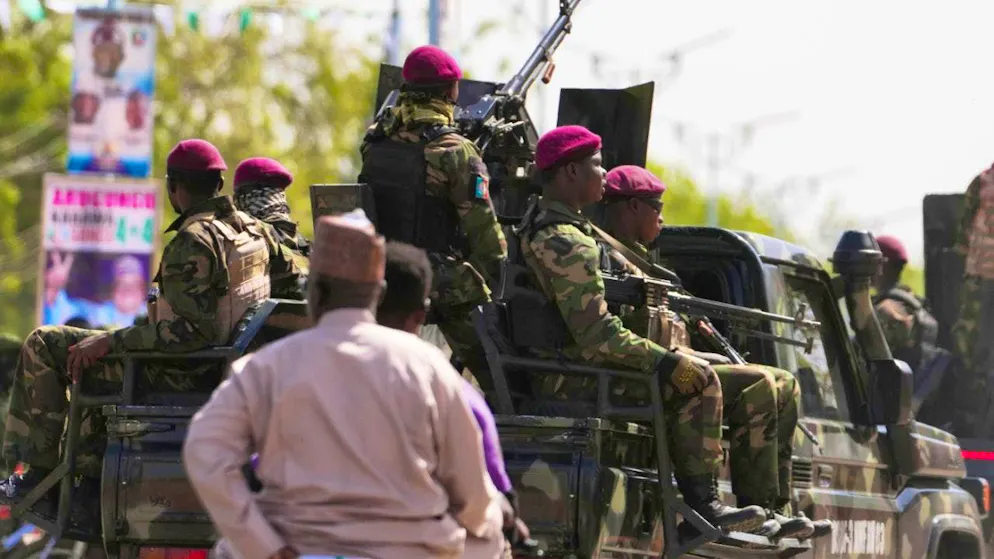
Keystone
Dozens of people are feared dead after an airstrike by the Nigerian military on a market in the north-east of the country. According to the human rights organization Amnesty International, more than a hundred people were killed in the attack. Local media reported between 30 and 200 dead, citing eyewitnesses. Authorities, including the police, confirmed the incident, but no official casualty figures were given.
Three military jets fired on the market in Jalli Futchimiram on the border between the states of Borno and Yobe on Saturday afternoon. The military is carrying out operations there against Islamist terrorist groups, including the IS West Africa Province (ISWAP) group, which is affiliated with the Islamic State terrorist militia.
Military confirms air strikes
The Nigerian military said that airstrikes had been carried out in the area, stating that the operation had targeted “a major terrorist movement corridor and a staging area for terrorists from the Islamic State West Africa Province and their accomplices”.
“Dozens of terrorists were neutralized in the attacks, their vehicles and technical equipment were destroyed, while surviving elements were observed fleeing in different directions,” a statement signed by military spokesman Sani Uba said.
Failures have hit civilians in the past
The Nigerian military relies heavily on airstrikes to combat jihadists who have been fighting against the state in north-eastern Nigeria for 16 years. On several occasions, civilians have been killed in misguided strikes. One of the worst incidents occurred in 2017, when a camp for internally displaced persons was bombed and 112 civilians were killed.
Other regions of Africa’s most populous country are also repeatedly hit by serious attacks by armed groups. The large number of security crises is stretching the resources of the country’s security authorities.
The USA has recently stepped up its support for Nigeria in the fight against terrorism. Following a US airstrike against armed groups at Christmas, around 100 US soldiers arrived in the country in mid-February to train and advise the Nigerian armed forces.
