


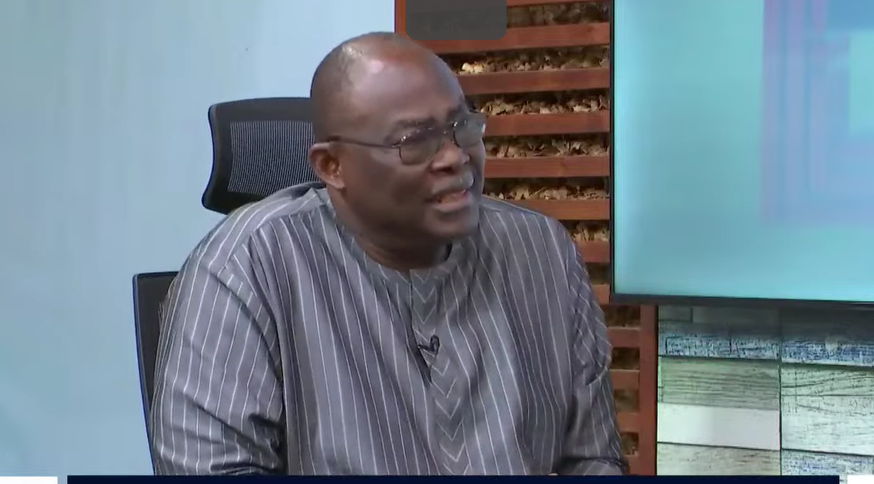
Ghana’s Presidential Envoy for Reparatory Justice, Ekwow Spio-Garbrah, has described United States President Donald Trump as a “champion of reparations,” despite Washington’s opposition to a United Nations resolution on the transatlantic slave trade.
The motion, presented under Ghana’s leadership at the United Nations on March 25, 2026, called for renewed global commitment to reparative justice for African countries and descendants of enslaved people. It urged member states to engage in structured dialogue and take concrete steps to address the enduring social, economic and cultural consequences of slavery.
The resolution was adopted following extensive debate, securing 123 votes in favour. The United States, Argentina and Israel voted against it, while 52 countries abstained.
In its response, the United States described the African Union-backed resolution as “highly problematic.” While acknowledging the historical injustices of slavery, it raised concerns over the identification of beneficiaries of any reparations framework.
However, speaking in an interview with Umaru Sanda Amadu on Channel One TV’s Face to Face, Dr Spio-Garbrah argued that President Trump’s economic approach reflects principles akin to reparatory justice.
“Even though when we talk about reparations, Donald Trump may think that reparations have nothing to do with him. He, himself, in my view, is a champion of reparation. He has been arguing with his European counterparts that they don’t contribute to NATO. America has to bear the brunt of protecting Germany and Japan,” he said.
He pointed to trade measures and tariff policies pursued by the US administration as examples, suggesting they were designed to protect national interests and correct perceived imbalances in global trade.
“He felt Africans and Chinese were taking advantage of the US trade weakness. The tariffs were a form of reparations. But when it came to the tariff wars, he imposed 100% there, 50% there, 30%. What did they claim he was doing there? He was protecting America’s trade interests.”
The remarks come amid intensifying global debate over reparatory justice, with African states and advocacy groups continuing to push for redress over the long-term impacts of the transatlantic slave trade.
