


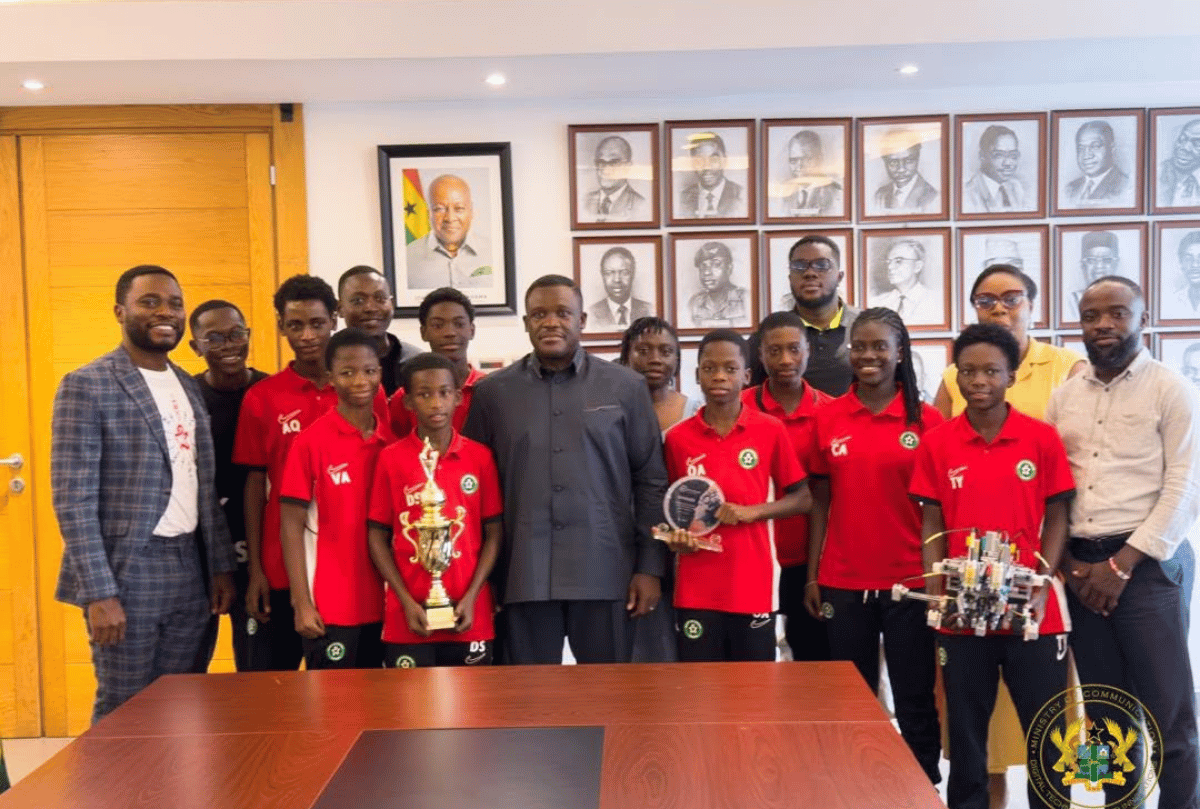
Ghana is taking a groundbreaking stride in redefining youth development by strategically integrating technology and digital skills into athletic training programs. This innovative approach not only enhances the professional prospects of young athletes but also equips them with future-ready competencies in a rapidly evolving digital economy. At the forefront of this initiative stands the Ministry of Communication, Digital Technology and Innovations, which recently engaged with students and coaches from the Right to Dream Academy (RTDA) to underscore the transformative potential of merging sports with cutting-edge technological education.
A Holistic Model of Excellence: Sports Meets STEM
The Right to Dream Academy, renowned for nurturing world-class football talent, has expanded its curriculum to include robotics, artificial intelligence (AI), and digital innovation. This dual-focus model ensures that athletes are not only elite performers on the field but also highly skilled in science, technology, engineering, and mathematics (STEM)—sectors critical to Ghana’s economic growth.
The academy’s recent achievements in global technology competitions have cemented its reputation as a pioneer in this interdisciplinary approach. Notably, a student team from RTDA secured first place in Ghana’s national AI for Good competition and second place in the senior category at Robofest 2026, a prestigious international robotics event. These victories highlight the academy’s ability to cultivate both athletic prowess and technological innovation, positioning its graduates for success in diverse career paths.
Government and Corporate Synergy for Digital Empowerment
The engagement between the Ministry of Communication, Digital Technology and Innovations and RTDA was not merely symbolic—it reflected a collaborative effort to scale digital literacy across Ghana. Minister Samuel Nartey George praised the academy’s integrated sports-education model, emphasizing that digital skills provide young athletes with alternative career pathways beyond sports.
The ministry’s commitment to supporting this initiative is evident in its strategic partnerships with corporate foundations. The MTN Ghana Foundation and Telecel Ghana Foundation were recognized for their financial and logistical support, enabling RTDA students to compete in global technology summits, including an upcoming event in Geneva. Such partnerships are instrumental in bridging the gap between Ghanaian talent and international opportunities, ensuring that local innovators are well-equipped to compete on a global stage.
Expanding Access: Government Initiatives for Digital Readiness
To further strengthen RTDA’s technological infrastructure, the ministry announced plans to donate 30 laptops to enhance the academy’s computer laboratories. This investment will provide students with direct access to advanced tools for coding, AI experimentation, and digital project development.
Additionally, the students will be enrolled in the government’s One Million Coders Programme, a flagship initiative aimed at democratizing digital education across Ghana. This program, part of the broader digital transformation agenda, seeks to train one million Ghanaians in coding and software development by 2025, thereby expanding the tech-savvy workforce and fostering innovation-driven economic growth.
A Blueprint for Future Youth Development
The collaboration between RTDA and the Ministry of Communication, Digital Technology and Innovations serves as a model for integrating sports and technology education in Ghana. By doing so, the country is not only future-proofing its athletes but also building a more resilient and adaptable youth workforce.
This approach aligns with Ghana’s National Digital Transformation Roadmap, which prioritizes digital inclusion, STEM education, and innovation-driven economic development. Initiatives like these are crucial in ensuring that young Ghanaians are competitive in the global digital economy, whether in tech startups, AI research, or high-tech industries.
The Path Forward: Preparing for a Tech-Enabled Future
As Ghana continues to advance its digital economy, the success of programs like RTDA’s sports-tech hybrid model will play a pivotal role in shaping the next generation of leaders. By combining athletic discipline with technological expertise, the country is fostering a new breed of innovators—individuals who can excel in both sports and science, contributing to Ghana’s socioeconomic progress in meaningful ways.
This visionary approach underscores the fact that true excellence is not confined to a single domain but thrives at the intersection of passion, skill, and innovation. As Ghana moves forward, such interdisciplinary education models will be key in nurturing a workforce that is not only skilled but also adaptable, creative, and globally competitive.
