


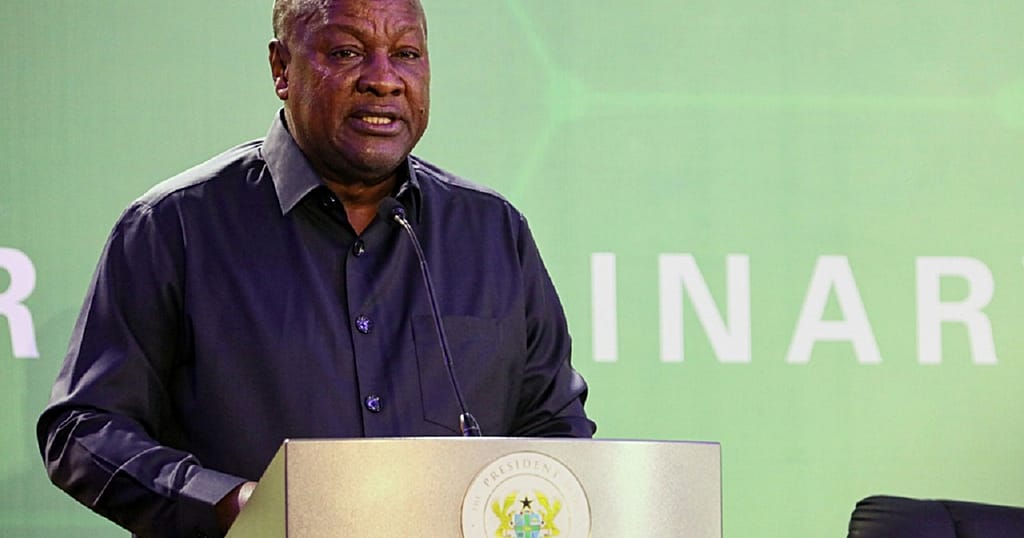
Ghana’s political landscape is currently undergoing a significant constitutional review, with the Constitutional Review Commission (CRC) recommending a major amendment to the presidential term limit, extending it from four to five years. This proposal, if approved, would mark a pivotal shift in the country’s governance structure, sparking intense debates among political stakeholders, legal experts, and the general public. Below is a detailed breakdown of the proposal, its potential implications, and the reactions it has elicited.
The Proposal: A Five-Year Presidential Term
The Constitutional Review Commission, established under the authority of President Nana Addo Dankwa Akufo-Addo, has submitted its final report to Parliament, advocating for a five-year presidential term instead of the current four-year tenure. The commission argues that this adjustment would align Ghana with regional and global best practices, enhancing stability, continuity, and effective governance.
Key points of the proposal include:
– Elimination of mid-term elections: A five-year term would reduce the frequency of presidential elections, potentially lowering electoral costs and logistical challenges.
– Enhanced policy implementation: Longer tenures could allow presidents to execute long-term development plans without the constraints of frequent electoral cycles.
– Regional and global alignment: Many African nations, including Nigeria, South Africa, and Kenya, have five-year presidential terms, suggesting that Ghana could be adopting a more standardized approach.
However, critics argue that extending the term could centralize power, reduce accountability, and potentially erode democratic norms if not accompanied by robust checks and balances.
Legal and Constitutional Considerations
The proposal to extend the presidential term raises constitutional and legal questions, particularly regarding the 1992 Constitution of Ghana, which currently stipulates a four-year term with a maximum of two consecutive terms.
- Amendment Process:
- Any constitutional amendment in Ghana requires a two-thirds majority in Parliament and subsequent public referendum approval.
-
The CRC’s report must now be debated in Parliament before proceeding to a national vote.
-
Precedents and Challenges:
- Ghana has a history of constitutional amendments, most notably the 1992 Constitution, which replaced the 1979 and 1978 Constitutions following the Fourth Republic.
-
Past amendments, such as those related to term limits for regional executives, have been contentious, highlighting the need for careful public consultation.
-
Judicial Scrutiny:
- The Supreme Court may intervene if the amendment is deemed unconstitutional or violates fundamental democratic principles.
- Legal experts warn that an extended term could undermine the principle of rotational leadership, a cornerstone of Ghana’s democratic system.
Political Reactions: Support and Opposition
The proposal has divided political parties, with each major force offering distinct perspectives.
Supporting the Extension
- New Patriotic Party (NPP):
- The ruling party has publicly endorsed the CRC’s recommendation, citing the need for stability and continuity in governance.
- NPP leaders argue that a five-year term would allow presidents to fully implement their manifestos without mid-term disruptions.
-
President Akufo-Addo has indicated openness to the proposal, though he has not yet committed to supporting it unconditionally.
-
Some Opposition Figures:
- A few members of the National Democratic Congress (NDC) have expressed cautious support, suggesting that the change could reduce electoral fatigue and improve governance efficiency.
- However, they emphasize the need for transparency and public consensus before finalizing the amendment.
Opposing the Extension
- National Democratic Congress (NDC):
- The main opposition party has strongly opposed the proposal, arguing that it concentrates power and undermines democratic accountability.
- NDC leaders, including former President John Mahama, have warned that the move could pave the way for authoritarian tendencies, citing concerns about presidential overreach.
-
They advocate for maintaining the four-year term to preserve Ghana’s rotational leadership system, which has been a key factor in its stable democratic transitions.
-
Civil Society and Youth Groups:
- Organizations such as the Ghana Center for Democratic Development (CDD-Ghana) and Youth Coalition for Democracy have voiced concerns, arguing that the proposal lacks sufficient public consultation.
- They demand national debates, town hall meetings, and referendums to ensure that the decision reflects the wishes of the Ghanaian people.
-
Some youth groups have organized protests, calling for the rejection of the proposal on grounds that it favors incumbents and weakens democratic institutions.
-
Legal and Academic Experts:
- Professors of constitutional law, including Dr. Kwesi Aning and Dr. Yaw Appiah-Kubi, have expressed reservations, arguing that the change could violate the spirit of the 1992 Constitution.
- They emphasize that term limits are essential for preventing authoritarianism and ensuring governance accountability.
Economic and Development Implications
The potential extension of the presidential term could have far-reaching economic and developmental consequences:
- Investor Confidence:
- A longer term might boost investor confidence by providing predictability in governance, reducing the risk of frequent policy shifts due to mid-term elections.
-
However, critics argue that short-term electoral cycles often force governments to prioritize development over populist measures, which could be lost with an extended term.
-
Budgetary Allocation:
- The Ghanaian Electoral Commission (EC) spends millions of cedis on elections every four years. A five-year term could reduce electoral expenditure, allowing more funds to be allocated to infrastructure and social programs.
-
Conversely, some economists warn that longer terms may lead to budgetary mismanagement if accountability mechanisms are weakened.
-
Regional Stability:
- Ghana’s ECOWAS (Economic Community of West African States) membership could influence the outcome. While some neighboring countries have five-year terms, others (like Côte d’Ivoire) have maintained four-year terms, suggesting that regional uniformity is not a decisive factor.
Public Sentiment and National Debates
Public opinion on the proposal remains highly polarized, with opinion polls and social media discussions reflecting deep divisions:
- Supporters argue that:
- A five-year term would allow better policy implementation, such as digitalization, infrastructure development, and job creation.
-
It would reduce the influence of money politics in elections, as fewer campaigns would be needed.
-
Opponents contend that:
- The change favors incumbents, making it harder for opposition parties to compete effectively.
-
It could lead to complacency in governance, as presidents might ignore public demands if they know they will remain in power for an additional year.
-
Undecided Voters:
- Many Ghanaians remain neutral, calling for more information and debates before forming an opinion.
- Some young voters, particularly those who experienced multiple electoral disputes in recent years, are skeptical of any term extension.
The Path Forward: Parliamentary and Referendum Processes
If the Constitutional Review Commission’s report is adopted by Parliament, the next critical step will be a national referendum. The process is expected to follow these stages:
- Parliamentary Debate and Vote:
- The Speaker of Parliament, Alban Bagbin, will preside over debates, with each party having the opportunity to present arguments for or against the amendment.
-
A two-thirds majority in the 318-member Parliament is required for approval.
-
Public Consultation and Referendum:
- The Electoral Commission of Ghana (EC) will organize public forums, town hall meetings, and awareness campaigns to educate citizens.
-
A national referendum will be held, with simple majority approval required for the amendment to take effect.
-
Implementation and Transition:
- If approved, the new term limit would apply to future elections, with the current president’s term remaining unaffected.
- The 2024 presidential election would still proceed under the existing four-year term framework, but the 2028 election could be the first under the new system.
Comparative Analysis: Ghana’s Term Limits in Global Context
Ghana’s current four-year presidential term is relatively short compared to many democratic nations:
| Country | Presidential Term | Maximum Consecutive Terms | Key Considerations |
|——————-|———————-|—————————–|————————|
| United States | 4 years | 2 terms (8 years total) | Rotational leadership ensures accountability. |
| France | 5 years | 2 terms (10 years total) | Stability but with strong checks on power. |
| Nigeria | 4 years | 2 terms (8 years total) | Frequent elections encourage political competition. |
| South Africa | 5 years | 1 term (renewable once) | Longer term but with term limits to prevent overstaying. |
| Kenya | 5 years | 2 terms (10 years total) | Extended term but with strict constitutional safeguards. |
Ghana’s proposed five-year term would align it more closely with European and some African models, but critics argue that without strong institutional safeguards, it could risk authoritarianism.
Conclusion: Balancing Stability and Democracy
The proposal to extend Ghana’s presidential term from four to five years is a complex and contentious issue that touches on democratic principles, governance efficiency, and public trust. While supporters argue that it will enhance stability and development, opponents warn of concentrated power and reduced accountability.
As Ghana moves toward Parliamentary debate and a potential referendum, the outcome will depend on:
– The depth of public consultation before the vote.
– The transparency of the amendment process.
– The commitment of political leaders to uphold democratic norms, regardless of the term length.
Ultimately, the decision will shape Ghana’s political future, influencing elections, governance, and the nation’s trajectory in the coming decades. The national dialogue on this issue remains critical to ensuring that any constitutional change reflects the collective will of the Ghanaian people.
